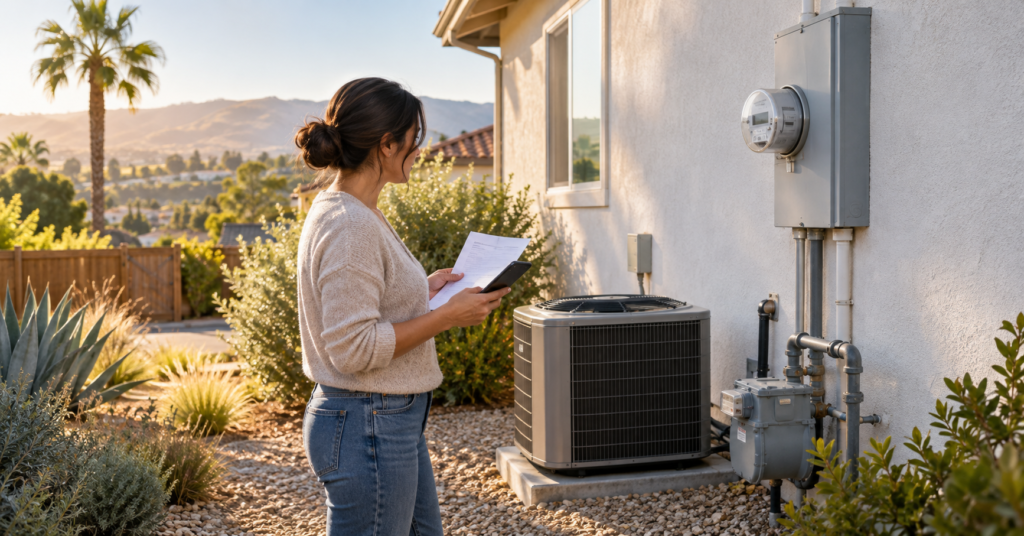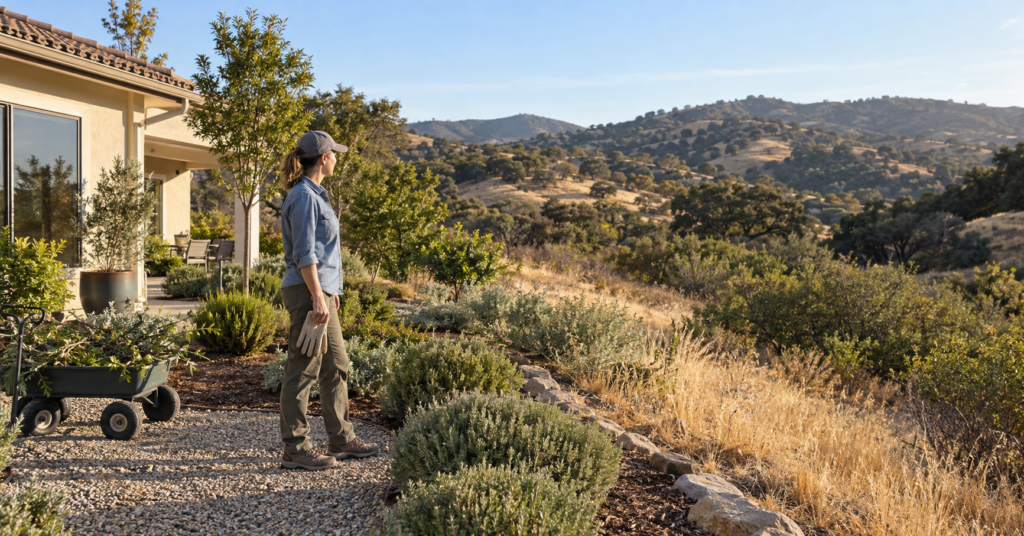
Living near a California Wildland Boundary can offer privacy, open views and quick access to nature. It can also create responsibilities that are easy to overlook during an ordinary home search.
The boundary between developed neighborhoods and undeveloped vegetation is often described as the wildland-urban interface. Homes in these areas may be exposed to wildfire, smoke, limited evacuation routes, utility interruptions and stricter property-maintenance expectations.
These concerns are not limited to remote cabins. Wildland edges can be found near suburban neighborhoods, hillside developments, canyon roads and communities only a short drive from major California cities.
Understanding how the surrounding land affects everyday life can help residents prepare before fire weather creates an emergency.
A Wildland Boundary Is Not Always Obvious
A property does not need to sit inside a dense forest to be near wildland vegetation. Grass-covered hills, chaparral, dry brush, canyons and open space can all carry fire under the right conditions.
A neighborhood may appear fully developed from the front while the rear yards border a steep vegetated slope. Another home may be separated from open land by a road, drainage area or narrow strip of landscaping.
Residents should examine more than the parcel itself. Vegetation on neighboring land, public open space and unmanaged slopes can influence the conditions around a home.
Season also changes the appearance of the area. Green spring grass can become dry fuel later in the year. A property viewed during winter may look less exposed than it does after several hot, dry months.
Fire Hazard Maps Provide Context, Not a Prediction
California fire hazard maps can help residents understand how an area has been classified. These maps consider factors associated with the likelihood and potential intensity of wildfire.
A hazard designation does not predict whether a particular house will burn. It also does not account for every building feature, landscaping decision or future weather event.
Residents should confirm the address rather than relying on a real estate description or general statement about the neighborhood. Map boundaries may run between nearby streets or across parts of the same community.
The California Office of the State Fire Marshal provides information about Fire Hazard Severity Zones. Local fire departments and planning agencies may have additional maps, rules and inspection requirements.
Evacuation Access Deserves Close Attention
A beautiful hillside road can become a major concern when many residents attempt to leave at the same time. Narrow lanes, sharp turns, parked vehicles and limited connections to larger roads may slow evacuation.
Some communities have only one practical route in and out. Others have secondary roads that are gated, unpaved or unfamiliar to new residents.
Residents should learn where local roads lead before an emergency. Navigation apps may direct drivers toward a route that is closed, unsafe or restricted during a wildfire.
Physical familiarity is more useful than seeing a road on a screen. Drive the main and alternate routes during normal conditions and notice bridges, narrow sections, school zones and places where traffic may merge.
An evacuation order can change quickly. Official directions from emergency personnel should take priority over a personal route preference.
Street Parking Can Affect Emergency Movement
Vehicles parked along both sides of a narrow street can leave little space for fire engines and evacuating traffic. This issue may become worse when households own more vehicles than their driveways can accommodate.
Residents should understand local parking rules and keep designated emergency access areas clear. Guests may need instructions about where to park safely.
A vehicle that has not been used recently should remain operational. A dead battery, low fuel level or blocked driveway can turn an ordinary maintenance issue into an evacuation problem.
Trailers, recreational vehicles and construction materials should not restrict the route between the home and the street. The driveway should provide enough space for residents to leave without moving several objects first.
Defensible Space Is a Year-Round Practice
Defensible space involves managing vegetation and combustible material around a structure. It is not a one-time cleanup completed immediately before fire season.
Leaves, pine needles, dead plants and dry grass can return after wind or routine seasonal changes. Wood piles, outdoor furniture and stored materials can also alter the area close to the home.
CAL FIRE describes different defensible-space zones, including the area closest to the structure and the wider area extending into the property. The appropriate work depends on the location, parcel, vegetation and applicable rules.
Residents can review current guidance through CAL FIRE’s Ready for Wildfire program.
Removing every plant is not necessarily the goal. Spacing, maintenance, species, slope and placement can matter more than creating a completely bare yard.
The First Few Feet Around the Home Matter
Residents often focus on distant trees while overlooking items directly beside the structure. Dry leaves beneath a deck, a combustible doormat, bark mulch or stored cardboard may be closer to the building than larger vegetation.
Wind-driven embers can collect in corners, roof edges, vents and spaces beneath outdoor structures. The area immediately surrounding the home should be reviewed regularly.
Patio furniture, cushions and decorative materials may need to be moved during periods of heightened fire weather. Trash and recycling containers should not remain pressed against exterior walls when a safer storage location is available.
The condition of a neighbor’s property can also affect the immediate area. Cooperative maintenance may provide more protection than isolated work on a single parcel.
Home Hardening Is Different From Landscaping
Defensible space deals largely with the area around the building. Home hardening focuses on the structure itself.
Potential vulnerabilities can include vents, roof edges, windows, siding, decks and gaps where embers may enter. A property with well-maintained landscaping can still have building components that are vulnerable to ember intrusion or radiant heat.
Homeowners considering upgrades should obtain advice appropriate to the building and local code requirements. Replacing one component without understanding how it connects to the rest of the structure may provide limited benefit.
Renters have less control over structural improvements. They can still ask the property owner about roof condition, vent protection, vegetation maintenance and the building’s wildfire preparation plan.
Slopes Can Change Fire Behavior and Maintenance
Hillside properties require additional attention because slope can influence how fire moves. Vegetation that appears distant when measured horizontally may still be located below a home on a steep incline.
Slope maintenance can also be physically difficult. Cutting brush or removing trees may require trained workers, specialized equipment and access through neighboring land.
Residents should avoid taking on hazardous tree or slope work without the appropriate experience. Power lines, unstable ground and falling limbs can create risks unrelated to wildfire.
Before buying a property, determine who owns and maintains the surrounding slope. It may belong to the homeowner, an association, a public agency or another private owner.
Shared Boundaries Require Cooperation
Wildfire preparation rarely stops at a property line. Trees, fences, driveways and vegetation may be shared or located close to neighboring homes.
A resident can maintain one yard carefully and still face concerns from unmanaged land next door. The solution should begin with clear communication rather than assumptions about responsibility.
Homeowners associations may have landscaping standards, approved plant lists or community fuel-reduction projects. These programs can affect what an individual owner is allowed or expected to change.
Public open space may follow a planned vegetation-management schedule rather than being maintained like a residential yard. Residents should contact the responsible agency when they have questions about work near the boundary.
Insurance Should Be Checked Before Committing to a Home
Insurance availability and cost can influence whether a wildland-edge property is affordable. Buyers should investigate coverage early rather than waiting until the closing process is almost complete.
A prior owner’s insurance arrangement does not guarantee that a new buyer will receive the same policy or price. The property’s location, roof, vegetation, access and surrounding conditions may affect underwriting.
Residents should compare deductibles, coverage limits and exclusions rather than focusing only on the annual premium. Additional living expenses, debris removal and rebuilding costs can become important after a major loss.
California residents can find consumer information through the California Department of Insurance.
Insurance questions should be addressed with a licensed insurance professional. General neighborhood estimates cannot confirm coverage for a particular address.
Utility Interruptions Can Occur Before a Fire Reaches the Area
Residents near wildland areas may experience power interruptions during periods of high fire risk. An outage can affect refrigeration, internet access, medical equipment, garage doors, well pumps and home security systems.
Households should understand which essential systems require electricity. A property that depends on an electric well pump may lose water access during an outage, even when the home itself is not threatened by fire.
Backup power equipment should be selected and operated safely. Generators can create carbon monoxide and fire hazards when placed or connected incorrectly.
Battery packs can support phones and small devices, but they may not power major appliances. Residents should match backup plans to realistic household needs rather than assuming one device can operate the entire home.
Internet and Mobile Service May Be Unreliable
A wildland-edge property may have weaker mobile coverage than a nearby urban neighborhood. Mountains, canyons and distance from infrastructure can affect service.
Residents should test mobile reception throughout the property and along normal evacuation routes. A phone that works beside one window may lose service outside the neighborhood.
Home internet can also fail during a power outage unless the modem, router and supporting network equipment remain operational. A battery backup may keep household equipment running temporarily, but it cannot restore service if the provider’s system is unavailable.
Important phone numbers, meeting locations and evacuation information should be available offline. Emergency communication should not depend on a single app or device.
Emergency Alerts Must Be Set Up in Advance
California communities may use county alert systems, wireless emergency alerts, law-enforcement notifications and local social media updates. These systems do not all work in the same way.
Residents should register for the local alert service where required and confirm that their home address is entered correctly. People with more than one residence may need notifications for multiple locations.
Alerts should be enabled on every household member’s phone rather than on only one device. Overnight settings should allow emergency notifications to be heard.
Residents should also understand the difference between an evacuation warning and an evacuation order. CAL FIRE describes an evacuation order as an immediate threat requiring people to leave, while a warning indicates a potential threat and gives people who need more time an opportunity to depart earlier.
Households With Animals Need More Time
Pets and livestock can complicate evacuation. A frightened animal may hide, resist entering a carrier or refuse to load into a trailer.
Carriers, leashes and essential supplies should be stored where they can be reached quickly. A carrier buried behind boxes in a garage is not useful during an urgent departure.
Livestock owners need a more detailed plan involving transportation, loading practice and a destination that can accept animals. Waiting until an evacuation order may leave too little time to move large animals safely.
Identification and current photographs can help reunite owners with animals that become separated. Medication and veterinary information should be included with the animal’s emergency supplies.
Smoke Can Affect Daily Life From a Distance
A home does not need to be close to active flames to experience smoke. Wind can carry particles across large areas and affect indoor air, outdoor work, exercise and school activities.
Residents should understand how to close outdoor-air intakes and operate their heating or cooling system during smoke conditions. A portable air cleaner may help create a cleaner room, but the equipment should be appropriately sized and maintained.
Opening windows for cooling may not be practical when outdoor air quality is poor. This can become especially difficult during hot weather.
The AirNow fire and smoke map provides current information about smoke and air quality. Local public health guidance should be followed when conditions become unhealthy.
After a wildfire, residents may also need to identify and record changes to the property. Our guide to California smoke damage documentation explains the types of records homeowners may want to preserve.
Everyday Outdoor Work Requires Fire Awareness
Routine activities can create sparks or heat. Mowing dry vegetation, using metal tools, operating outdoor equipment and parking over dry grass may require additional caution during hot, windy conditions.
Local restrictions can change with weather and fire danger. An activity that was reasonable during a cool morning may be unsafe later in the day.
Residents should check official restrictions before burning debris or starting any permitted outdoor fire. A permit does not eliminate the need to observe current suspension orders and safety rules.
Contractors working on the property should understand the site conditions. The homeowner should not assume that every worker has reviewed local fire restrictions.
Deliveries and Service Access May Be Limited
Remote or hillside addresses can be difficult for delivery drivers, contractors and emergency services to locate. Gates, private roads and unclear house numbers may cause delays.
Address numbers should be visible from the approach to the property. Vegetation should not cover signs or block access.
Large vehicles may have trouble turning around on a narrow driveway. Before scheduling furniture, appliance or construction deliveries, residents should explain access limitations to the company.
A private road may also have maintenance costs or restrictions that are not obvious during a home tour. Buyers should identify who is responsible for repairs, vegetation clearance and gate operation.
Water Supply Deserves Attention
Some wildland-edge homes use wells, storage tanks or small water systems rather than a large municipal network. Residents should understand how water reaches the property and whether the system depends on electricity.
A private pool should not be assumed to provide a dependable firefighting water source. Access, equipment and local fire-department procedures determine whether it can be used.
Hydrants may be farther apart in lower-density areas. Their presence does not guarantee a particular level of fire protection for one property.
Questions about firefighting water supply should be directed to the local fire authority or water provider. Homeowners should not modify tanks, hydrants or connections without proper guidance.
Seasonal Cleanup Can Affect Cost and Scheduling
Vegetation work often becomes more difficult to schedule as fire season approaches. Tree companies, landscapers and hauling services may be busy when many residents request work at once.
Planning maintenance during safer conditions can reduce last-minute pressure. However, seasonal work should consider nesting wildlife, wet soil, erosion and local restrictions.
Cut vegetation also needs to be removed or processed appropriately. Leaving dry piles on the property can replace one hazard with another.
Homeowners should budget for recurring work rather than treating vegetation clearance as an unexpected expense each year.
Buying Remotely Requires Extra Care
Photographs and virtual tours may not show how close a home is to unmanaged vegetation. Wide-angle images can also make roads and driveways appear larger than they are.
A remote buyer should obtain clear views of the surrounding slopes, road access, neighboring parcels and the area beneath decks. Map imagery can help, but it may be outdated or captured during a greener season.
Our remote California homebuying guide discusses additional checks that can help buyers evaluate a property before closing from another location.
An in-person visit is particularly useful for understanding steepness, road width, wind exposure and mobile reception.
Renters Need a Property-Specific Plan
Renters may not be responsible for major vegetation work or structural upgrades, but they still need to know how the property is managed.
Ask who maintains the yard, slope and shared access road. Confirm whether the property has experienced evacuation warnings, utility shutoffs or access problems.
The lease should identify maintenance responsibilities rather than relying on a verbal promise. Renters should report blocked exits, dead vegetation and damaged gates in writing.
Personal preparation remains important even when the landlord controls the building. Renters need their own alerts, transportation plan, go bag, insurance review and arrangements for animals.
A Go Bag Should Match the Household
An emergency bag should contain items the household can realistically carry and use. Medication, identification, charging equipment, basic clothing, water and essential records may be priorities.
The contents should reflect the people and animals in the home. A household with an infant, older adult or medical needs may require supplies that are not found on a generic checklist.
Important documents can also be stored securely in digital form. Digital copies are helpful, but access should not depend entirely on internet service.
Bags and carriers should be located near a practical exit. Supplies spread across several closets may take too long to collect.
Property Documentation Helps Before an Emergency
Current photographs and videos can establish the condition of the home and personal property before damage occurs. Walk through the interior, exterior, garage and storage areas.
Records for major purchases, repairs and upgrades should be stored somewhere that remains accessible if the home cannot be entered. This may include cloud storage or another secure location.
Contact details for insurance, utilities, contractors and local authorities should be easy to retrieve.
Documentation is not a substitute for safety preparation. Its purpose is to reduce confusion after an event, when residents may already be dealing with displacement and stress.
Living Near Open Land Requires Ongoing Attention
Wildland-edge living is not defined only by the days when a fire is active. Road access, vegetation, insurance, communications and utilities influence the home throughout the year.
The most useful preparation is consistent and specific to the property. Residents should understand who maintains surrounding land, how they will leave, what systems can fail and which tasks need to be completed before dry weather arrives.
A scenic location can remain enjoyable when its practical demands are understood. Preparation should become part of ordinary home maintenance rather than an activity postponed until smoke is visible.
Note: This article provides general information about living near a California Wildland Boundary. Fire hazard designations, defensible-space requirements, insurance conditions and emergency procedures vary by location and may change. Residents should follow current instructions from CAL FIRE, local fire authorities, law enforcement, emergency management agencies and their insurance provider.