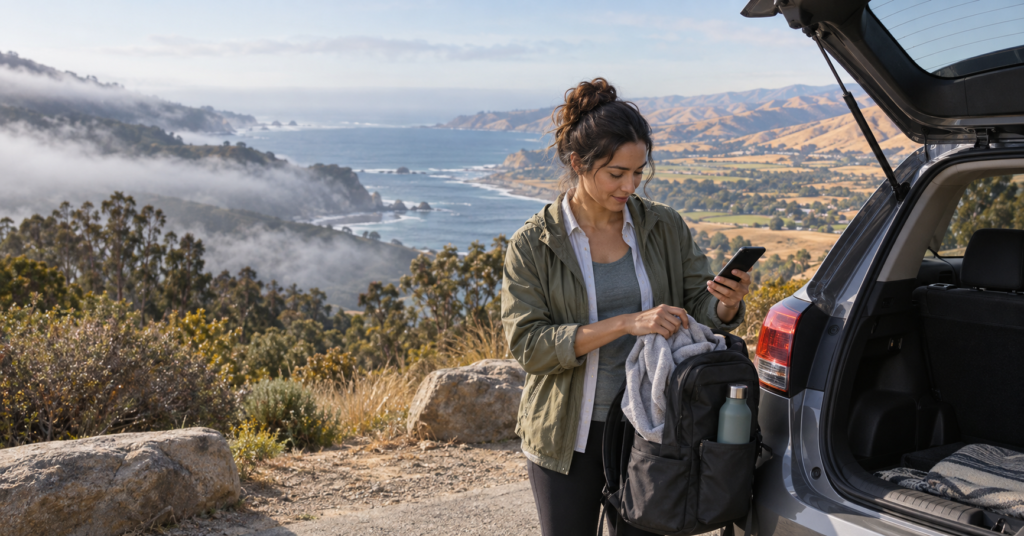
California Microclimates can make it difficult to plan an ordinary day. A morning may begin with fog and cool wind near the coast, continue with dry heat in an inland neighborhood and end with a chilly evening beside the water.
These changes do not always require a long road trip. Temperatures and wind conditions can vary noticeably between neighborhoods in the same metropolitan area.
For residents, understanding local microclimates is useful for more than choosing an outfit. It can affect commuting, outdoor activities, home comfort, utility use and what should remain inside a car or work bag.
What Creates a California Microclimate?
A microclimate is a localized set of weather conditions that differs from the surrounding region. California has many of them because the state combines a long coastline with mountains, valleys, deserts, urban areas and large changes in elevation.
The Pacific Ocean moderates temperatures near much of the coast. Farther inland, the marine influence can weaken and daytime temperatures may rise quickly.
Hills and mountain ranges can block cool air or redirect wind. Valleys may trap heat, cold air or poor air quality. Dense neighborhoods with limited shade can also remain warmer than nearby parks and less-developed areas.
The result is that a regional forecast may not accurately describe conditions at a specific address.
Distance From the Coast Changes Daily Conditions
The phrase “coastal California” covers communities with different levels of ocean influence. A home beside the water may experience fog, cool breezes and moderate afternoon temperatures. A neighborhood several miles inland may be significantly warmer at the same time.
The difference can be especially noticeable in areas where hills separate coastal communities from inland valleys. Cool marine air may remain on one side while warmer, drier conditions develop on the other.
Residents should avoid assuming that a citywide forecast applies equally to every neighborhood. Checking the weather for the actual destination is more useful than reviewing conditions only at home.
This matters when visiting beaches, attending outdoor events or commuting between coastal and inland areas.
The San Francisco Bay Area Can Change Quickly
The Bay Area is one of the clearest examples of California’s local weather differences. San Francisco neighborhoods exposed to the ocean may be cool and windy while communities across the bay or farther inland experience warm sunshine.
Conditions can also differ within San Francisco itself. A foggy western neighborhood may feel very different from an area protected by hills.
A person leaving a warm inland community may arrive near the coast and discover that shorts and a light shirt are not enough. The reverse can happen when someone dressed for a cool morning travels east into stronger afternoon heat.
Carrying one light outer layer is often more practical than dressing for the temperature at only one end of the trip.
Los Angeles Is Not Always Warm Everywhere
Los Angeles weather is often described in broad terms, but the metropolitan area includes beaches, basins, hills, canyons and inland valleys.
A morning near Santa Monica may begin with low clouds and cool air. During the same period, parts of the San Fernando Valley can already be warming rapidly.
Traffic can make this difference more important. A person may leave home during a cool morning and remain at an inland destination until the hottest part of the afternoon.
Sun exposure also changes by neighborhood. Areas with mature trees and coastal airflow may feel more comfortable than wide commercial corridors with dark pavement and little shade.
Daily planning should be based on the complete route rather than the weather at the starting point.
San Diego Has Coastal and Inland Differences
San Diego is associated with mild weather, but temperatures can rise as residents travel east from the coast. Marine clouds may keep beach communities cool while inland neighborhoods experience clear skies and stronger heat.
The change is relevant for hiking, school activities, work appointments and visits to inland attractions. Someone leaving a cloudy coastal apartment may underestimate the amount of sun and water needed at the destination.
Returning to the coast in the evening can create the opposite problem. Clothing that felt comfortable inland may feel too light after the wind increases and the temperature falls near the water.
Residents dealing with coastal moisture may also want to read our guide to San Diego apartment humidity and mold risks.
Elevation Creates Another Type of Change
Temperature changes are not limited to the difference between the coast and inland areas. Elevation can create colder conditions, stronger wind and different precipitation within a relatively short trip.
A drive toward the mountains may begin in dry, mild weather and end in rain, cold wind or snow. Conditions can also change after sunset more quickly than visitors expect.
Mountain weather should not be estimated from a forecast for the nearest lower-elevation city. Roads, trailheads and communities at different elevations may have separate forecasts and warnings.
People planning mountain travel should check road conditions and destination-specific weather before leaving. A jacket stored in the vehicle may not be enough for a long outdoor delay in genuinely cold conditions.
Valleys Can Hold Heat and Cold
California valleys often have their own temperature patterns. During summer, some valley locations retain heat into the evening. In winter, cold air may settle overnight and create chilly mornings even after a mild afternoon.
This wider daily temperature range affects clothing and home energy use. Residents may need heat early in the day and no heating at all by lunchtime.
A shaded home can also remain cooler than the outdoor afternoon temperature suggests. Conversely, an upper-floor apartment may retain heat after the surrounding air begins to cool.
Understanding the building’s response to local conditions is part of learning the microclimate.
Wind Can Matter as Much as Temperature
The forecast temperature does not always explain how conditions will feel. Strong wind can make a cool coastal afternoon uncomfortable, while dry inland wind may increase dehydration and wildfire concerns.
Certain streets, building entrances and transit platforms can funnel wind. A neighborhood that appears calm may contain exposed areas where the wind is much stronger.
Loose clothing, hats and light umbrellas may be difficult to manage in these locations. Cyclists and pedestrians may also need extra time when traveling against strong wind.
A thin wind-resistant layer can provide more value than a heavy sweater in a mild but exposed coastal area.
Dressing in Adjustable Layers
Layering is useful in California because it allows clothing to adapt without requiring a complete change of outfit. The goal is not to carry several heavy garments. It is to combine a comfortable base with one or two pieces that are easy to remove and store.
A light jacket, cardigan or overshirt may be enough for a day that moves between cool mornings and warm afternoons. A wind-resistant outer layer can be useful near the ocean, on ferries and in exposed downtown areas.
Fabric choice matters as well. Breathable materials are more comfortable during inland heat, while tightly woven outer layers provide better protection from cool wind.
Our article about the California wardrobe audit explains how residents can choose clothing for fit, fabrics and regional conditions without filling their closets with unnecessary items.
Planning for Work and Commuting
A commute can cross several microclimates before the workday begins. This is common when residents travel from coastal communities to inland employment centers or between opposite sides of a large bay.
The temperature at departure may not represent conditions near the office. Transit riders may also wait outdoors at shaded stations or exposed platforms before entering a climate-controlled building.
Keeping a light layer in a work bag can help with both outdoor changes and strong office air conditioning. A reusable water bottle may be useful when the return trip occurs during the warmer part of the day.
Drivers should not rely entirely on the car’s climate control. A breakdown, parking delay or unexpected walk can expose them to the actual outdoor conditions.
Outdoor Activities Need Destination Forecasts
A regional forecast is too broad for many outdoor plans. Beach visitors, hikers, cyclists and families attending sports events should check conditions for the exact destination and expected time.
A beach can be sunny in the morning and covered by low clouds later, or the opposite. Inland trails may become hot before coastal neighborhoods warm up.
Sun exposure remains possible during cool or cloudy weather. Clouds can make the air feel mild without removing the need for sun protection.
Wind, air quality and overnight temperature may be more important than the daytime high for camping and evening events.
The National Weather Service allows users to search forecasts by location. Local forecast offices also publish advisories when conditions create a safety concern.
Beach Days Require More Than a Temperature Check
A warm inland forecast does not guarantee a warm beach day. Coastal clouds, wind and cold water can make the shoreline feel much cooler.
Visitors should check the coastal forecast rather than the temperature at home. A light layer and dry clothing can make the return trip more comfortable, especially for children or anyone who has been in the water.
Parking location can also change how much equipment must be carried. If the car is far from the beach, returning for a forgotten jacket may be inconvenient.
Our California beach parking and access guide covers parking restrictions, public access and other considerations that can affect a coastal visit.
Indoor Temperatures Follow Their Own Pattern
The outdoor forecast does not always predict indoor comfort. Window direction, insulation, floor level and surrounding shade can create a microclimate inside a building.
A west-facing room may become hot during the afternoon even when the outdoor temperature is moderate. A ground-floor coastal apartment may remain cool and damp throughout the day.
Residents should notice which rooms receive direct sun and when the temperature begins to change. Curtains, ventilation and fan placement can then be adjusted before the room becomes uncomfortable.
People in coastal homes without cooling equipment can review our guide to Living Without Air Conditioning for ventilation, heat-wave and indoor air-quality considerations.
Microclimates Affect Utility Use
Local conditions influence how often a household needs heating, cooling or dehumidification. Two homes in the same county may have very different energy patterns.
A coastal household may use little air conditioning but require occasional morning heat or moisture control. An inland home may have high summer cooling demand and relatively dry indoor air.
The home’s orientation can add another difference. Direct afternoon sun may increase cooling needs, while constant shade can make a property colder during winter.
Residents trying to understand these cost changes can read our guide to California Utility Billing.
Cars Need Their Own Preparedness Kit
A car often becomes the storage point for items needed across changing conditions. A small kit can include a light jacket, reusable water bottle, hat and basic sun protection.
Items that can be damaged by heat should not remain in a parked vehicle. Electronics, medication, pressurized containers and certain personal-care products may be affected when interior temperatures rise.
A jacket left in the trunk should also be checked occasionally. It may become damp or dusty, especially in a coastal environment.
The purpose of the kit is to provide a reasonable backup for ordinary changes—not to replace the equipment required for mountain travel, severe weather or emergencies.
Planning Events and Social Activities
Outdoor gatherings can become uncomfortable when organizers use the daytime high as the only planning detail. Shade, wind and the temperature after sunset may matter more.
Guests traveling from another part of California may arrive dressed for conditions at home. Hosts can help by mentioning that the venue is exposed, coastal, shaded or noticeably warmer than nearby areas.
Evening events near the water often require a layer that was unnecessary earlier in the day. Inland events may remain warm well after sunset, particularly in paved urban locations.
A brief description of the setting can be more useful than simply telling guests that the weather will be nice.
Weather Apps May Show Different Results
Weather apps use different observation points and forecasting methods. Two apps may display different temperatures for the same neighborhood, particularly in areas with complex terrain.
Residents should check where the reported conditions are being measured. An airport, hilltop station or coastal observation point may not represent a nearby residential area.
Over time, personal observation becomes valuable. Learning when fog normally clears, which direction the afternoon wind arrives from and how quickly a home heats up can improve daily decisions.
Official warnings should still be taken seriously. Local experience does not replace current alerts during heat, fire weather, flooding or winter storms.
Learning a New Neighborhood’s Pattern
New residents may need a full year to understand how a neighborhood changes by season. Summer fog, autumn heat, winter rain and spring wind do not affect every California community in the same way.
Keeping simple notes can help during the first several months. Record which rooms become warm, when an evening layer is needed and how conditions differ along the normal commute.
Neighbors can also provide practical information. Someone who has lived in the building for several years may know when direct sunlight reaches a unit or how often strong wind affects the block.
The goal is not to predict every change. It is to recognize the recurring conditions that influence ordinary routines.
A Flexible Daily Planning Routine
A useful morning check should cover the starting point, destination and time of return. The temperature range, wind and air quality may be more informative than the current temperature alone.
Clothing should be adjustable enough for the expected changes. A small amount of preparation can prevent a cool coastal evening or hot inland afternoon from disrupting the day.
California’s variety is part of its appeal, but it rewards local planning. A short trip can cross conditions that would be associated with different seasons elsewhere.
Note: This article provides general information about California Microclimates and everyday planning. Weather can change quickly, particularly near mountains, deserts and the coast. Check current destination-specific forecasts, road conditions and official alerts before travel or outdoor activities.