Apartment Package Theft can turn an ordinary delivery into a frustrating dispute involving the resident, retailer, carrier and property manager. The problem is particularly difficult in California apartment buildings where drivers may leave parcels in open lobbies, outside security gates or beside rows of unit doors.
A delivery notification does not always mean that a parcel reached the intended resident. It could have been stolen, delivered to another unit or left in an unexpected part of the property.
Residents can reduce the risk by understanding how deliveries enter the building, choosing secure alternatives and documenting missing packages carefully.
Why Apartment Deliveries Are Vulnerable
A detached home generally has one address and a private entrance. An apartment building may have hundreds of residents, several doors and a delivery area shared by visitors, contractors and drivers.
The front entrance can become particularly vulnerable when residents allow unknown people to follow them through a controlled-access door. Even a locked building provides limited protection if packages are left outside the gate because the delivery driver cannot enter.
Older apartment properties may not have space for a parcel room or modern lockers. Packages may be placed near mailboxes, inside a leasing office or along an interior hallway. Each location creates a different level of security.
High delivery volume also contributes to the problem. When dozens of boxes arrive on the same day, residents may not immediately notice that one is missing.
Confirm That the Package Was Actually Stolen
A missing package should not immediately be treated as theft. Delivery scans can appear before the parcel reaches the correct location, and drivers sometimes place boxes where they are protected from weather or less visible from the street.
Start by reviewing the delivery time, photograph and location description. Compare visible doors, flooring, plants and unit numbers in the photograph with the property.
Check the lobby, mail area, side entrance, leasing office and package room. If the property has several buildings with similar unit numbers, the parcel may have gone to the wrong entrance.
Residents can also ask nearby neighbors without accusing anyone. A neighbor may have accepted the delivery to protect it or received it by mistake.
Waiting until the end of the delivery day may be reasonable when the tracking status has recently changed. However, a high-value or time-sensitive package should be investigated promptly.
Understand the Building’s Delivery Process
Every apartment property handles deliveries differently. Some leasing offices accept packages, while others refuse them because of limited storage, liability concerns or restricted hours.
A building may have a secure parcel room, electronic lockers or open shelves. These options are not equally protective.
Before relying on the system, residents should determine how drivers enter the property, whether each carrier has access and how recipients are notified. It is also important to know how long packages can remain in storage before they are moved or removed.
Residents should ask what happens when a package is too large for a locker. Oversized parcels are often left in a less secure overflow area even when smaller deliveries receive better protection.
A written building policy is more useful than an informal explanation because office staff and delivery procedures can change.
Package Lockers and Secure Rooms
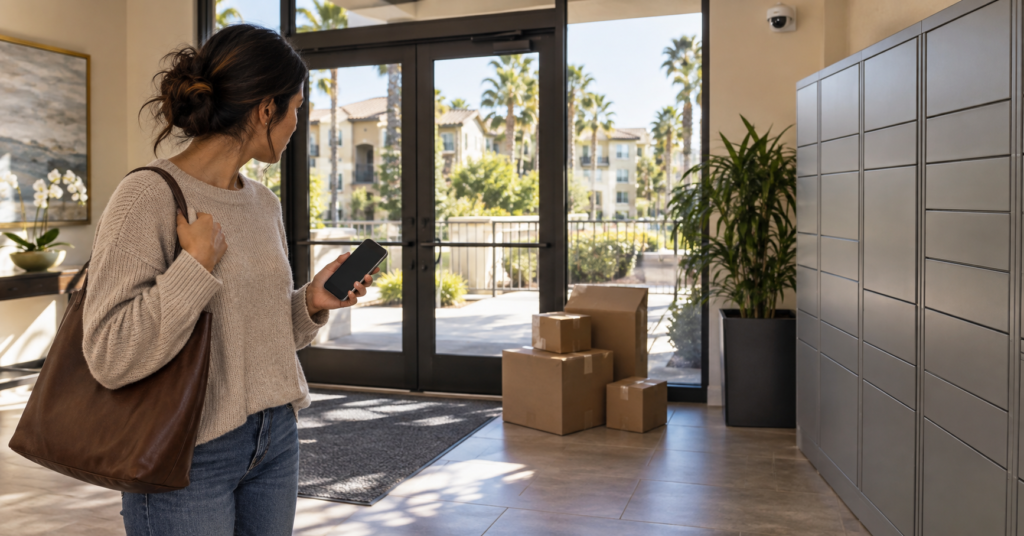
Electronic lockers can reduce the time a package remains accessible to other residents. A driver places the parcel in a compartment, and the recipient receives a code or app notification.
The system works only when the driver uses it correctly. Full lockers, damaged compartments or incompatible delivery procedures can cause packages to be left nearby.
A secured package room can hold larger deliveries, but security depends on who can enter. A room available to every resident may prevent access from the street without stopping another tenant from taking the wrong box.
Residents should avoid leaving packages in a locker or parcel room for several days. Quick collection reduces crowding and makes it easier to identify when something has gone wrong.
If a locker opens but the expected parcel is not inside, photograph the empty compartment and report the issue immediately. The locker operator or property manager may be able to review access records.
Using Carrier Pickup Locations
A staffed pickup counter or authorized collection location may be safer than sending an expensive item to an apartment building. This option can be especially useful for electronics, medication, gifts and purchases that cannot be easily replaced.
The recipient normally needs identification or a pickup code. The name on the shipment should match the person collecting it.
Pickup locations have their own limitations. Packages may be held for only a certain period, and size restrictions can apply. The location may also be inconvenient for someone without a car or with limited mobility.
Residents should confirm that the retailer and carrier support the selected pickup method before placing the order. Changing the destination after shipment may not always be possible.
Delivery to a Workplace
Some residents send packages to their workplace when home delivery is unreliable. This can provide access to a staffed reception desk and reduce the amount of time a parcel sits unattended.
Workplace delivery should only be used when the employer permits personal shipments. Office policies may restrict large boxes, refrigerated items or frequent deliveries.
The complete business address should include the employee’s name, company name, floor and department where necessary. An incomplete label can cause the parcel to be rejected or delayed.
Hybrid and remote workers should consider whether they will actually be present when the package arrives. A secure workplace is not helpful if the employee cannot collect the parcel before the office closes.
Scheduling Delivery Around Availability
Some retailers and carriers allow customers to select a delivery day, request a hold or receive an estimated arrival window. These options can reduce exposure, although delivery times are not always guaranteed.
Notifications are most useful when the recipient can act on them. A resident who receives an alert while away from home may ask a trusted neighbor to collect the package.
Signature service can add protection for valuable items. However, residents should understand what type of signature is required. Some shipments may be signed for by another person at the address or building rather than the named recipient.
A delivery instruction requesting that the driver hide a package does not guarantee compliance. Drivers may have limited time, restricted building access or safety rules that prevent them from entering a particular area.
Apartment Door Delivery Versus Lobby Delivery
Delivery to the apartment door may appear safer than leaving a parcel in the lobby, but the result depends on the building.
A box placed outside a unit is less visible to people entering from the street. It may still be accessible to neighbors, visitors and service workers using the hallway.
In a building with controlled elevator access, unit-door delivery may be difficult. Drivers may leave all packages at the entrance rather than waiting for a resident to provide access.
Lobby delivery can work when the area is monitored, away from exterior windows and accessible only to residents. An open lobby next to an unlocked street door provides very little protection.
Residents should evaluate the actual path a package follows instead of assuming that one location is always safer.
Delivery Instructions Need to Be Specific
Vague instructions such as “leave somewhere safe” may not help a driver unfamiliar with the property. Better instructions identify the correct entrance and the approved package location without sharing a door code unnecessarily.
A resident might mention the building number, gate location or package-room entrance. Instructions should be short enough for a driver to read quickly.
Permanent access codes should not be placed in a public address field. Residents should use the carrier’s designated access feature when one is available and permitted by the building.
Delivery instructions should also be updated after moving. An old note from a previous address can direct the driver to a location that does not exist at the new property.
People preparing to change apartments may find our guide to California apartment earthquake safety helpful when reviewing other building features before signing a lease.
Cameras and Doorbell Devices
A doorbell camera or hallway-facing device may record when a package arrived and what happened afterward. Recording can provide useful evidence, but it does not physically secure the parcel.
Renters should review their lease and building rules before mounting equipment in a shared hallway or modifying a door. Some properties restrict drilling, wiring or devices that record common areas.
Camera placement should respect neighboring doors and private spaces. A device aimed broadly across a shared corridor may create privacy concerns that do not arise with a camera focused closely on the resident’s own doorway.
Recordings should be saved promptly after an incident because cloud and local storage systems may overwrite older footage.
What Property Managers Can Control
A property manager may be able to improve lighting, repair a broken entry door or clarify where carriers should leave packages. Management may also communicate with residents after a pattern of theft.
However, residents should not assume that the leasing office monitors every delivery or accepts responsibility for each missing parcel. Package-handling terms may be addressed in the lease, community rules or a separate agreement.
When reporting a security concern, provide specific information. A message explaining that an exterior door failed to latch on several dates is more useful than a general statement that the building feels unsafe.
Requests and responses should be kept in writing. This creates a record if the same access problem continues.
Other building conditions can also affect daily life in a rental. Residents near the coast may want to review our article about San Diego apartment humidity and mold risks before choosing a unit.
Documenting a Missing Package
Good documentation helps distinguish theft from a delivery mistake and supports a claim with the seller or carrier.
Save the order confirmation, tracking number, delivery notice and photograph supplied by the carrier. Take pictures of the area where the parcel was supposedly left.
Write down when the location was checked and who was contacted. If a neighbor, concierge or leasing employee provides relevant information, record the details while they are still fresh.
A resident should avoid editing or cropping original evidence in a way that removes the date, time or surrounding context. Copies can be made for submission while the originals remain stored safely.
Contacting the Seller and Carrier
The first contact may depend on how the purchase was made. Some retailers manage delivery claims directly, while others ask the customer to work with the carrier.
Explain whether the package was never found, appears to have been misdelivered or was seen and later taken. These are different situations and may follow different claim processes.
A delivery scan alone may not establish where the parcel was placed. The carrier may have GPS data or additional delivery notes that are not visible in the customer’s account.
Residents should use official websites and verified customer-service numbers. Missing-package situations can attract scammers who send false refund links or request account credentials.
Keep confirmation numbers and copies of all communications. If a refund or replacement is promised, record the expected processing or shipment date.
Reporting Suspected Theft
When the available evidence indicates that someone took the package, the resident may choose to make a report with local law enforcement. The report should include the item description, value, tracking information, delivery evidence and any video footage.
The decision to investigate and the appropriate reporting method depend on the local agency and circumstances. Some departments offer online reporting for non-emergency property crimes.
If the stolen item was sent through the U.S. Mail, suspected mail theft can also be reported to the U.S. Postal Inspection Service.
Emergency services should not be used simply because a package is missing. Call emergency services only when there is an immediate threat, confrontation or dangerous situation.
Residents should not attempt to recover a package by entering another unit or confronting a suspected thief. Evidence can be shared with the appropriate authorities instead.
Repeated Theft Requires a Different Plan
One missing package may result from a delivery error. Multiple incidents at the same property suggest that the usual delivery location is not reliable.
Residents should look for patterns in the timing, carrier or location. Packages may disappear only when left outside the gate, during evening deliveries or after the parcel room becomes full.
The next step should address the specific weakness. That may mean using a staffed pickup point, redirecting expensive orders or arranging immediate collection with a neighbor.
Repeatedly adding the same delivery note is unlikely to solve a physical access problem. The delivery destination may need to change.
Insurance and High-Value Purchases
Renters insurance may provide some protection for personal property theft, but coverage, deductibles and exclusions vary. A small package may be worth less than the deductible, making a claim impractical.
High-value items may be subject to special limits or documentation requirements. Residents should review their policy before ordering expensive jewelry, electronics or collectibles for unattended delivery.
A credit card may also provide purchase protection in certain situations. The cardholder should review the specific benefit terms rather than assuming every stolen delivery is covered.
For an expensive purchase, prevention is often more useful than relying on reimbursement. A signature requirement or secure pickup location may cost less than the inconvenience of replacing the item.
Checking Package Security Before Renting
Package handling should be part of an apartment tour, especially for residents who shop online frequently or work irregular hours.
Look at where boxes are currently being left. An overflowing mail area can reveal more than a description of the building’s security features.
Ask whether the property has lockers, a secured room or staff who accept deliveries. Confirm what happens to oversized packages and whether residents have experienced recurring access problems.
The most advanced system is not automatically the best. A simple locked room with controlled access and clear procedures may work better than electronic lockers that are frequently full.
Package security is only one part of evaluating an apartment. Parking, indoor temperature, noise, building maintenance and utility responsibilities may have a greater long-term effect on daily life.
Creating a Practical Delivery Routine
A reliable routine combines the building’s available features with the resident’s schedule. Ordinary low-value items might be sent to a secure apartment locker, while expensive purchases go to a staffed pickup location.
Delivery notifications should be enabled, and packages should be collected soon after arrival. Trusted neighbors can help when residents are traveling, but the arrangement should be agreed upon in advance.
The goal is not to use every available security option. It is to prevent packages from remaining unattended in predictable, accessible locations.
Note: This article provides general information about Apartment Package Theft, delivery choices and storage practices in California apartments. Building policies, carrier procedures, insurance coverage and local reporting systems vary. Residents should verify current requirements with their property manager, carrier, retailer, insurer and local authorities.