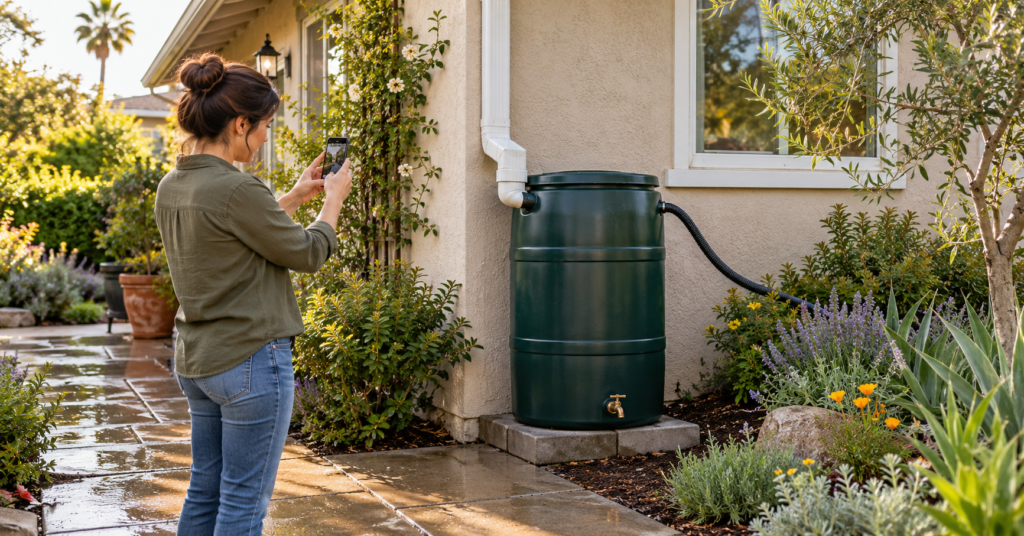
A rain barrel can help collect roof runoff for garden watering, but buying one does not automatically qualify you for financial assistance. California rain barrel rebates depend on local program rules, which can affect everything from the purchase date to the way the barrel connects to your downspout.
The easiest mistake is choosing a product first and checking the application afterward. A barrel that qualifies in one water district may be ineligible elsewhere, while a missed enrollment deadline can exclude an otherwise suitable installation.
Before ordering, identify the program serving your property and work through its requirements in the order they apply.
Start With Your Water Provider and Installation Address
California rain barrel rebates are offered through local utilities, cities, and regional programs. There is no single application that covers every California household.
Use your water bill to identify the provider and service address. A nearby city’s advertised offer is not enough to establish eligibility, particularly where mailing addresses and utility boundaries differ.
San Francisco’s program, for example, requires an active SFPUC water account or approval from the account holder, along with the installation site’s account number. This makes account access an early consideration for tenants and residents of buildings with shared water service.
Ask the program administrator which application applies to your address and property type. Keep the response if your situation involves a condominium, multiple meters, or a landlord-managed account.
Check Whether Approval Must Come Before Installation
Application timing is one of the most consequential differences between programs.
Sacramento excludes work performed before enrollment in its rain barrel rebate program. Its terms also require completion within 120 days of approval to proceed, with an extension process for projects that need longer.
Alameda County Water District uses a different sequence: review the terms, purchase qualifying equipment, and submit the application within 90 days of purchase.
Before paying, record three separate dates:
- The earliest eligible purchase or installation date.
- The deadline for completing the project.
- The deadline for submitting the claim and supporting documents.
Do not assume an application acknowledgment means approval to start. If the instructions are unclear, ask whether purchasing, assembling, or connecting the barrel would affect eligibility.
Match the Barrel to the Program’s Product Requirements
Capacity, construction, and intended use can determine whether a rain barrel qualifies.
Pasadena Water and Power’s published guidance requires a minimum capacity of 50 gallons and a product designed for rain capture. Homemade rain barrels do not qualify under that program.
However, homemade equipment is not treated identically everywhere. Alameda County Water District allows certain accessory and hardware costs for self-made systems, subject to its conditions. That does not mean every reused container or construction expense is eligible.
Save the product description before ordering. It should clearly identify the model, capacity, and included components. If the listing uses vague wording such as “water storage container,” request confirmation that the exact product meets the rebate requirements.
Check how the program distinguishes a rain barrel from a larger cistern, too. Moving into another capacity category may change the application and installation conditions.
Review Multiple-Barrel Limits Before Your First Claim
Buying one barrel now and another later can create an unexpected eligibility problem.
SoCal Water$mart requires customers to include all eligible rain barrels in a single application. Its published rules state that submitting a rain barrel or cistern application prevents rebates for subsequent purchases of either type. Applicants also cannot claim both rain barrels and cisterns under that program.
Decide how many units you realistically need before submitting. Consider available space, suitable downspouts, and how you will use the stored water.
For a property with an existing barrel, ask whether a previous rebate affects a new application. Establish whether limits attach to the customer, water account, installation address, or equipment.
Do not assume that a change of ownership resets the property’s rebate history.
Settle Landlord and Shared-Space Permissions
Tenants should resolve permission before modifying a downspout or placing a barrel in a shared outdoor area.
Discuss the proposed location, installation method, overflow route, and responsibility for maintenance. Ask what should happen to the equipment when the tenancy ends.
For condominiums and other shared properties, establish who controls the gutter, exterior wall, and ground beneath the proposed installation. These may involve different approval processes.
Keep property permission and rebate eligibility separate. Approval to use a courtyard does not establish that you can apply through the building’s water account. Likewise, being eligible for a rebate does not settle permission to alter shared drainage.
Provide the program administrator with the actual ownership and account arrangement rather than selecting an application category that only approximately fits.
Plan the Downspout Connection and Overflow Route
An eligible product still needs a compliant installation.
SoCal Water$mart specifies gutter and downspout requirements, covers to exclude pests and debris, and an overflow outlet with mosquito prevention. Its rain barrel rules also restrict connections to irrigation and graywater systems. These conditions should be checked against the proposed setup before purchasing fittings.
In San Francisco, guidance for disconnected-downspout installations requires overflow to be directed away from adjacent buildings and properties toward an appropriate drain or landscape area.
Sketch where water will enter, where you will draw it off, and where excess water will go when the barrel fills. Check the manufacturer’s support requirements and preserve clear walking routes.
If the installation involves structural changes, a large tank, or unusual plumbing connections, ask the local building department whether additional review is needed.
Calculate the Cost After Eligible Reimbursement
An advertised maximum is not necessarily the amount you will receive.
Alameda County Water District, for example, limits payment to the applicable rebate cap or the barrel’s cost, whichever is lower. Its provisions for self-made systems exclude labor and equipment rental.
Prepare a simple budget covering the container, delivery, fittings, support materials, and any installation work. Then identify which expenses the program actually accepts.
Ask whether tax, shipping, discounted purchases, or other incentives affect the calculation. Avoid treating a rebate estimate as money already available to pay the seller.
Choose a setup that makes sense for your garden and budget even if reimbursement takes longer than expected.
Gather Receipts, Photos, and Training Records
Create a project folder before installation so the evidence is available when you apply.
Useful records include the product listing, itemized purchase receipt, approval correspondence, and any required photographs. Check whether pictures must show the location before work begins as well as the completed setup.
SFPUC directs applicants to complete required training and submit documentation, including receipts identifying the amount paid for each barrel or cistern.
Photographs should make the installation understandable. Capture the water connection, lid, support, and overflow arrangement rather than only a close-up of the container.
After submitting, save the confirmation number and monitor the email address used on the application. A request for missing information may have its own response deadline.
Check Maintenance and Removal Obligations
Rebate responsibilities may continue after payment.
Sacramento requires the installation to remain in place for at least five years. Its terms call for repayment if the participant replaces or removes the barrels before that period ends. This is worth discussing before accepting the rebate if you expect to move or redesign the outdoor space.
Keep the maintenance instructions with your approval documents. Plan who will inspect the screens, clear debris, check connections, and manage the system between rainy periods.
Finally, connect the project to a realistic gardening routine. If you are starting a small planting area, TCG’s guide to California seed libraries can help you choose a manageable first garden. Let your available growing space and watering needs guide the purchase, rather than buying the largest setup a rebate might support.
Note: Funding, eligibility, and deadlines can change. Confirm the current requirements with the program serving your installation address. For one local example of the paperwork and installation conditions involved, see the SFPUC rain barrel and cistern rebate guidance.