California Apartment Outages can create problems beyond losing lights and internet access. Refrigerators stop cooling, elevators may become unavailable, electronic entrances can behave differently, and motorized garage gates may not open normally. Buildings that depend on electric pumps can also experience interruptions involving water pressure or other shared systems.
Some outages are caused by equipment failures, storms, heat or accidents. Utilities may also use a Public Safety Power Shutoff when weather creates a significant wildfire risk. Renters cannot prevent these events, but they can prepare for the parts that affect apartment life most directly.
Planned Shutoffs and Unexpected Outages
An unexpected outage can begin without warning and may affect one building, a neighborhood or a larger service area. A planned interruption normally gives residents time to charge devices, adjust travel and prepare refrigerated food.
California utilities may temporarily turn off electricity in high-risk areas to reduce the possibility of electrical equipment starting a wildfire. The California Public Utilities Commission refers to these events as Public Safety Power Shutoffs, or PSPS events.
A utility warning does not always provide an exact restoration time. Weather, inspections and repairs can change the schedule. Residents should prepare for the possibility that an interruption will last longer than the initial estimate.
Confirming Where the Problem Started
When the electricity goes off, a renter should first determine whether the problem affects only the apartment. Lights in the hallway, neighboring buildings and nearby streets may provide clues.
If only one unit is affected, the problem may involve a tripped breaker, a failed outlet or an electrical issue inside the apartment. Residents should not open electrical panels or attempt repairs beyond any safe steps permitted by building management.
When common areas are also dark, the resident can check the utility’s outage map or reporting service. Management should be contacted if the utility does not show a wider outage or if the building has a separate electrical problem.
Sparks, smoke, a burning smell or damaged wiring require immediate attention. Residents should leave the affected area and contact emergency services when there is an immediate danger.
Keeping Refrigerated Food Safe
The refrigerator door should remain closed as much as possible during an outage. Repeatedly opening it to check the temperature allows cold air to escape and shortens the useful cooling period.
According to FoodSafety.gov, an unopened refrigerator generally keeps food safe for up to four hours without electricity. Refrigerated perishable foods such as meat, fish, poultry, eggs and leftovers should normally be discarded after four hours without power.
Food should never be tasted to decide whether it is safe. Harmful bacteria may be present even when an item looks and smells normal.
A refrigerator thermometer makes the decision easier because it provides evidence of the temperature inside the appliance. The appliance should generally remain at 40°F or below for safe cold storage.
What Happens to Frozen Food
A full freezer can generally maintain a safe temperature for approximately 48 hours when its door remains closed. A half-full freezer may maintain its temperature for about 24 hours.
Frozen food may be safe to refreeze when it still contains ice crystals or remains at 40°F or below. Texture and quality may change even when the food remains safe.
Residents expecting a planned shutoff can group frozen items together so they retain cold longer. Filling unused space with frozen water containers can also help, but containers need room for the water to expand as it freezes.
Dry ice requires careful handling and ventilation. Renters should not use it in a small apartment without understanding the supplier’s safety instructions.
Documenting Spoiled Groceries
A long outage can cause a significant food loss. Residents may want to photograph affected items before disposing of them and save grocery receipts when available.
Documentation does not guarantee reimbursement. Utilities, property insurers and renters insurance policies use different rules for food-spoilage claims. Deductibles may also make a small claim impractical.
Residents should review the appropriate claim process before assuming the property manager is responsible. If the outage resulted from a building maintenance failure rather than a utility interruption, written communication with management can help establish what occurred.
Elevators During an Outage
Elevators normally stop operating when the building loses electricity unless an emergency power system supports limited service. Backup systems differ between properties, and residents should not assume every elevator will continue working.
Anyone inside an elevator when it stops should use the emergency call button or communication system. Trying to force the doors open or leave without instructions can create a serious fall or crushing hazard.
Residents who cannot use stairs should ask management about the building’s outage procedures before an emergency happens. Useful information includes whether the elevators receive backup power, how long that power may last and who should be contacted for assistance.
An outage plan should not depend on firefighters routinely carrying residents down the stairs. People with mobility limitations may need an individual emergency plan developed with management, household members, caregivers or local emergency resources.
Electronic Entrances and Apartment Keys
Apartment buildings increasingly use electronic fobs, keypads, smartphone applications and powered locks. Some systems include battery backup or unlock automatically during a power failure, while others continue working only for a limited period.
Residents should know whether a physical key is available for their apartment and building entrance. A key stored inside the unit is not useful if the resident is locked outside when the system fails.
Building managers should explain how residents can enter after hours during an outage. They should also clarify whether side entrances, lobby doors or vehicle gates operate differently when power is unavailable.
Residents should not prop secure doors open for convenience. Doing so can create a security problem for the entire property.
Garage Gates and Trapped Vehicles
A motorized garage gate can prevent residents from entering or removing a vehicle. Some systems include a manual release or backup battery, but access to that mechanism may be restricted to staff.
Renters should ask management how the garage operates without electricity. The answer is particularly important for residents who park behind multiple controlled gates or depend on their vehicle for work, medical appointments or evacuation.
A resident should not pull an unfamiliar release cable or attempt to lift a heavy gate without authorization. A gate can move unexpectedly, fall or become damaged.
When a planned shutoff is expected, parking outside the controlled garage may be practical if legal street parking is available. Residents should check posted restrictions, permit requirements and overnight rules before relocating the vehicle.
Water Pressure and Hot Water
Apartment water systems do not all respond to outages in the same way. Low-rise buildings may continue receiving cold water through municipal pressure, while taller properties may depend on electric booster pumps.
Hot water can also be affected. An electric water heater will stop heating, and a gas-powered central system may still require electricity for controls, pumps or ignition.
Residents can store a reasonable amount of drinking water when a planned outage is approaching. Bathtubs and sinks should not be treated as reliable drinking-water storage unless an appropriate clean container is used.
Loss of water, sewage backups or unusual pressure should be reported to management. Residents should not assume these conditions are a normal part of every electrical outage.
Heat Inside the Apartment
A summer outage can make an apartment uncomfortable quickly, especially on an upper floor or in a west-facing unit. Air conditioning, portable cooling equipment and many fans will not work without electricity.
Residents should close blinds on sun-facing windows and move to the coolest safe part of the unit. Once outdoor temperatures fall below indoor temperatures, opening windows may help if outdoor air quality is acceptable.
Young children, older adults and people with certain health conditions can be more vulnerable to heat. A cooling center, library, community center or another air-conditioned location may be safer during an extended outage.
The TCG guide to living without air conditioning in coastal California provides additional strategies for managing indoor temperatures, although inland heat can require faster action.
Medical Equipment and Refrigerated Medicine
Residents who rely on powered medical equipment need a plan that does not depend entirely on the building’s electricity. The plan may involve approved batteries, a backup location, utility notifications or assistance from a healthcare provider.
Extension cords running through shared hallways are not a safe substitute for a proper backup arrangement. They can create trip hazards and may violate building safety rules.
Some medicine requires controlled refrigeration. Residents should ask their pharmacist or healthcare provider how long the specific product can remain outside its recommended temperature range. Medication should not be discarded or used based on general food-storage advice.
Utility programs may offer notifications or support for qualifying customers with medical needs, but enrollment does not guarantee uninterrupted service.
Charging Phones and Staying Informed
A charged phone can provide utility alerts, emergency information and communication with management. Portable battery packs should be charged regularly rather than left empty until an outage begins.
Residents can reduce battery use by lowering screen brightness, closing unnecessary applications and using low-power mode. Downloaded contact information is useful when internet service becomes unreliable.
Cellular service can become congested or weakened during a widespread interruption. A battery-powered radio provides another way to receive emergency information when phone access is limited.
Residents should save the utility’s outage number and the building’s emergency contact before a problem occurs. Depending entirely on an online resident portal may fail when the phone battery or internet connection is unavailable.
Internet and Remote Work
Home internet service may stop even when a laptop still has battery power. The router and modem require electricity, and the provider’s neighborhood equipment may also be affected.
A phone hotspot can provide temporary access, but it consumes battery power and depends on cellular service. Remote workers should identify an alternative workspace before an announced shutoff rather than searching after the outage begins.
An employer may ask for evidence of the interruption. A screenshot of the utility outage map, notification message or building announcement can document the disruption.
Residents should avoid joining confidential work systems through unfamiliar public Wi-Fi unless they follow their employer’s security requirements.
Using Candles, Generators and Cooking Equipment
Battery-powered lighting is generally safer than an open flame. Candles can be knocked over, forgotten or placed too close to curtains and other combustible materials.
Portable generators must never be operated inside an apartment, garage, balcony enclosure or near an open window. They produce carbon monoxide, which cannot be detected by smell and can become fatal.
Outdoor grills, charcoal and camp stoves are also unsuitable for indoor cooking. Residents should keep shelf-stable food that can be eaten without heating rather than improvising with unsafe equipment.
A gas stove should not be used to heat the apartment. If the stove normally uses electric ignition, residents should follow the manufacturer’s instructions and property rules rather than attempting an unfamiliar lighting method.
What to Ask the Property Manager
The most useful questions concern systems that are controlled by the building. Residents should understand the backup arrangements for elevators, garage gates, entry doors, hallway lighting, fire alarms and water pumps.
Management should also explain where updates will be posted and which phone number residents should use outside normal office hours. A contact method that depends solely on powered lobby equipment may not be sufficient.
Renters with pets should ask whether access procedures change when staff members are absent. A resident locked outside may need to reach an animal inside before the building’s main power returns.
Written answers are helpful because staff members can change and verbal explanations may be remembered differently during an emergency.
Planned Outage Preparation
An apartment outage kit can remain compact. Useful items include flashlights, spare batteries, a charged power bank, drinking water, shelf-stable food, necessary medication and printed contact information.
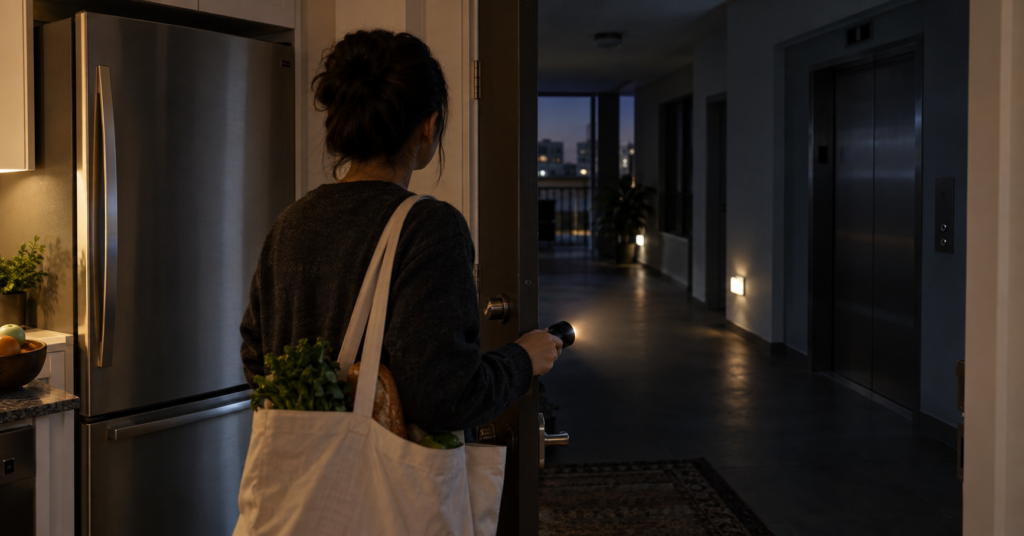
The kit should be stored where it can be reached in the dark. Emergency lighting in hallways may operate for only a limited time, so a flashlight should be accessible before leaving the unit.
Residents should also keep physical keys together and know where shoes are located. Broken glass, dark stairwells and debris can make walking barefoot dangerous.
People living near fire-prone areas should coordinate their outage preparation with evacuation planning. The TCG article about living near a California wildland boundary explains additional considerations for residents close to vegetation and evacuation routes.
After Electricity Returns
Power restoration does not mean every building system will restart normally. Elevators, gates, water pumps, internet equipment and electronic locks may need to reset or receive attention from management.
Residents should check appliances for unusual sounds, leaks or error messages. Sensitive electronics can be reconnected gradually if they were unplugged during the interruption.
The refrigerator and freezer should be evaluated using time and temperature rather than appearance. Perishable food that has remained too warm should be discarded even if power has returned.
Management should be notified if common-area lighting, access equipment or life-safety systems remain unavailable. Residents should not attempt repairs to shared electrical equipment.
Building a Realistic Apartment Outage Plan
California Apartment Outages affect each property differently. A modern high-rise may depend heavily on elevators and electronic access, while a smaller building may have fewer powered systems but no emergency staff.
A useful plan reflects the resident’s actual building, mobility, food storage, transportation and medical needs. Knowing how the property works is more valuable than collecting emergency products without a clear purpose.
Renters should review the plan when they move, change parking spaces, receive new access equipment or begin using medicine that requires refrigeration. Preparation can turn an outage from a confusing building-wide disruption into a more manageable interruption.
Note: This article provides general preparedness information. Follow instructions from emergency officials, your electric utility, building management, healthcare providers and food-safety authorities during an actual outage. Call 911 when there is an immediate threat to life or safety.