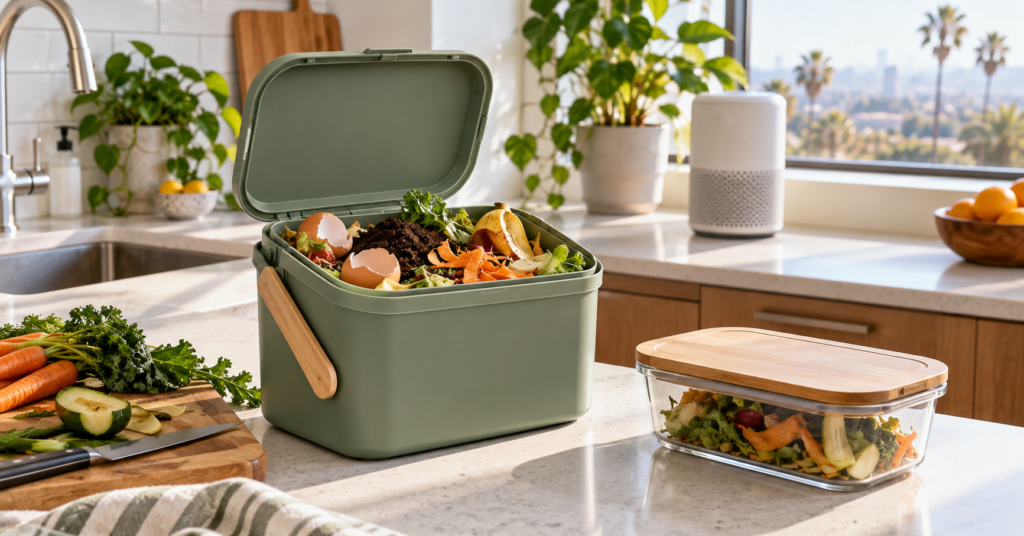
California Apartment Composting can be more complicated than placing food scraps in a green container. Renters may have limited kitchen space, shared waste rooms and collection instructions that differ between cities. Unclear signs or poorly maintained bins can make the process even more confusing.
California’s organic-waste program is intended to keep food scraps and other compostable material out of landfills. Apartment residents are part of that effort, but the collection method depends on the local waste provider and the property’s setup.
A practical routine begins with learning what the local program accepts. Residents can then choose a manageable way to store scraps, prevent leaks and control odors between collection days.
Why California Separates Organic Waste
Food and other organic material can produce methane when buried in a landfill. California adopted statewide organic-waste requirements under Senate Bill 1383 to reduce these emissions and recover more material for composting and other permitted uses.
Local jurisdictions are generally responsible for providing organic-waste collection services to residents and businesses. Apartment buildings may receive green carts, shared dumpsters or another approved collection system.
The statewide requirement does not mean every green bin accepts exactly the same items. Collection facilities use different equipment and processing methods, so local instructions remain important.
Residents can review the CalRecycle SB 1383 guidance for statewide information, but the city, county or waste hauler should be the primary source for property-specific sorting instructions.
What Usually Belongs in an Organics Bin
Many California programs accept common food scraps such as fruit and vegetable pieces, bread, grains, meat, bones, eggshells and coffee grounds. Food-soiled paper and yard trimmings may also be accepted in some service areas.
However, renters should not treat this as a universal list. A local program may permit paper towels and pizza boxes while another may provide different directions. Rules for compostable bags, wooden utensils and fiber containers can also vary.
The most reliable approach is to check the label on the building’s collection bin and compare it with the waste provider’s current online guide. When the two sources conflict, the property manager or waste provider should clarify which instruction applies.
Compostable Packaging Can Be Confusing
A package labeled biodegradable, plant-based or compostable does not automatically belong in an apartment’s green bin. Some facilities accept certified compostable liners and serviceware, while others reject all plastic-like materials because they are difficult to separate from conventional plastic.
Biodegradable is also not the same as compostable. A material may break down under certain conditions without being suitable for the local processing facility.
Residents should avoid guessing based on the appearance of a container. If the local instructions do not specifically accept the item, placing it in the trash may be less harmful than contaminating an entire load of organic material.
Creating a Kitchen Scrap Routine
Apartment residents do not need a large countertop container. A small container with a secure lid may work better because it encourages frequent emptying and takes up less space.
The container should be easy to carry, wash and dry. A removable liner can make cleanup easier when the local program permits the liner material. If bags are not accepted, scraps can be emptied directly into the shared bin and the kitchen container washed afterward.
Draining excess liquid before storing scraps can reduce leaks and slow odor development. Wet food, sauces and spoiled liquids should not be poured loosely into a collection container unless local instructions allow it.
Residents who cook frequently may need to empty the container every day. A household producing fewer scraps may find that a smaller container and a different storage method work better.
Controlling Food-Scrap Odors
Odors usually become stronger when scraps remain warm, wet and exposed to air for too long. The most effective response is to remove the source rather than cover the smell with fragrance.
Keeping the lid closed, draining moisture and emptying the container regularly can prevent many problems. Washing the container with dish soap after it is emptied helps remove residue that would otherwise continue to smell.
Some renters store food scraps in a sealed container in the refrigerator or freezer until they are ready to visit the collection area. This can be useful in hot apartments or buildings where the shared bins are not conveniently located. The container should be clearly marked and kept separate from prepared food.
Strongly scented products may hide an odor without addressing spoiled material. They can also be unpleasant for residents who are sensitive to fragrance.
Using an Air Purifier for Odors
An air purifier from PuroAir may help with lingering kitchen odors if the selected model includes activated carbon or another filter designed for gases and smells. Check the filter specifications, since a standard particle filter mainly captures airborne particles and may have limited impact on odors.
Choose a purifier suited to the room’s size and leave enough space around it for airflow. Follow the manufacturer’s replacement instructions, as carbon filters become less effective when saturated.
Use air purification alongside regular cleaning. It cannot make spoiled food sanitary, prevent leaks or replace washing the bin. Removing food scraps and cleaning the container should remain the first steps.
Avoid products that intentionally generate ozone in occupied spaces. When opening windows, consider outdoor smoke, weather and indoor temperatures. Residents in mild coastal areas can also consult the TCG guide to living without air conditioning when planning ventilation during warmer periods.
Preventing Fruit Flies and Other Pests
Fruit flies can reproduce around damp organic material, residue and recycling containers. A clean-looking kitchen can still attract them if a small amount of liquid remains beneath a liner or around the lid.
Rinsing the container, drying it completely and cleaning the surrounding counter can remove likely breeding areas. Produce stored outside the refrigerator should also be checked for damage or overripeness.
Ants, cockroaches and rodents require a different response. Residents should keep scraps in a container that closes securely and avoid leaving filled bags beside the door overnight.
A continuing pest problem may extend beyond one apartment. The property manager should be notified when insects or rodents appear near shared waste rooms, hallways or exterior bins.
Shared Green Bins in Apartment Buildings
The condition of the shared collection area can determine whether residents participate consistently. A green bin that is regularly overflowing, blocked or contaminated may discourage correct use.
Residents should close the lid after depositing material and avoid leaving bags or containers on the ground. Items should not be forced into a full bin, particularly when doing so prevents the lid from closing.
If the property does not provide enough capacity, renters can document the problem with photographs and notify management. Useful details include the location, date, collection schedule and whether the issue regularly appears before pickup day.
Shared waste rooms can have access and security problems similar to other common areas. The TCG guide to California apartment package theft offers additional ideas for documenting recurring problems and communicating with building management.
What Property Management Should Explain
Apartment residents need more than a green cart somewhere on the property. Management should clearly identify the collection location, accepted materials, bag rules and scheduled pickup process.
Move-in information is a useful place for these instructions. Signs near trash and recycling containers can reinforce them, particularly when residents speak different languages or the bins are not placed together.
Management should also provide a way to report overflowing containers, damaged lids, pests and illegal dumping. Fast responses can keep one maintenance issue from turning into a long-term sanitation problem.
Renters should ask for clarification rather than assuming that a lack of instructions means organic-waste separation is optional.
When a Building Has No Organics Bin
A renter may move into a property that does not appear to offer a green or organics container. The bin may be located in another waste enclosure, or the building may use a collection arrangement that is not obvious to residents.
The first step is to ask the property manager how food scraps should be handled. If management cannot answer, the resident can contact the city, county or local waste provider and describe the property type and address.
Some properties or jurisdictions may qualify for waivers or use alternative arrangements. Residents should not assume that the building is violating a rule until the local agency confirms which requirements apply.
Written communication creates a record and gives management an opportunity to explain or correct the situation.
Avoiding Contamination Charges and Disputes
Contamination occurs when trash, conventional plastic or other unacceptable material is placed in an organics container. A waste provider may leave the bin uncollected, issue warnings or charge additional fees depending on local policies and service agreements.
Determining who placed the wrong item in a shared dumpster can be difficult. Property managers should avoid blaming an individual resident without evidence. Clear labels, appropriate bin placement and regular resident education are generally more useful than vague warnings.
Residents can protect themselves by following posted instructions and reporting repeated contamination. Photographs can help show that a problem existed before a particular resident used the bin, but people should avoid photographing neighbors in a confrontational way.
Cleaning a Countertop Container
A food-scrap container should be washed often enough to prevent residue from building up. Dish soap and warm water may be sufficient for routine cleaning, provided the container’s care instructions allow them.
Grooves around handles, hinges and lids deserve attention because liquid can collect in these areas. The container should dry fully before a new liner or batch of scraps is added.
Cleaning products should never be mixed unless their labels say the combination is safe. Bleach, ammonia and acidic cleaners can create dangerous fumes when improperly combined.
If a container remains smelly after thorough cleaning, the material may have absorbed the odor. Replacing it with a nonporous, easy-to-wash container may be more practical than repeatedly adding fragrances.
Apartment Composting Without a Green Bin Indoors
Residents do not have to produce finished compost inside their apartments to participate in organic-waste collection. A countertop pail is normally a temporary storage container, not a composting system.
Actual home composting requires the correct balance of materials, moisture and airflow. A sealed bucket filled only with food scraps is more likely to become wet and unpleasant than to create useful compost.
Vermicomposting may suit some households, but it requires appropriate bedding, suitable food and ongoing care. Lease terms, space, temperature and pest concerns should be considered before starting any indoor system.
For most renters, collecting scraps and transferring them to the building’s organics bin is the simpler option.
Preparing for Warm California Weather
Heat can accelerate decomposition and make food-scrap odors appear sooner. Apartments without air conditioning may require more frequent emptying during warm periods.
Residents can adjust by using a smaller container, refrigerating scraps and timing disposal closer to collection days. Keeping the container away from direct sunlight, an oven or another heat source can also help.
The outdoor collection area needs attention as well. A damaged lid or residue around the bin may attract pests and create odors that enter nearby apartments. These conditions should be reported instead of treated as an unavoidable part of summer.
A Practical System for Everyday Use
California Apartment Composting works best when the routine is simple enough to continue. Residents should know what their local service accepts, keep a manageable container and move scraps out of the apartment before odors or pests develop.
Apartment managers play an important role by providing usable bins, clear instructions and consistent maintenance. Waste providers and local agencies can clarify rules that are not explained at the property.
An air purifier may reduce some lingering smells when it has the right filter, but it should support source control rather than replace it. Clean containers, short storage times and correct sorting remain the foundation of an effective apartment composting routine.
Note: Organic-waste rules and accepted materials vary by jurisdiction and waste provider. Residents should follow current local instructions and contact their property manager or collection provider when building signs are missing or unclear.