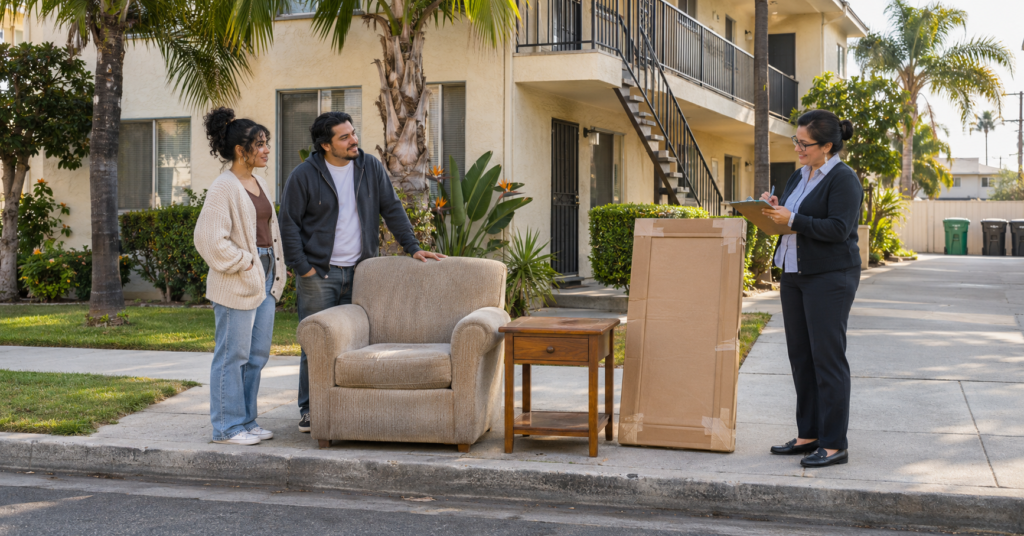
Long Beach bulky pickup can help residents dispose of furniture and other oversized belongings, but apartment living adds an important complication: the collection arrangement belongs to a service account, which may be managed by someone else.
A sofa beside the building’s bins does not tell the collection crew who requested removal, whether it was approved, or which provider should collect it. Before carrying anything downstairs, establish the service provider, the person responsible for booking, and the preparation instructions for your items.
Confirm Your Apartment’s Waste Collection Provider
Long Beach has both City-serviced properties and properties using permitted private waste haulers. The City directs households served by private haulers to contact those providers for service details. Living within city limits does not, by itself, establish access to the City’s collection program.
Start with the property manager when trash charges are included in your rent or paid through a shared building bill. Ask for the provider’s name and the procedure residents should follow for oversized items.
A useful message includes your unit number, the item you want removed, and your preferred timeframe. This gives management enough information to identify the correct arrangement without a lengthy exchange.
Avoid relying solely on a logo visible on a passing truck. Confirm the provider associated with your building’s refuse account.
Check How the Shared Account Handles Requests
The City’s current Special Collection 101 page lists 12 special collections per calendar year for each City-serviced account, with possible charges for special handling. That is an account allowance, not a promise of 12 separate pickups for every apartment.
Ask management how requests are coordinated when several households share service:
- Who submits the booking.
- Whether other residents already have items scheduled.
- How remaining collections are tracked.
- Who approves any additional expense.
- Who receives the appointment confirmation.
For example, two residents replacing furniture during the same week might ask management to coordinate one request. However, the combined inventory should be approved before either household adds belongings to the collection area.
Keep One Person Responsible for Changes
Choose a single contact to update the booking. Separate calls from tenants, maintenance staff, and the manager can create confusion about quantities or dates.
Share the final confirmation with everyone involved, including the person carrying the furniture outside.
Describe Furniture Accurately Before Scheduling
Prepare an inventory before contacting the collection provider. Record the item type, approximate dimensions, quantity, and any unusual features.
“Living-room furniture” is less useful than “one three-seat sofa, one armchair, and a coffee table with a removable glass top.” Photographs can help management understand the request, particularly when an item is unusually large.
The City instructs residents to disclose items exceeding its listed size limits when scheduling. Its current limit per pickup is eight large items or 25 bags, bundles, or boxes. Confirm how a mixed load will be counted.
Do not dismantle an item simply to make it appear smaller on the request. First establish whether disassembly is necessary and how the resulting pieces should be prepared.
Separate Collection From Carrying Items Downstairs
City collection crews cannot enter private property. Residents must place approved items at the regular collection location by 6 a.m. on the confirmed day, without setting them out before that scheduled day.
For apartment residents, this creates a separate planning task: moving belongings from the unit to the approved location.
Arrange suitable assistance before the appointment. Measure narrow doors and stair turns, and check whether the building requires an elevator reservation or protective floor coverings.
Tell your helpers where the item must end up. “Near the dumpster” may be too vague when the property has an enclosed bin area, an alley entrance, and a separate collection point.
Keep corridors, exits, accessible routes, and neighboring entrances clear throughout the move.
Prepare Glass and Special-Handling Items
Preparation can determine whether an approved item is actually collected.
Long Beach requires large glass pieces to be fully wrapped in sturdy protective material. Appliances, televisions, monitors, and tires must be separated from other items because a different truck collects them. Nothing should be stacked on mattresses.
Build preparation into your schedule rather than leaving it until the furniture reaches the sidewalk. Gather appropriate wrapping materials and discuss awkward components with the provider beforehand.
For appliances, disclose the exact type and obtain the applicable safety instructions. Do not disconnect a gas appliance or handle unfamiliar electrical connections solely to meet a collection deadline; arrange appropriate help.
Match Replacement Deliveries to the Removal Date
Ordering a replacement sofa before arranging disposal can leave a small apartment with nowhere to put either item.
Check the available collection date before selecting a delivery window. Then decide where the old furniture can remain inside until its approved set-out time.
A practical sequence is to confirm removal, arrange carrying assistance, and finalize the replacement delivery around those commitments. Leave flexibility for changes rather than assuming both services will happen within the same hour.
During a move-out, include any carrying assistance or alternative removal expense in your California moving costs. A collection appointment and the labor needed to empty an upstairs apartment are separate budget considerations.
Keep Personal Disposal Separate From Dumping Reports
Long Beach provides different routes for requesting a special collection and reporting illegally dumped belongings. The Clean Team directs reports of dumped items in public spaces through Go Long Beach.
Use the appropriate route for the situation. Scheduling removal of your own furniture is different from reporting an abandoned couch you discovered beside the building.
When reporting an unknown item, describe its location and any access obstruction accurately. Do not add your belongings to an existing pile or assume that a report authorizes additional disposal.
Follow Up With Specific Collection Details
When an item remains after the expected collection, save the booking reference and take a photograph showing its location and preparation.
Contact the provider with a concise description of what remains. Explain whether other items from the same request were removed and whether anyone changed the original inventory.
Ask for the reason before arranging another appointment. A location problem requires a different correction from missing preparation or an item that was never included in the booking.
Notify management promptly so everyone knows who is handling the follow-up. Avoid leaving an unresolved pile without a named person responsible for the next step.
Frequently Asked Questions
Can tenants book Long Beach bulky pickup themselves?
Ask your property manager how requests are handled for your account. Some buildings may coordinate bookings centrally, while others may allow residents to contact the provider directly. Confirm the arrangement before submitting a request.
Does paying a trash charge with rent guarantee free furniture removal?
No. The charge alone does not explain what the building’s collection agreement includes. Ask which provider serves the property and whether your proposed removal carries any separate cost.
What should I do if a neighbor adds furniture to my scheduled items?
Tell management or the booking contact before collection. Provide an updated inventory and ask whether the additional belongings can be included or require another arrangement.
Can I leave usable furniture outside with a “free” sign?
Arrange a direct handoff instead of treating an unattended sidewalk placement as a donation plan. Set a collection time with the recipient and keep the item in an approved location until that exchange.
What if I cannot carry the item out of my apartment?
Discuss assistance with management or arrange suitable help before booking. Explain stairs, elevator access, and the item’s weight when organizing that assistance so the people involved arrive prepared.
Note: Collection allowances, preparation rules, fees, and scheduling procedures can change. Confirm the current requirements with your property manager and the provider serving your address before moving items outside.