Old batteries tend to accumulate quietly: a few from a television remote, a rechargeable pack that no longer holds power, or a portable charger tucked into a drawer. California battery disposal requires more planning than putting those items into the recycling bin.
The right destination depends on the battery’s type, size, and condition. A collection point accepting ordinary household batteries may have different arrangements for a swollen power bank, a battery-powered device, or a larger equipment battery.
Before leaving home, identify what you have and confirm how the receiving location wants it prepared. Those two steps can prevent a rejected drop-off and reduce risks during storage and transport.
Keep All Batteries Out of Ordinary Household Bins
CalRecycle lists both rechargeable and single-use batteries among materials banned from trash, standard recycling, and organics bins. This includes familiar AA, AAA, C, D, button-cell, and 9-volt batteries, as well as automotive batteries. Batteries can leak harmful substances or cause fires during collection and processing.
An alkaline battery does not become acceptable household rubbish simply because it is inexpensive or no longer powers a device.
Likewise, a recycling symbol does not mean an item belongs in your curbside recycling cart. Battery collection uses a separate process from the sorting of bottles, cans, paper, and other ordinary recyclables.
If your waste provider offers a special household battery pickup, follow its specific preparation and placement instructions. Do not assume that a service available in a neighboring community also applies to your address.
Identify Battery Chemistry Before Choosing a Collection Point
Read the battery label without opening its casing. Useful descriptions include alkaline, lithium, lithium-ion, nickel-metal hydride, nickel-cadmium, and lead-acid.
Size alone is not enough to identify the contents. Similar-looking batteries can have different chemistries, so describing everything as “small batteries” may not give collection staff enough information.
Make a simple inventory before calling:
- The battery type shown on the label.
- The device it came from.
- The approximate number or total quantity.
- Whether the battery is loose or still inside a device.
- Whether there is swelling, leakage, corrosion, or other damage.
If the label is unreadable, explain that rather than guessing. Staff may ask for a photograph or direct you to a facility that can assess it.
Keep larger packs separate in your planning. Ask specifically about e-bike, scooter, tool, or automotive batteries instead of assuming a small household collection box accepts them.
Confirm Local Drop-Off Eligibility and Opening Arrangements
Start with your city or county’s household hazardous waste information. Look for accepted materials, appointment requirements, residency conditions, and any instructions specific to batteries.
Local arrangements differ. San Mateo County identifies a residential household hazardous waste program with an appointment process, while Orange County publishes collection-center arrangements for its residents.
Before traveling, confirm:
- Whether your battery type and condition are accepted.
- Whether you need an appointment or proof of residence.
- Whether there are quantity or size limits.
- Whether the location accepts complete battery-powered devices.
- Whether temporary closures affect your visit.
Use the facility’s current notice rather than an old event listing or map review. A collection event held last year does not establish that the same site accepts batteries today.
Also distinguish household waste from business waste. If the batteries came from a workplace or commercial activity, ask which program applies instead of assuming a residential service can take them.
Protect Exposed Terminals on Intact Batteries
A battery that no longer runs a device may still contain enough energy to cause trouble if its terminals contact conductive material.
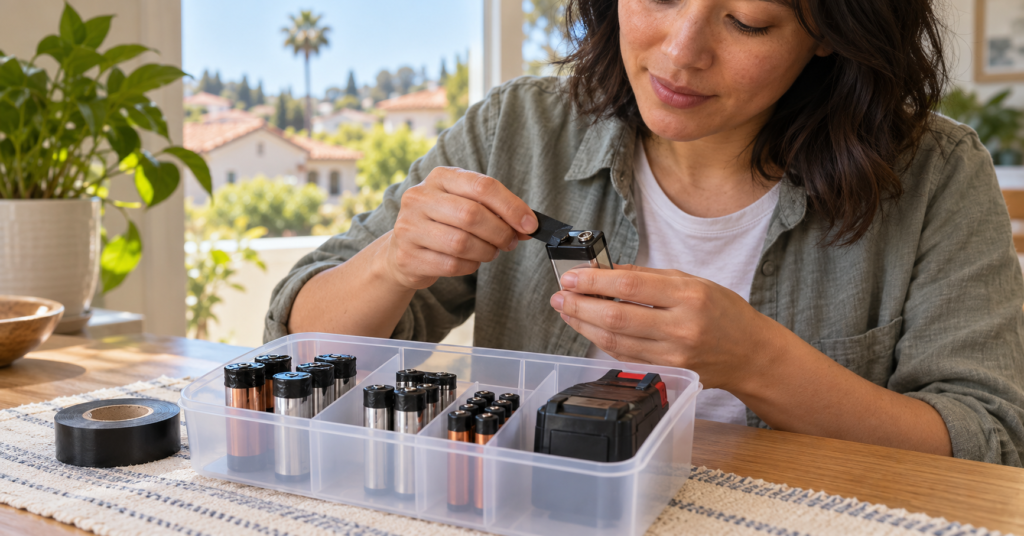
For lithium-ion batteries, EPA recommends covering the terminals or connections with non-conductive tape. Electrical tape is preferred; follow the receiving program’s preparation instructions for the batteries you are bringing.
San Mateo County’s household guidance also advises taping lithium-ion and rechargeable battery terminals and storing batteries in a non-metal container before recycling.
Apply these routine preparation steps only to intact batteries that can be handled safely. A leaking, swollen, hot, or otherwise damaged battery needs separate instructions.
Avoid tipping loose batteries into a container with coins, screws, keys, or tools. Keep identifying labels visible where possible so collection staff can determine what they are receiving.
Treat Swollen or Damaged Batteries as a Separate Issue
A swollen battery is not simply a worn-out battery awaiting the next convenient recycling trip. EPA identifies swelling as evidence of damage and a potential fire hazard.
If there is no immediate fire threat, contact the manufacturer or your local household hazardous waste program for instructions before transporting it. Describe the condition clearly and ask about an appropriate receiving location and packaging.
Do not put a damaged battery into an unattended collection box, continue charging it, squeeze it back into a device, or puncture its casing. Routine terminal taping does not make a damaged battery safe.
If a battery is smoking, burning, or appears to present an immediate fire risk, move away, keep others clear, and call 911. Do not load it into a vehicle for a disposal trip.
A leaking battery also warrants specific guidance. Avoid direct contact with leaked material and tell collection staff about the problem before attempting normal drop-off preparation.
Check Devices With Built-In Batteries Before Dismantling Them
Phones, headphones, portable chargers, and other electronics may contain batteries that are difficult to remove. Do not assume you must extract the battery before recycling the product.
Ask whether the collection location accepts the complete device. Avoid forcing open a sealed casing or prying at a battery to make it fit a loose-battery collection program.
EPA says lithium-ion batteries and devices containing them should go to appropriate separate recycling or household hazardous waste collection points, rather than household garbage or recycling bins.
For a working device containing personal information, consider account sign-out and data removal before handover. However, do not power up or charge a damaged device solely to erase it. Ask about available handling and data-security options instead.
Keep the condition of the device part of the conversation: acceptance of an ordinary old phone does not necessarily mean acceptance of a phone with a swollen battery.
Plan the Whole Hazardous Waste Load
If you combine battery disposal with a garage clear-out, check the limits for the entire load.
Orange County’s collection guidance lists a maximum of 15 gallons or 125 pounds per vehicle per trip. It also instructs residents not to combine different waste types and notes that most transport containers will not be returned. These details matter when batteries travel alongside paint, cleaners, or other household hazardous materials.
Ask your own facility how its limits apply to your planned visit. A battery-specific collection box may have different restrictions from a staffed hazardous waste center.
Keep items secured against movement and follow the facility’s packaging instructions. Plan a direct trip rather than leaving the load in the car while completing unrelated errands.
For lithium-ion batteries, EPA advises avoiding prolonged exposure to extreme temperatures, including a vehicle dashboard in direct sunlight.
Make Battery Disposal a Small, Regular Household Task
A manageable collection is easier to identify and prepare than years of mixed batteries emptied from several drawers.
Choose a designated location for intact used batteries, separate from new batteries and inaccessible to children and pets. Label the container so nobody mistakes its contents for usable spares.
When removing a battery, check its condition and follow the collection program’s preparation instructions immediately. Arrange disposal before the container becomes crowded or its contents become difficult to identify.
If you live with other people, share the local process. A brief note explaining where batteries belong and which items need special attention can prevent them from being swept into ordinary rubbish during cleaning.
The most useful California battery disposal routine ends with a confirmed handover to a suitable collection program—not simply moving old batteries from one drawer to another.
Note: Accepted battery types, collection limits, and preparation requirements vary by program. Confirm current instructions with your local household hazardous waste facility, and obtain separate guidance for damaged batteries before transport.