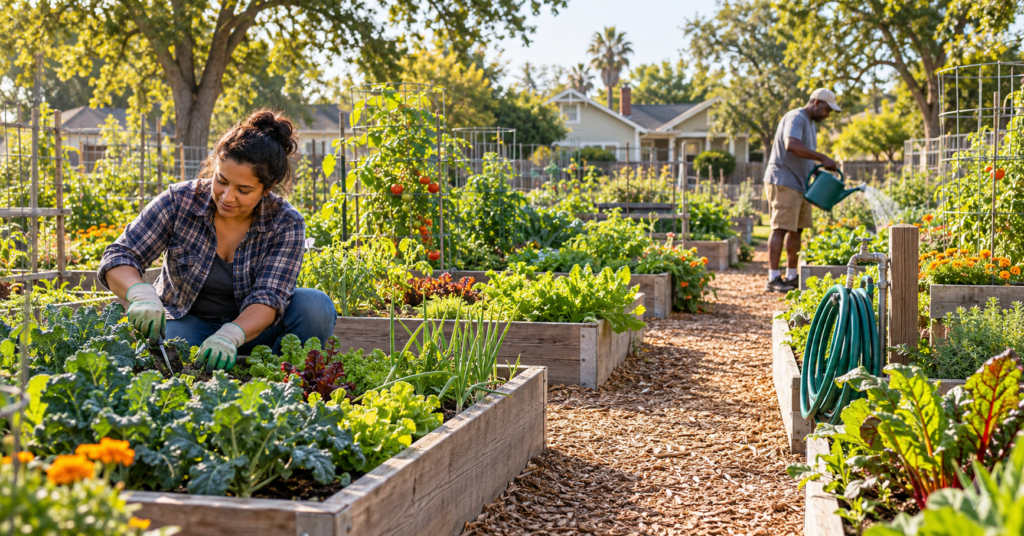
Sacramento community gardens offer residents a place to grow vegetables, herbs, and flowers when space at home is limited. However, accepting a plot involves more than paying a registration fee and planting a few seedlings.
The practical commitment includes traveling to the garden, keeping the space maintained, arranging watering, and understanding how shared areas operate. A plot that looks manageable during a weekend visit may require more attention than your weekday schedule allows.
Before accepting an available space, ask for the current garden agreement and visit the site. These checks can help you choose a plot you will enjoy maintaining throughout the growing season.
Identify Who Manages the Community Garden
The City of Sacramento’s Youth, Parks, & Community Enrichment Department operates several permanent community gardens. Its directory includes locations such as Blackbird Park, Fremont, Healthy Roots, Oak Brook Park, and Southside Park.
Start by confirming whether the garden you are considering belongs to the city program or has another operator. A Sacramento mailing address alone does not establish who manages the site.
Ask who handles applications, plot assignments, maintenance questions, and disputes. Save that person’s preferred contact method before joining.
Request the rules for the specific garden rather than relying on another gardener’s experience elsewhere. Site arrangements can affect access, equipment, planting choices, and shared responsibilities.
Check Plot Availability Before Buying Supplies
A garden appearing in a directory does not mean a plot is immediately available.
Fremont Community Garden maintains a waiting list and states that the date it receives an applicant’s email determines their position. Its published page warns of a potentially lengthy wait and asks applicants to update their contact information when it changes. Confirm the current estimate directly rather than planning around an older online figure.
Ask whether the application is for one named garden or several locations. Also establish how offers are made, how quickly you must respond, and whether declining an unsuitable plot affects your place.
If you need an accessible bed or a smaller space, explain that when applying. Waiting for the right plot may be more practical than accepting one you cannot comfortably use.
Confirm Annual Fees and Any Deposit
The city’s community garden directory currently lists a general annual plot charge of $25. Garden-specific information can provide additional detail: Fremont’s published page lists $25 for small and accessible plots, $50 for large plots, and a refundable $25 initial deposit tied to leaving the garden in good condition. Confirm the amount currently payable before registering.
Ask what the payment includes and whether any other contributions are expected. Clarify the registration period, renewal date, and deposit-return process.
Your personal budget should also account for seeds or seedlings, supports, gloves, and transportation. Check which tools or materials are available before buying duplicates.
Treat the plot fee as one part of the cost, rather than a complete estimate of the gardening season.
Visit the Exact Plot and Its Access Route
Garden facilities are not identical. The city lists accessible plots at several locations, while Blackbird Park’s description includes a storage shed with community tools and compost bins. These amenities should not be assumed at every site.
Walk from the entrance to the proposed plot and water source. Check the surface, distance, bed height, and room to move around plants once they mature.
Consider how you will carry supplies and harvests. Nearby parking may help with an occasional delivery, but everyday access should work with the transport you normally use.
Visit at a time similar to when you expect to garden. A site that suits a leisurely Saturday outing may be inconvenient for a short stop before work.
Establish Who Waters the Plot
Ask the coordinator to explain the actual irrigation arrangement. Do not assume that a visible water supply means somebody waters individual plots.
Useful questions include:
- Does each gardener water their own space?
- Are hoses shared, or must you bring equipment?
- Is drip irrigation permitted, and who maintains it?
- Are timers allowed?
- Who handles a broken tap or irrigation leak?
Sacramento County’s UC Master Gardener guidance emphasizes consistent irrigation for summer vegetables. Plan how you will meet your plants’ needs during warm periods rather than relying entirely on weekend visits.
Arrange backup care before traveling. Make sure the person helping you has permission to enter and knows which plot and equipment to use.
Clarify Shared Work and Maintenance Expectations
Keeping your own plants healthy may be only one part of participation. Ask whether the garden expects members to attend workdays, maintain adjoining paths, or help care for common areas.
Get the details in writing where possible. Find out whether there is a minimum contribution, how participation is recorded, and whether alternative tasks are available if scheduled workdays conflict with employment or caregiving.
These are questions to confirm with the operator, not universal requirements for every Sacramento garden.
Also ask how maintenance concerns are communicated. Knowing the process for an overgrown plot or an extended absence gives you an opportunity to address problems before they become disagreements.
Choose a commitment you can meet regularly, including during weeks when gardening is less convenient.
Match Planting Plans to Sacramento’s Seasons
An available plot does not mean every crop is ready to plant.
UC Master Gardeners of Sacramento County publishes a local vegetable planting schedule and monthly gardening guidance. These resources help distinguish suitable planting periods and the tasks needed as crops move from one season to another.
Begin with a modest selection of crops you actually want to eat. Leave enough room to reach them for watering, weeding, and harvesting.
If you are sourcing seeds affordably, TCG’s guide to California seed libraries explains what to check before collecting packets. Choose seeds for your planting window and available space rather than taking everything that looks interesting.
Ask the coordinator about restrictions on tall supports, spreading plants, perennial crops, or anything that could extend beyond your plot.
Learn the Garden’s Product and Compost Rules
Fremont describes itself as an organic garden. Before bringing fertilizers, sprays, or soil amendments to any site, check its approved practices and ask how pest problems should be handled.
Do not assume a product is permitted because it is sold for home vegetable gardens. Share its label with the coordinator if you are unsure.
Compost arrangements also need a clear explanation. Ask which plant materials belong in the shared system, where unsuitable material goes, and whether outside food scraps are accepted.
Keep your gardening supplies within the agreed storage area. Shared sheds and paths work better when everyone knows what can be left on site and what must go home.
Set Boundaries for Harvesting and Shared Equipment
At orientation, identify which plants belong to individual gardeners and which are intended for communal harvesting.
An apparently unused plot is not an invitation to pick produce, remove weeds, or rearrange supports. Ask before working in another person’s space, even when you intend to help.
For shared equipment, establish where tools are returned, how damage is reported, and whether borrowing them outside the garden is prohibited.
If family members will help, clarify guest access and supervision expectations. Everyone using the plot should understand the same boundaries, especially around neighboring beds and common crops.
Understand Renewal and Leaving the Garden
Before signing, ask whether the plot renews automatically or requires a fresh application and payment. Record the deadline and keep your contact details current.
Discuss what happens if you move, become unable to maintain the space, or decide gardening no longer fits your schedule. Find out how much notice is expected and which materials must be removed.
Ask specifically about transferring a plot to a friend or relative rather than assuming that arrangement is allowed.
A clear exit process protects both your deposit, where applicable, and the next gardener’s opportunity to use the space. Accepting a plot is easier when you understand the full commitment—from the first planting to the eventual handover.
Note: Availability, fees, and participation rules can change. Use the City of Sacramento’s community garden directory to identify locations and confirm current terms with the program coordinator before accepting a plot.