A California library parks pass can make a beach visit, woodland walk, or lakeside afternoon more affordable. Borrowing one takes some planning, however: you need an available pass, a participating destination, and enough time to return it under your library’s rules.
The program’s official name is the California State Library Parks Pass. It provides free vehicle day-use entry at more than 200 participating state park units operated by California State Parks. Public library cardholders borrow the pass through their local library.
Before building your day around the benefit, check how the lending process and park entry rules fit together. A little preparation can prevent an unavailable pass or an unexpected fee from disrupting the trip.
Understand What the California Library Parks Pass Covers
The pass covers an eligible vehicle’s day-use entry. It is not an all-inclusive ticket for every activity inside a park.
Camping, boat-use charges, individual admission, tours, and special-event fees are among the exclusions. A museum or paid tour within a broader park itinerary may therefore require a separate payment.
Separate your plans into two questions: what does it cost to enter with the vehicle, and what does it cost to do the activity you have chosen?
This distinction matters when comparing an inexpensive afternoon walk with a trip built around a guided experience. Check the specific activity before assuming the borrowed pass makes the entire visit free.
Check the Exact Park Before Planning Your Route
Start with California State Parks’ participating and nonparticipating parks list. Search for the destination’s full name rather than relying on a general description such as “the beach near town.”
The pass does not apply to national parks, city parks, or facilities operated by federal or local government, private agencies, or concessionaires. Off-highway vehicle recreation areas are also excluded.
Then identify the entrance or parking area you intend to use. If the destination has several access points, check which one serves your planned walk, beach area, or picnic spot.
Save the destination and directions before leaving. This is especially useful when similarly named recreation areas appear in navigation results.
Match Library Checkout Rules to Your Travel Dates
Borrowing policies are set locally, so a friend’s experience at another library may not match yours.
For example, OC Public Libraries allows one pass per patron, with a three-week checkout period and no renewals. San Diego Public Library lists a 14-day, nonrenewable loan, with passes available on a first-come, first-served basis.
Before committing to a trip, establish the following:
| Borrowing detail | What to confirm |
|---|---|
| Availability | Whether the branch currently has a pass |
| Holds | Whether you can join a queue or must visit in person |
| Checkout period | Whether it covers your departure and return |
| Pickup requirements | Which library card or identification is needed |
| Renewals | Whether an extension is possible |
| Return procedure | Where and how the pass must be returned |
A hold request should not be treated as a confirmed pass for a particular weekend. Wait for the library’s pickup notification or availability confirmation before relying on it.
Count Vehicles Before Inviting a Group
The pass covers one passenger vehicle with a capacity of nine people or fewer, or one highway-licensed motorcycle. Additional or extra vehicle charges are not included.
If friends are meeting you in separate cars, explain the arrangement before departure. Do not budget as though one borrowed pass covers a convoy.
Also check vehicle capacity rather than simply counting the people attending. The published rule refers to the vehicle’s capacity, which matters if you are considering a larger passenger van.
Carpooling may simplify the outing, but choose a vehicle with suitable seating and enough room for the group’s belongings. Keep the travel plan practical for everyone involved.
Bring the Physical Pass and Follow Display Instructions
Keep the borrowed pass with the items you will take to the park. A library checkout receipt is useful for tracking the loan, but it is not the pass itself.
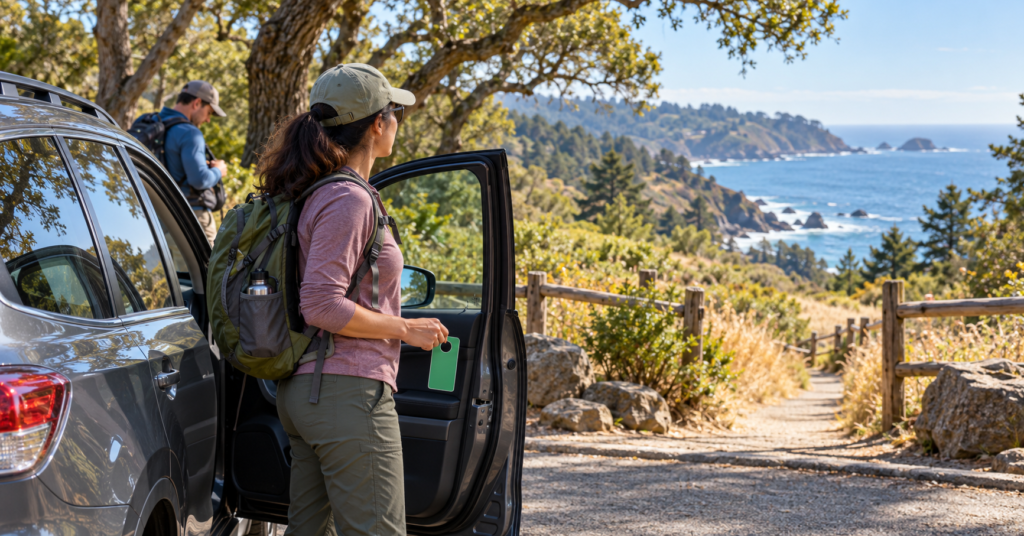
The official terms require the original pass; photocopies are not accepted. At participating parks, it must be displayed front-side out on the dashboard or rearview mirror, or scanned where a barcode scanner is available. Motorcycle users have separate instructions for exchanging the hangtag for a day-use ticket.
Read the entrance instructions on arrival and ask staff if the process is unclear. Before walking away from the parked vehicle, check that the pass is visible as required.
Keep its library packaging and return materials somewhere secure so they are ready when the loan ends.
Plan for Parking Availability and Park Conditions
The pass is valid on weekends and holidays, but it does not reserve a parking space or provide priority admission. Entry remains subject to available space.
Choose an arrival time that suits the destination and have a backup plan. A second nearby participating park can be useful, provided you check its access details beforehand.
Review the park’s official page shortly before departure for opening hours, closures, and current notices. Also confirm practical features important to your group, such as accessible routes, restroom availability, and dog restrictions.
Avoid building a tightly timed day around several distant stops. Leaving room for traffic, a full parking lot, or a slower walk can make the outing more enjoyable.
Budget for the Rest of the Day
Removing an entry charge helps, but transportation and incidental spending still belong in the budget.
Estimate fuel or charging costs, food, any separate activity fees, and equipment you genuinely need. Compare a nearby destination with a longer drive before choosing a park solely because it accepts the pass.
For a simple outing, bringing lunch and using equipment you already own may keep costs manageable. If an activity requires rentals or a paid booking, establish that total before leaving.
The California Guide’s California living costs guide can help you place occasional outings within a broader monthly spending plan.
Prepare for the Visit Beyond the Entry Gate
Choose a route and activity that suit the group’s experience, available time, and mobility. Free entry does not make every trail an appropriate first outing.
California State Parks recommends learning about the destination, wearing suitable clothing, and bringing essentials such as sufficient food and water.
Check the forecast for the park itself rather than assuming it matches conditions at home. Save an offline map if mobile reception could be unreliable, and identify a sensible turnaround time.
For a first visit, a shorter walk with time to explore nearby facilities may be more useful than attempting the longest route. You can use what you learn to plan a later trip.
Schedule the Return Before You Leave Home
Set a reminder for the due date when you collect the pass. Include enough time to reach the required return location after your outing.
San Diego Public Library, for example, requires passes to be returned to the location where they were borrowed. Other systems may use different procedures, so ask whether a return desk, book drop, or another method is appropriate.
If the pass is lost or stolen, contact the lending library promptly. California State Parks directs borrowers to their library for information about any replacement fee.
After returning it, check your library account or retain the return confirmation. Completing that final step clears the loan and makes the pass available for another household’s day outside.
Note: Pass availability, library lending policies, participating parks, and access conditions can change. Confirm the current rules with your library and destination before traveling.