A bag of empty bottles can seem straightforward until the refund is smaller than expected or a container gets rejected. California CRV refunds depend on the beverage, its packaging, and how the return is calculated. A recycling symbol alone does not establish eligibility.
For households saving containers between errands, a little preparation can make redemption easier. The useful checks begin before the bags reach the scale: identify eligible packaging, decide whether to request payment by count, and confirm where you can return it.
Understand What California CRV Refunds Cover
California Redemption Value, commonly called CRV, is a redeemable charge associated with eligible beverage containers. Consumers pay it when purchasing qualifying drinks and receive a refund when returning the containers through the redemption system.
For eligible glass, aluminum, plastic, and bimetal beverage containers, the standard refund is 5 cents for containers under 24 ounces and 10 cents for containers holding 24 ounces or more. Certain wine and distilled-spirit boxes, pouches, and cartons carry a 25-cent refund. The larger refund applies to the qualifying packaging type, not to every wine or liquor container.
Check the capacity printed on the container when estimating a return. A large-looking bottle does not necessarily cross the 24-ounce threshold.
For example, 40 eligible 16.9-ounce water bottles have a refund value of $2 when redeemed by count. Forty eligible two-liter soda bottles have a refund value of $4. Keeping those groups separate makes your expected total easier to explain and verify.
Separate CRV Beverage Containers From Ordinary Recycling
Not everything accepted in a household recycling bin qualifies for a cash refund. CalRecycle lists milk, infant formula, medical food, juice cartons, and food or non-beverage containers among the exclusions.
That means a plastic milk jug and a plastic water bottle can belong to different refund categories even though both are familiar household recyclables. A glass sauce jar also should not be treated like an eligible beverage bottle.
Look for wording such as “CA CRV,” “California Redemption Value,” or “CA Cash Refund.” These markings are more useful for redemption than the recycling symbol or plastic resin number alone.
A practical household setup is to keep refund containers in a separate collection area from general recycling. This reduces the amount of sorting needed at the return location and prevents food packaging from becoming mixed into a beverage-container load.
Check Older Wine and Juice Containers Before Rejecting Them
Wine, liquor, and additional large juice containers joined the expanded CRV program in January 2024. Labeling rules included a transition period, so the absence of a CRV message is not always enough to rule out a refund.
CalRecycle identifies exemptions that continue after July 1, 2026. These include wine and liquor containers filled and labeled before July 1, 2025, and qualifying large fruit and vegetable juice containers filled and labeled before July 1, 2024.
Only beverage containers purchased in California qualify for California redemption. Bringing bottles back from an out-of-state trip does not make them eligible simply because similar packaging is sold here.
Keep an uncertain container separate and ask about its eligibility before combining it with the rest of your return. That is especially useful when clearing out older bottles whose labels differ from newer purchases.
Request Payment by Count Before the Return Is Processed
One of the most useful California CRV refunds checks is deciding whether you want payment by count or weight.
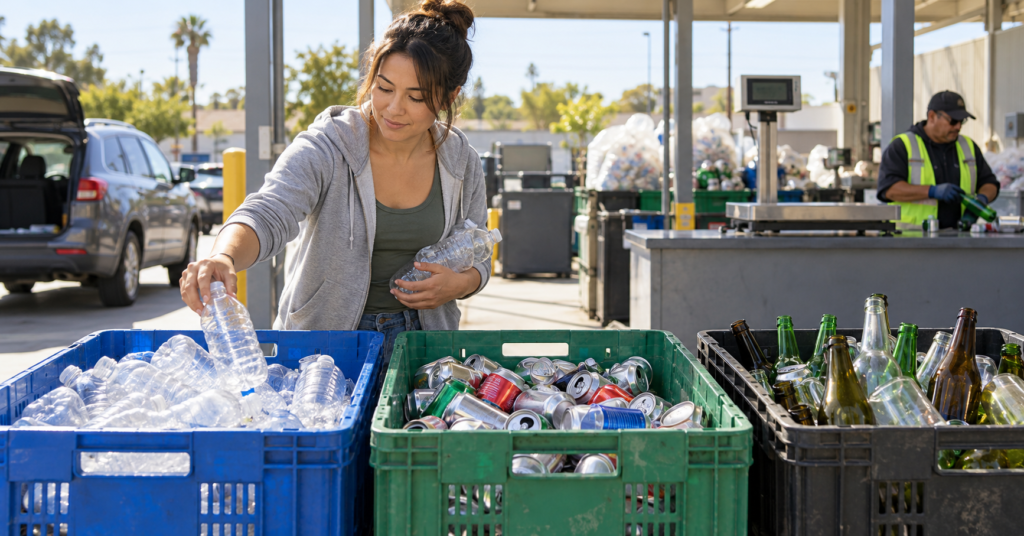
Customers can request payment by count for up to 50 eligible containers of each conventional material type per transaction, including glass, aluminum, plastic, and bimetal. This is not a single 50-container allowance shared across all those materials.
Separate count limits apply to certain wine and distilled-spirit packaging: up to 25 bag-in-box containers, 25 multilayer pouches, and 25 paperboard cartons per transaction.
Tell the attendant that you are requesting payment by count before the containers are processed. Arriving with counted groups makes that request easier to handle.
For a small household return, a note on your phone can record the material, number of containers, and sizes. You do not need a complicated spreadsheet; the purpose is to know what you brought and how you expected it to be calculated.
Understand Why Weight-Based Payments Can Differ
A payment calculated by weight does not necessarily match the exact total of the individual deposits in your bag. CalRecycle’s minimum weight-based rates use statewide container surveys, so they approximate the refund value of a typical mix.
The composition of your return matters. A batch of lightweight bottles can produce a different comparison between count and weight than a batch containing heavier packaging. Payment by count is therefore not automatically the better option in every situation.
CalRecycle’s consumer fact sheet suggests considering count-based payment for plastic containers of similar size and weight-based payment when containers vary substantially in size and type. Recycling centers may choose to count more than the standard allowance, but they are not required to do so.
For a large collection, ask how the load will be processed before unloading. This is more useful than assuming the amount will match a total calculated from individual containers.
Prepare Clean Containers and Keep Boxed Wine Packaging Together
Empty containers completely and keep dirt, food scraps, and other contamination out of the return. CalRecycle advises bringing whole, clean containers. Mixing non-CRV materials into a load can lead to rejection or payment at scrap value instead of the expected CRV amount.
Use separate bags or bins for different materials so you can unload without having to sort everything on the ground. A sturdy container is useful for transporting glass without breakage.
Boxed wine needs particular attention. CalRecycle’s program fact sheet says a bag-in-box must remain an intact unit, including the bladder, spout, and cardboard, to qualify for redemption. Separating the cardboard for household recycling can therefore leave you without the complete package needed for the refund.
If storage space is tight, ask your intended return location about preparation before flattening or dismantling unfamiliar packaging.
Confirm the Redemption Location Before Leaving Home
Use CalRecycle’s recycling-center search to identify a return location, then confirm its operating days and hours. Certified centers are independently operated; they are not state-run facilities. Some retailers also provide redemption.
A curbside recycling collection is different from a personal refund transaction. When eligible containers go into curbside or public recycling bins, the collecting organization claims the CRV rather than paying it directly to the household.
Before making a dedicated trip, ask where customers should unload and how the location handles your particular return. For an unfamiliar site, checking the entrance and parking arrangement can prevent an awkward arrival with several heavy bags.
It also helps to combine a small return with an existing errand. Estimate the refund first, then consider the extra driving and time involved.
Keep Large Collections Within Redemption Load Limits
A household clear-out or community collection can involve much more material than a routine bottle return. CalRecycle lists daily load limits of 100 pounds each for aluminum and plastic and 1,000 pounds for glass. These weight limits are separate from the smaller payment-by-count allowances.
For newer wine and distilled-spirit packaging, the listed limits are 50 pounds for bag-in-box containers, 25 pounds for multilayer pouches, and 25 pounds for paperboard cartons.
Contact the redemption location before transporting an unusually large collection. Describe the materials and approximate quantity so you can plan the visit around the applicable limits and unloading arrangements.
Resolve Refund Questions While the Details Are Fresh
If a payment seems incorrect, first ask whether it was calculated by count or weight and whether any containers were excluded. Those questions help distinguish a calculation issue from an eligibility disagreement.
Keep any receipt provided and record the location, date, materials, and approximate quantity. For a count-based return, your original tally can help explain the discrepancy.
CalRecycle accepts complaints about recycling centers and retail redemption locations, including problems with redemption rights. A useful report describes what happened: the payment method requested, the containers involved, and the explanation given. Specific details are more helpful than reporting only that the refund felt too low.
Note: Redemption rates, labeling guidance, and location arrangements can change. Check CalRecycle’s current information before returning unusual packaging or a large collection.