A replacement battery can solve a starting problem and still complicate your next Smog Check. After power is disconnected, the vehicle may need to complete emissions self-tests before its onboard diagnostic system is ready for inspection.
California smog readiness problems can be particularly frustrating when the car drives normally and the registration deadline is approaching. More driving does not always produce an immediate result, and another paid inspection may be premature if nothing has changed.
The useful first step is to identify exactly which monitor remains incomplete. From there, you can separate a routine reset delay from a problem that needs diagnosis while handling the DMV deadline independently.
What “Not Ready” Means on a Smog Report
Readiness monitors indicate whether the vehicle has completed particular emissions-related diagnostic self-tests. An incomplete monitor means the relevant test has not finished; it does not, by itself, establish that the associated component needs replacement.
The Bureau of Automotive Repair explains that monitors may complete through normal driving or a specified drive cycle after repairs. Some require particular operating conditions and take longer than others.
For example, a catalyst monitor marked “not ready” is different from a diagnostic finding that the catalytic converter has failed.
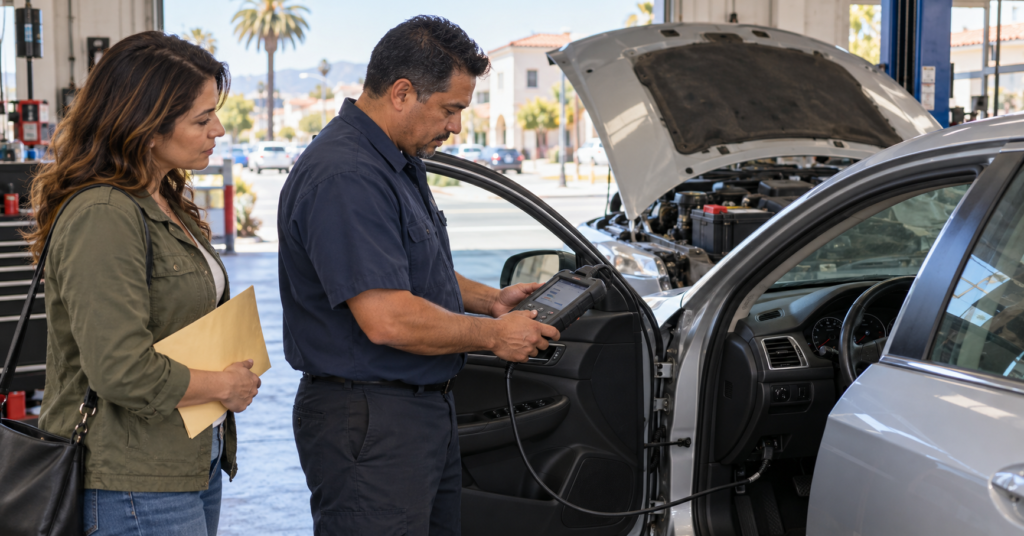
Ask the station to identify the incomplete monitor by name and explain the inspection result. Keep the vehicle inspection report so a technician can review the actual findings rather than relying on a description such as “the computer failed.”
Why Battery Work Can Affect California Smog Readiness
Disconnecting a battery can reset readiness information. The vehicle then needs to rerun the applicable checks.
BAR’s consumer guidance recommends driving for a week or two after a battery replacement or disconnection before a Smog Check. Treat that as general preparation guidance, not a promise that every vehicle will become ready within the same period.
Record when the battery was replaced, whether it subsequently went flat, and whether other repairs occurred. Include any occasion when diagnostic codes were cleared.
If the vehicle repeatedly loses power, mention that before spending more time trying to complete monitors. Ask whether the underlying electrical problem has been resolved so the diagnostic process can move forward.
Why Extra Mileage May Not Resolve the Delay
The discussion behind this topic involved a California driver who reported an incomplete catalyst monitor after a battery replacement despite driving hundreds of miles. That account illustrates the frustration, but advice for another owner’s car is not a vehicle-specific repair procedure.
Readiness depends on the conditions needed for the particular self-test, rather than one universal mileage target. BAR acknowledges that some monitors require specific driving conditions or considerably more time to complete.
Ask a technician for guidance appropriate to your model year, engine, and remaining monitor. Request an explanation of any required starting conditions and how completion will be checked.
Never attempt an online driving sequence that conflicts with traffic conditions or safe operation. If the procedure cannot reasonably be performed on your usual roads, discuss alternatives with the technician.
Check the Applicable Monitor Rules
Avoid relying on a blanket statement that every incomplete monitor causes failure—or that one incomplete monitor is always acceptable.
BAR’s current On-Board Diagnostic Test Reference distinguishes requirements by model year and fuel type and includes guidance for vehicles with known testing difficulties.
BAR also announced readiness regulation changes effective October 1, 2025, while explaining that implementation would be phased in and that existing pass/fail criteria would remain during data review.
This makes the current reference more useful than an old forum answer. Ask the station which criteria apply to your vehicle on the inspection date.
Also clarify whether a scanner’s display means “incomplete” or “not supported.” A system the vehicle does not have should not be confused with a supported monitor that has not finished.
Keep Readiness and Trouble Codes Separate
A readiness status and a diagnostic trouble code answer different questions. One concerns completion of a self-test; the other records a detected condition.
Permanent diagnostic trouble codes add another distinction. BAR explains that these cannot simply be erased by disconnecting the battery or using a scan tool. The underlying problem must be addressed, and the vehicle must rerun the relevant monitor successfully for the code to clear itself.
Before authorizing work, ask what the technician has actually found:
| Finding | Useful question |
|---|---|
| Incomplete readiness monitor | What conditions are preventing completion? |
| Stored or pending trouble code | What testing is needed to identify the cause? |
| Permanent trouble code | Has the underlying fault been repaired and verified? |
| Check-engine light | What condition is commanding the light on? |
| Communication problem | Can the inspection equipment reliably read the vehicle? |
Do not clear codes simply to make the display look better before testing. Doing so may remove useful diagnostic information and restart readiness checks.
Request a Readiness Check Before Another Inspection
Before returning for a paid retest, ask whether the station or repair shop can check monitor status and what that service costs.
BAR notes that stations may offer a pretest or pre-inspection and must provide an estimate before performing it.
Clarify whether you are authorizing a quick status check, diagnostic work, or an official Smog Check. These are different services.
A readiness check also does not guarantee a complete inspection pass. Other required parts of the inspection still apply.
If you use your own scanner, save the results without selecting erase or reset functions. Share the monitor names, codes, date, and odometer reading with the technician so later readings can be compared.
Bring a Short Repair and Reset History
A clear timeline can make the appointment more productive.
Bring the previous inspection report, battery invoice, recent repair records, and registration notice. Note when the problem began and whether the vehicle has experienced starting trouble since the battery work.
Describe your driving pattern in practical terms: short local trips, occasional freeway travel, or long periods parked. Avoid presenting accumulated mileage as proof that a specific component must be defective.
Ask what evidence would justify replacing a part and how the proposed repair will be verified. If the monitor remains incomplete, request a defined next step rather than repeatedly returning without new information.
BAR’s technical reference includes vehicle-specific testing issues and circumstances requiring manufacturer service or Referee assistance.
Pay Registration Fees Without Assuming You Can Drive
Smog completion and timely fee payment are separate obligations.
DMV instructs owners to pay registration renewal fees by the due date even when required smog certification is unavailable. Paying the full renewal fees on time prevents registration late penalties, but payment alone does not authorize vehicle operation.
Save the payment confirmation and check what remains outstanding on the renewal.
If registration expires before the issue is resolved, ask DMV what operating authorization is available for your circumstances. Do not assume that a fee receipt, repair appointment, or unsuccessful inspection permits continued driving.
Check Temporary Permit Eligibility Carefully
DMV offers a temporary operating permit for qualifying vehicles that fail a biennial Smog Check. Its published requirements include paid renewal fees, a failed inspection report, proof of insurance, and a $50 nonrefundable permit fee unless an applicable waiver is available.
The permit runs for 60 days from the registration expiration date or removal from planned nonoperation—not automatically 60 days from the day you request it. Only one such biennial smog permit may be issued within a two-year period.
A station declining to begin an inspection may leave you without the failed report DMV requires. Explain exactly what happened and ask DMV which option applies.
Once the car passes, retain the final report and verify that the registration renewal is complete. BAR says the passing certificate is sent electronically to DMV, but any other outstanding renewal requirements still need attention.
Note: Smog readiness requirements and drive-cycle procedures depend on the vehicle and current BAR standards. Confirm inspection questions with a licensed station and registration or temporary-permit questions directly with DMV.