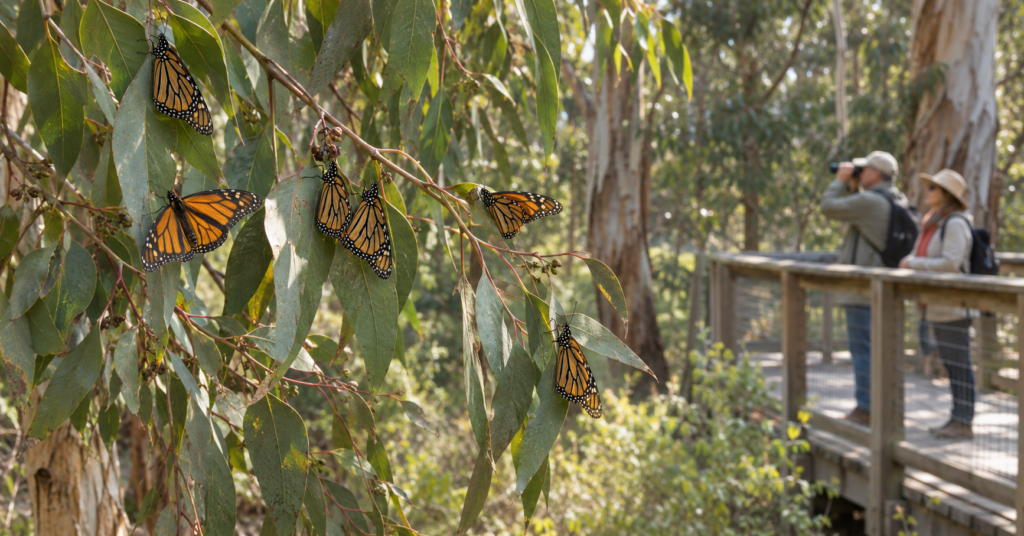
A quiet stand of coastal trees can hold a surprising November sight: monarch butterflies resting together on branches, their closed wings blending into the leaves. Spotting them often takes patience, especially when you arrive expecting bright orange butterflies flying everywhere.
California monarch groves offer a seasonal outing built around observation. A worthwhile visit starts with choosing a suitable location, checking recent reports, and understanding how weather affects what you might see.
Why November Suits a Monarch Grove Visit
Western monarchs use sheltered coastal groves as overwintering habitat. At Pismo State Beach, eucalyptus and Monterey cypress trees help buffer the butterflies from wind and temperature extremes. California State Parks lists the grove’s season as November through February.
Timing varies by location. At Natural Bridges State Beach in Santa Cruz, the park identifies late October and November as particularly good periods for observing monarchs, while emphasizing that arrival dates and numbers change each year.
Treat the month as a useful planning window. Your actual experience will depend on the grove’s current population and conditions that day.
Check Recent Sightings Before Choosing a Destination
Historic photographs can set unrealistic expectations. A grove pictured with heavily covered branches several years ago may have a much smaller population during your visit.
This matters for November 2026. In its November 13 update, the Pacific Grove Museum of Natural History reported low numbers and no large clusters at the local sanctuary. It suggested afternoon visits for butterflies around the nectar beds and identified Natural Bridges and Pismo as alternatives with more monarchs.
Before committing to a long drive, look for:
- A dated update from the park or sanctuary.
- Observations from the current season.
- Information about where visitors can presently see butterflies.
- Any weather closures or changes to public access.
Check the date attached to a count, too. A previous winter’s total describes past conditions, not what is waiting in the trees today.
Choose California Monarch Groves Around Your Group’s Needs
Several established viewing locations make useful starting points.
Natural Bridges State Beach, Santa Cruz: The monarch observation deck is reached by a boardwalk that California State Parks describes as wheelchair and stroller accessible. This can suit visitors who want a defined route into the grove.
Pismo State Beach Monarch Butterfly Grove: This protected Central Coast site offers a dedicated overwintering habitat. Its seasonal interpretive resources can help visitors understand the butterflies’ migration and winter behavior.
Pacific Grove Monarch Sanctuary: Admission is free, parking is limited, and the museum describes a packed gravel trail with a slight downhill incline. Consider those details alongside the latest butterfly report when deciding whether it suits your group.
Choose one main destination rather than trying to visit several distant groves in a day. Leaving room for observation is more useful than spending the outing moving between parking areas.
Decide Between Resting Clusters and Flying Butterflies
Cooler conditions generally favor clustering, while warmer sunshine can encourage flight. These are different viewing experiences.
A resting cluster may resemble dried leaves or small cones. Looking for orange movement alone can cause you to miss it. Flying monarchs are easier to notice, but they may move beyond your camera frame quickly.
The Xerces Society suggests cooler mornings or overcast conditions for observing clusters, and warmer, sunny periods for seeing butterflies become active. Neither guarantees sightings.
Tell your companions what you hope to observe before choosing an arrival time. Someone expecting active butterflies may enjoy the outing more when they understand why the grove appears still.
Make Parking and Trail Access Part of the Plan
Save the visitor entrance before leaving home. A map pin marking a habitat area may not identify the correct parking lot or public approach.
For anyone using a wheelchair, walker, or stroller, check the entire route from the vehicle to the viewing area. Useful questions include:
- Is there a slope between parking and the trail?
- What surface will you travel over?
- Are there places to sit?
- How far away are the restrooms?
Keep the grove visit manageable for the least mobile person in your group. A short, comfortable observation period can be more enjoyable than adding an unnecessary walk.
Also check whether parking and admission are charged separately. Free access to a viewing area does not automatically mean every nearby parking option is free.
Pack for a Shaded Coastal Stop
Standing still beneath trees can feel different from walking through a sunny parking lot. Bring a light outer layer and comfortable shoes, and check the forecast for the destination rather than relying on conditions at home.
Our guide to California microclimates explains why nearby coastal and inland locations can feel noticeably different.
Binoculars or a camera with zoom can help you observe branches from the designated route. Practice adjusting binoculars before arriving, particularly when sharing them with children.
Keep the rest of your packing simple. A small bag leaves your hands free and is easier to manage around other visitors than bulky equipment.
Let a Docent Help You Find the Butterflies
A brief conversation with a volunteer can give your visit direction. Ask where monarchs have been visible that day and which features distinguish a cluster from surrounding foliage.
Useful questions include:
- Which branches should we look toward?
- Are butterflies resting or feeding today?
- Is there a good viewing position for someone who cannot stand for long?
- Are any short talks scheduled?
Where spotting scopes are available, take turns and avoid changing their position without asking. A scope already aimed at a cluster can reveal details that are difficult to find unaided.
Allow children time to locate one butterfly before asking them to identify a larger group. That small discovery can make the visit engaging without requiring a dramatic display.
Protect the Habitat While Watching
Stay on designated paths and behind barriers. Do not shake branches, touch butterflies, or try to make them fly for a photograph. Watch the ground as well as the canopy, and alert a docent if you notice a butterfly where visitors might step on it.
The Xerces Society also advises against using spray products inside groves or releasing captive-reared monarchs at overwintering sites.
Check local pet rules before bringing a dog. Pacific Grove prohibits pets in the sanctuary, and Natural Bridges does not allow dogs on the monarch boardwalk.
For photographs, use the view available from the public route. Keep paths clear while composing the image and give other visitors room to look.
Leave Space for a Simple Second Stop
Plan an optional nearby activity so the day remains enjoyable even when sightings are limited. A visitor-center stop, a short public walk, or lunch afterward can complement the grove without making the schedule demanding.
For families, bring a notebook and invite children to sketch the tree canopy or record what they noticed. Adults might enjoy comparing observations before checking their photographs.
Keep that second stop flexible. You may want to stay longer when a docent is explaining the habitat, or leave sooner when someone becomes cold or tired.
Note: Monarch populations, viewing conditions, access arrangements, and volunteer schedules vary by site and season. Check the destination’s current visitor information before traveling. November is a useful seasonal window, but large clusters and active flight are never guaranteed.