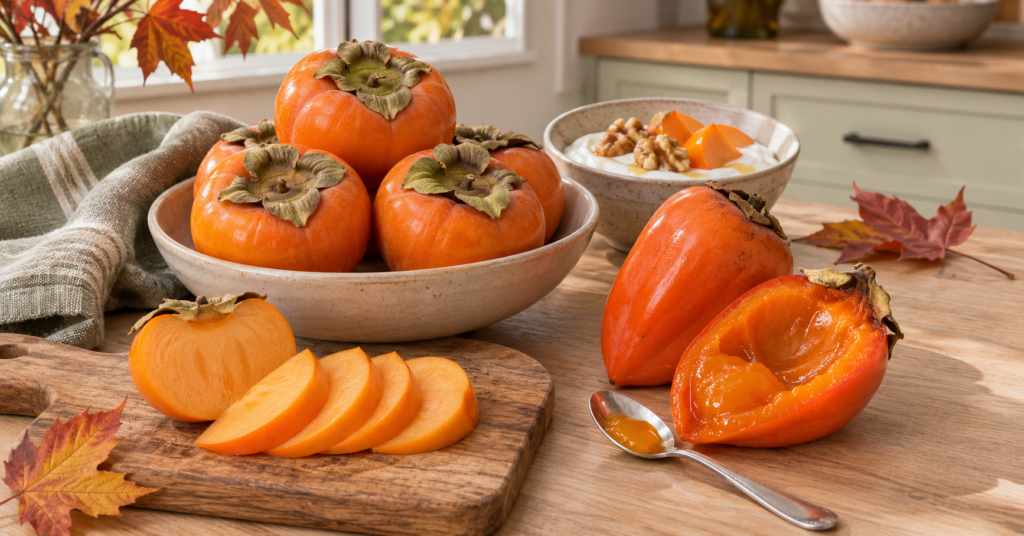
Bright orange persimmons bring seasonal color to a November kitchen, but choosing them involves more than finding an attractive piece of fruit. One variety can be sliced while firm; another needs to soften thoroughly before it becomes pleasant to eat.
California persimmons are easier to enjoy when you match the variety and ripeness to what you plan to make. A few careful choices at the market can give you crisp fruit for lunch, soft pulp for baking, and a manageable supply for the weeks ahead.
Why November Is a Good Time for California Persimmons
Persimmons fit naturally into California’s autumn harvest. UC Cooperative Extension guidance places typical Fuyu harvesting around mid-October through mid-November, while Hachiya harvesting can extend from October into January. Local growing conditions and varieties affect the timing.
That seasonal overlap makes November useful for exploring different textures and kitchen uses. However, a basket of orange fruit may contain persimmons at very different stages of readiness.
Shop around your plans for the week. Fruit for tonight’s salad needs to be ready now, while fruit intended for a later baking project can have time to soften.
Learn the Difference Between Fuyu and Hachiya
The most useful distinction is between non-astringent and astringent persimmons. Astringency is the dry, puckering sensation that makes an unready persimmon unpleasant.
Fuyu for Firm Slices
Fuyu persimmons are generally squat and rounded, with a shape resembling a flattened tomato. They can be eaten while firm once mature and properly colored.
Their crisp texture makes them convenient for slicing, snacking, and adding to dishes where you want distinct pieces of fruit.
Hachiya for Soft Pulp
Hachiya persimmons are usually more elongated, with an acorn-like or pointed shape. They need to become very soft, with an almost jelly-like interior, before eating.
An orange exterior alone does not establish that a Hachiya is ready. UC Master Gardeners specifically distinguish firm, ready-to-eat Fuyu from the much softer texture required for Hachiya.
Shape is a helpful clue, but ask for the variety name when buying unfamiliar fruit. California growers also produce cultivars beyond these two common examples.
Buy for Your Meal Plan, Not Just the Display
Start with a small quantity when trying persimmons for the first time. A large bargain box is less useful when you have no plan for the fruit as it ripens.
At a farmers market or produce stand, ask:
- Which variety is this?
- Can it be eaten firm?
- Which fruit would you choose for eating today?
- Which pieces need more time at home?
Choose intact fruit and handle it gently. Avoid repeatedly squeezing soft persimmons to test them; ask the seller to help select an appropriate piece instead.
For the trip home, place delicate fruit on top of heavier groceries. A shallow container can be easier to manage than a crowded shopping bag.
When receiving backyard fruit from a neighbor, ask about the variety before mixing it with your purchases.
Give Ripening Fruit a Clear Place in the Kitchen
Firm Hachiya can finish softening at room temperature. UC guidance notes that they are commonly harvested firm and allowed to soften off the tree. Refrigeration can help extend storage once fruit is ready, although its remaining life depends on condition and ripeness.
Keep fruit you are monitoring somewhere visible rather than buried beneath other produce. Check individual pieces because they may not soften together.
A small note identifying the variety can prevent someone from biting into a Hachiya too early. This is particularly helpful when two types share the same counter.
Move ready fruit into your meal plan promptly. Waiting for every persimmon in a batch to reach the same stage can leave the earliest ones unused.
Prepare Persimmons Without Complicating the Process
Wash fruit under running water before cutting, even when you intend to remove the skin. The FDA advises against washing produce with soap, detergent, or commercial produce wash. Use clean hands, utensils, and a clean cutting surface, and discard fruit that appears rotten.
For firm fruit, remove the leafy top and cut it into wedges, thin slices, or small pieces suited to the dish. Check for seeds as you work.
For fully softened fruit, work over a bowl to catch the pulp. Keep the leafy cap, any seeds, and unwanted skin separate from the portion you will eat or measure.
Prepare only what you need for immediate serving, and refrigerate cut fruit rather than leaving it on the counter throughout the day.
Build Simple Autumn Meals Around Firm Persimmons
You do not need a special dessert recipe to start using Fuyu. Try a few slices on their own first so you can judge the flavor and decide what would complement it.
For an easy lunch, combine thin slices with leafy greens, toasted walnuts, and a lemon dressing. The contrasting textures make the fruit part of the meal without overwhelming it.
Other serving ideas include:
- Small pieces over plain yogurt with oats.
- Thin slices on toast with ricotta.
- Wedges alongside cheese and crackers.
- Diced fruit stirred into a cooled grain salad.
These are flexible combinations rather than fixed recipes. Begin with modest portions and adjust the acidity, salt, or sweetness after tasting.
For a November gathering, a simple sliced-fruit plate can introduce persimmons to guests without adding another oven dish to the schedule.
Use Soft Persimmon Pulp Carefully in Baking
Fully ripe Hachiya pulp can be used in baking, including recipes developed for persimmon breads, cookies, and puddings.
Choose a recipe that specifies persimmon pulp and measure the prepared amount. “Two persimmons” can vary considerably depending on fruit size and how much usable pulp each contains.
Avoid assuming that pulp will behave exactly like diced fruit or another purée. A substitution can change the moisture and structure of a batter.
For your first attempt, follow the recipe before adjusting sugar, flour, or liquid. Keep a brief note about the variety and amount used so you can repeat a result you enjoy.
Small portions of ripe pulp can also be stirred into yogurt for a quick breakfast without committing to a full baking project.
Freeze Extra Pulp in Useful Portions
Freezing is a practical option when several persimmons become ready together.
The National Center for Home Food Preservation provides a method using orange, soft-ripe fruit that is washed, peeled, sectioned, and pressed into purée. Its instructions allow unsweetened purée to be packed in suitable containers with headspace, sealed, and frozen.
Choose portions based on how you expect to use them. A recipe-sized container is more convenient than a large block that must be thawed all at once.
Label each container with the date, quantity, and whether sugar was added. That last detail matters when the pulp becomes an ingredient in a later recipe.
Follow the published persimmon freezing instructions for preparation details. Freezing guidance should not be treated as instructions for making shelf-stable jars.
Make Persimmons Part of a Relaxed November Routine
Give your first purchase one clear purpose: a breakfast topping, a lunch salad, or a weekend baking project. Once you know which texture you enjoy, choosing the next batch becomes easier.
Sharing fruit can be just as simple. Include the variety name and a short explanation of when it is ready to eat. A gift of firm Hachiya is much more useful when the recipient knows to wait for softening.
Keeping the quantity realistic and the intended use clear helps turn an unfamiliar seasonal fruit into something you look forward to each autumn.
Note: Harvest timing, ripening speed, and storage life vary by variety and fruit condition. Confirm unfamiliar persimmons with the grower or seller, and use tested food-preservation guidance when freezing, drying, or canning.