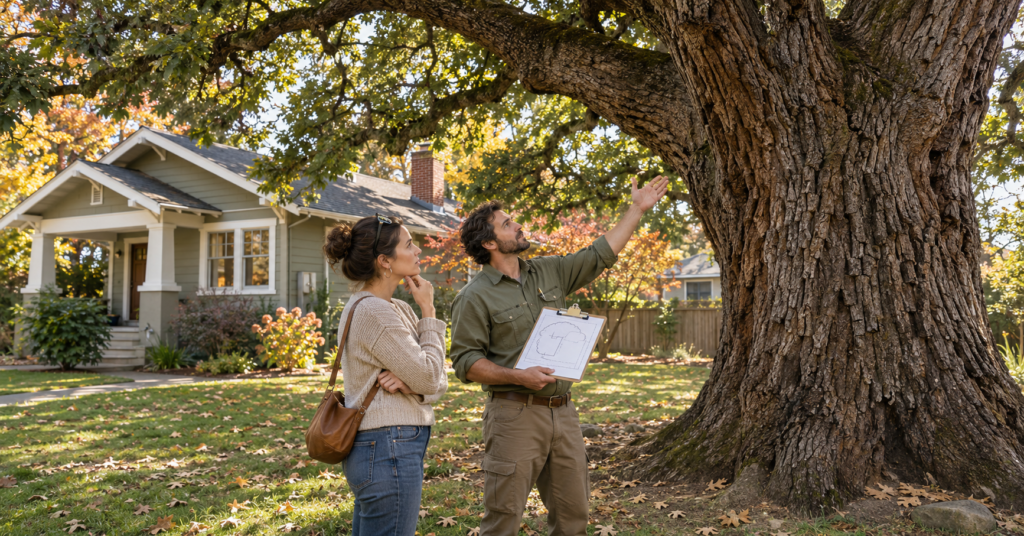
A mature tree can make a Sacramento home more appealing, shading the yard and giving the property an established character. It can also affect plans for a pool, driveway, addition, or backyard renovation.
Sacramento protected trees deserve attention during the purchase process because owning the land does not automatically authorize every change to its trees. Buyers should establish which rules apply, assess maintenance needs, and investigate whether their intended improvements are realistic before committing to the property.
Confirm the Property’s Jurisdiction First
A Sacramento mailing address is not enough to identify the authority responsible for tree permits. Establish whether the parcel falls within the City of Sacramento, unincorporated Sacramento County, or another incorporated city.
Sacramento County operates its own tree-permit process. Its guidance identifies native oaks, certain landscaping trees, and tree work associated with development among situations that may require review. The city’s size thresholds should not be applied to county properties without checking the county’s requirements.
Use the property address and parcel number when contacting the relevant department. Describe the actual concern: routine care, removal, excavation, or a proposed building project.
This gives staff something specific to assess and avoids relying on advice intended for a different jurisdiction.
Understand Which Sacramento Trees Are Protected
Within city limits, protection depends on species, trunk size, property type, or a specific designation.
The City of Sacramento’s published guidance identifies these principal size categories:
- Specified native species, including several native oaks, California buckeye, and California sycamore, at 12 inches or more in diameter at standard height.
- Trees at 32 inches or more on private property containing a single-family home or duplex.
- Trees at 24 inches or more on undeveloped private land or other property types.
These measurements refer to trunk diameter, not circumference. A tree does not have to be an oak to qualify under the larger size categories.
Have an arborist identify uncertain species and measure unusual trunks. Trees that branch low or have multiple stems require more care than a quick measurement around the base.
Do not assume that the absence of a tag means a tree is unprotected.
Separate Private Trees From City Street Trees
A tree beside the sidewalk may appear to belong to the house while falling within the public right-of-way. Its location can change who maintains it and how work is authorized.
Sacramento’s Urban Forestry guidance states that the city maintains public trees, while private-tree maintenance is the owner’s responsibility. Protected status does not make a privately owned tree eligible for routine city maintenance.
Ask for clarification when a trunk stands near the frontage, alley, or apparent property boundary. A fence or landscaping edge should not be treated as definitive evidence of ownership.
Keep these responsibilities separate in your purchase notes. A city street tree, a private backyard tree, and a neighboring tree overhanging the property may require different conversations.
Arrange an Arborist Assessment During Due Diligence
A general home inspection may flag branches touching the roof or visible damage, but buyers should confirm whether a detailed tree assessment is included.
Where a mature tree could affect the purchase, arrange a separate arborist visit with the seller’s permission. Request a written assessment addressing:
- Species, approximate size, and condition.
- Visible defects or signs requiring further investigation.
- Recommended maintenance and its urgency.
- Potential conflicts with structures or planned improvements.
- Whether additional specialist evaluation is needed.
Separate immediate work from ongoing care. This helps you understand whether the first-year budget needs a substantial allowance or whether the tree primarily creates a recurring maintenance obligation.
The city recommends checking tree-care professionals’ qualifications, insurance, references, and competing bids.
For broader upkeep planning, our guide to California home maintenance covers other systems and exterior conditions worth reviewing alongside the trees.
Test Renovation Plans Against the Root Area
Keeping the trunk in place does not necessarily avoid tree review. Sacramento’s definition of regulated work includes activities such as trenching, grading, paving, soil compaction, and storing construction materials within a protected tree’s protection zone. Routine maintenance is treated separately.
This matters when a listing suggests room for an addition or describes a backyard as suitable for future development.
Bring a simple concept plan to the assessment. Show the proposed structure, utility routes, excavation area, and access for equipment. A project may need space beyond its finished footprint during construction.
For example, a planned patio might fit comfortably between the house and a tree, while the proposed excavation or delivery route creates a conflict. Identifying that issue before purchase allows you to consider a different layout.
Request Existing Tree Records From the Seller
Ask for documents connected to previous tree work rather than relying only on a verbal account.
Useful records include:
- Arborist reports and maintenance invoices.
- Tree permits and their approved scope.
- Removal decisions or denied applications.
- Tree-protection or replacement plans.
- Notices or correspondence from the responsible authority.
Match each document to the correct tree. A dated photograph or numbered site sketch can prevent confusion when several similar trees stand on the property.
Also check whether proposed work was actually completed. An invoice for an assessment does not establish that recommended treatment occurred.
Sacramento’s tree-permit code states that permits are not transferable. A seller’s approval should therefore be discussed with Urban Forestry before a buyer assumes it can be used after ownership changes.
Do Not Build the Purchase Around Assumed Removal
A contractor’s willingness to remove a tree does not establish that removal will be approved.
Sacramento’s code sets specific grounds for removing private protected trees, including qualifying development necessity, certain health or safety conditions, and specified threats to main structures where reasonable alternatives are unavailable. Removal also involves a replacement-plan requirement.
When removal is essential to your intended use, seek property-specific guidance before relying on that plan. Explain why retaining the tree appears incompatible with the project and ask what evidence the city needs.
Treat uncertainty as part of the buying decision. Consider whether the home still works for you with the tree retained, the project relocated, or the improvement reduced in size.
Budget for the Full Scope of Tree Work
Request itemized estimates rather than a single figure labeled “tree removal” or “yard cleanup.”
Depending on the approved work, the budget may include an arborist report, permit fees, specialized access, debris hauling, stump work, replacement planting, irrigation changes, and landscape restoration.
Ask which items are included and which depend on the authority’s decision. Keep optional landscaping upgrades separate from necessary tree care so the estimate remains useful during negotiations.
For retained trees, request a practical maintenance schedule instead of assuming every tree needs the same annual service.
Resolve Timing Before Scheduling Contractors
Tree approval can affect the order of work. Sacramento’s code generally provides a 15-day notice period for issued removal permits, with effectiveness also dependent on resolution of any appeals. Do not treat an initial approval as permission to begin immediately.
Before closing, keep a short list of unresolved matters: the responsible authority, tree classification, recommended work, permit status, and estimated cost.
Discuss any purchase conditions or seller commitments with your real estate professional. A written understanding should identify the tree and intended outcome clearly enough that both parties know what remains outstanding.
Note: This article focuses on City of Sacramento tree rules; Sacramento County and neighboring cities have separate requirements. Tree classification, permit conditions, and property circumstances can change the outcome. Confirm current requirements with the responsible authority and obtain a qualified arborist’s assessment before authorizing work.