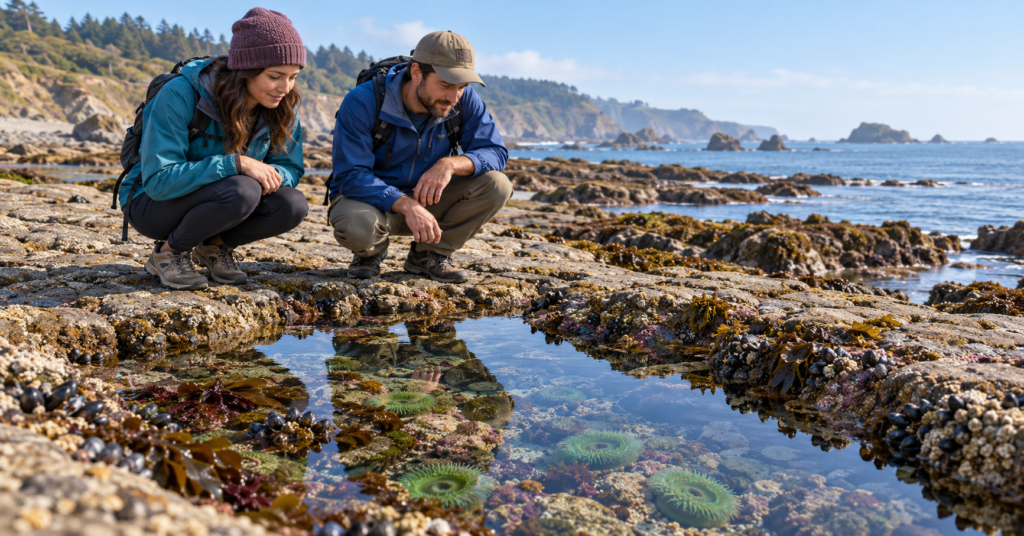
California tide pooling offers a chance to notice coastal wildlife that is easy to miss during an ordinary beach visit. A shallow pool between rocks may contain anemones, small crabs, or other marine life, making a short stretch of shoreline worth exploring slowly.
A successful first visit depends on more than choosing a scenic beach. Tide timing, surf conditions, access routes, and local protection rules all affect where you can go and what you should do when you arrive.
Plan a modest outing with time to observe a small area. You do not need to reach the farthest rocks or find a particular animal for the visit to be worthwhile.
Choose a Tide-Pool Location That Fits Your Group
Start with an official park or beach page that specifically describes tide-pool access. Photographs can show attractive pools without revealing the stairs, uneven ground, or long walk needed to reach them.
Check the route from the entrance to the viewing area. Consider whether everyone in your group can manage the terrain and return comfortably.
Bean Hollow State Beach, for example, has tide pools, but its access arrangements differ between the main beach and nearby Pebble Beach. California State Parks describes stairs at Pebble Beach and limited parking facilities at both locations.
For a first outing, prioritize clear directions and manageable access. A visitor center or staffed entrance can also give you somewhere to ask about the day’s conditions.
If someone uses a mobility device or needs a step-free route, ask about the complete journey. An accessible parking space does not establish that the rocky intertidal area is accessible.
Read Local Tide Times and Heights Together
A tide forecast gives you both the expected time and height of the tide. Those details work together: a low tide that exposes one beach’s pools may not reveal another location’s rocky habitat.
Natural Bridges State Beach says its tide pools are best seen when the tide is two feet or lower. Cabrillo National Monument publishes different site-specific guidance, including a recommendation that a tide of 0.7 feet or below should expose its pools. These figures are examples for those locations, not statewide thresholds.
Use the tide information recommended by the park you intend to visit. Check the correct date and local time, and avoid relying on a screenshot from a previous trip.
Build your arrival plan around reaching the viewing area, not simply entering the parking lot. Paying for parking, using restrooms, and walking to the rocks can take part of your intended viewing window.
Check Daylight and Opening Hours Before Picking a Date
The lowest tide is not automatically the most practical one. It may occur before the beach opens, after dark, or too close to closing time for a comfortable visit.
At Cabrillo National Monument, the National Park Service identifies late fall and winter as particularly useful seasons because very low tides occur during daylight hours when the park is open.
For your first California tide pooling outing, choose a daylight opportunity that fits the site’s operating hours. Give yourself enough time to return without rushing.
Check the tide-pool access area separately from the wider park where applicable. Roads, gates, visitor facilities, and shoreline access may have different arrangements.
If the available date offers only a short window, reduce the scope of the visit. Exploring a few nearby pools is more sensible than trying to cover an entire coastline.
Treat Surf Conditions as a Separate Decision
Low tide does not guarantee safe conditions. Waves can still reach exposed rocks, and a favorable tide prediction should never override a closure or surf warning.
California State Parks’ Asilomar guidance recommends checking weather and safety conditions, avoiding tide-pool visits during high-surf advisories or bad weather, and remaining alert to waves and the rising tide.
Check the official coastal forecast before leaving and reassess conditions on arrival. If waves are washing across your intended route, choose another activity rather than trying to time your crossing between them.
Keep your attention on the ocean while observing. Looking into a pool or framing a photograph can make it easy to stop noticing what is happening around you.
Never treat other visitors standing on exposed rocks as evidence that the location is safe.
Plan Parking Without Losing the Viewing Window
Parking is part of the tide-pooling schedule. A full lot or an unfamiliar entrance can delay your arrival even when the drive itself goes smoothly.
Before departure, identify the correct public access point, the likely parking arrangement, and a realistic alternative. TCG’s California beach parking and access guide explains how to check parking restrictions, entrances, and the route from your vehicle to the shoreline.
Avoid choosing a backup space solely because it looks close on a map. A coastal bluff, fence, or missing accessway may separate it from the beach.
For groups traveling separately, share one meeting point and decide how long you will wait before walking toward the pools. Poor phone reception or several similarly named entrances can otherwise leave people searching for each other.
Wear Footwear That Works on Wet, Uneven Ground
Tide-pool terrain can include slippery algae, sharp surfaces, and irregular steps between rocks.
The National Park Service recommends sturdy shoes with good traction and discourages flip-flops, loose sandals, and bare feet for visits to Cabrillo’s tide pools.
Choose footwear you can walk in confidently and do not mind getting wet. Good tread helps, but it does not make every rock a suitable foothold.
Keep your hands available for balance rather than carrying several loose objects. A small backpack can hold drinking water, an extra layer, and essentials without requiring you to juggle them while walking.
Leave a towel and spare footwear in the car if that will make the journey home more comfortable. There is little benefit in carrying extra equipment down to the pools unless you will use it.
Observe Wildlife Without Rearranging Its Habitat
Use an observation-first approach. Watch what is already visible rather than lifting rocks, reaching into crevices, or moving animals into clearer water.
Asilomar’s tide-pool guidance asks visitors not to touch or collect animals, plants, rocks, or shells. It also explains that moving rocks can damage sheltered creatures or expose them to predators and sunlight. Bean Hollow likewise directs visitors to observe without disturbing its tide pools.
Leave nets and collecting buckets at home. For a casual first visit, photographs and notes provide a record without removing anything.
If an animal is difficult to identify, photograph it from a stable position and look it up afterward. Do not pry it loose or reposition it for a better image.
Follow the rules posted for the specific location, especially within protected areas.
Give Children a Clear Role Before Reaching the Rocks
Explain the outing before arriving: everyone will walk carefully, stay close, and watch animals where they live.
Make observation engaging without turning it into a race. Children can look for different colors, count visible shells without touching them, or notice how an anemone changes appearance underwater.
Assign supervision clearly when several adults are present. Avoid assuming that someone else is watching while you take photographs.
Keep the visit short enough for the group’s attention and energy. Tired children may find the return over uneven ground harder than the initial walk.
Check pet rules separately. For example, the National Park Service’s Cabrillo guidance allows pets on the coastal trail under specified leash conditions but does not allow them in the tide pools. Permission to enter a park does not necessarily extend to every habitat within it.
Set Your Return Plan Before You Start Exploring
Identify the route back while it is easy to see. Notice any low sections where water could cut off access as the tide rises.
Choose a turnaround time that accounts for the walk, the group’s pace, changing conditions, and site closing hours. Leave earlier if the route becomes wet or conditions deteriorate.
A guided visit can help beginners understand the habitat and local access. Natural Bridges advertises public tide-pool tours on weekends when tides permit, with cancellations for rain or unsuitable weather. Confirm current arrangements before planning around a tour.
Keep an alternative in mind, such as a visitor-center stop or a walk on an open coastal path. That allows the day to remain enjoyable when California tide pooling conditions are unsuitable.
Note: Tide predictions do not guarantee safe access. Check current park notices, coastal weather, and local protection rules, and follow closures and staff instructions during your visit.