California sewer lateral compliance can become an unexpected issue during a home purchase. A property may have working toilets, recently renovated bathrooms, and no obvious drainage problems while still needing testing or documentation under a local sewer program.
The important distinction is location. Buyers should not assume that every California sale requires the same certificate, inspection, or deadline. The applicable city or sewer district must confirm what the particular property needs.
Before agreeing to repairs or accepting a seller credit, establish the compliance status, the work required, and who will complete it. Those details can affect both your closing schedule and the cash you need after moving in.
What Is a Private Sewer Lateral?
A private sewer lateral is the pipe connecting a property’s wastewater plumbing to the public sewer system. It carries wastewater from fixtures such as toilets, sinks, and showers.
Responsibility for individual sections depends on local rules. Berkeley, for example, states that the city maintains the lower lateral from the curb to the sewer main, while owners maintain the upper lateral serving their property. Buyers should verify the boundary with the relevant agency rather than assume responsibility ends at the property line.
The City of Berkeley’s sewer maintenance guidance illustrates why identifying the responsible section matters before requesting repair estimates.
Ask the contractor to show the proposed work’s starting and ending points. A quote for one section may leave another section outside the inspection or repair scope.
Start With the Local Point-of-Sale Requirements
Confirm the sewer authority using the property address and, where needed, its assessor’s parcel number. Ask whether the proposed sale triggers a compliance requirement, whether an existing certificate remains acceptable, and whether any exception applies.
Different administrative programs can operate near one another. The East Bay regional program directs Berkeley property owners to Berkeley’s separate program. A requirement that applies to a neighboring city should not be treated as the rule for your address.
Berkeley’s Private Sewer Lateral program generally requires a certificate before a covered property transfer closes, with extensions available in certain circumstances. Its process also applies to condominiums and developments with shared laterals.
Get the agency’s answer early enough to use it when negotiating the purchase. Waiting until the final escrow review leaves less time to locate records, arrange testing, or resolve a failed result.
A Sewer Camera Inspection Is Not a Compliance Certificate
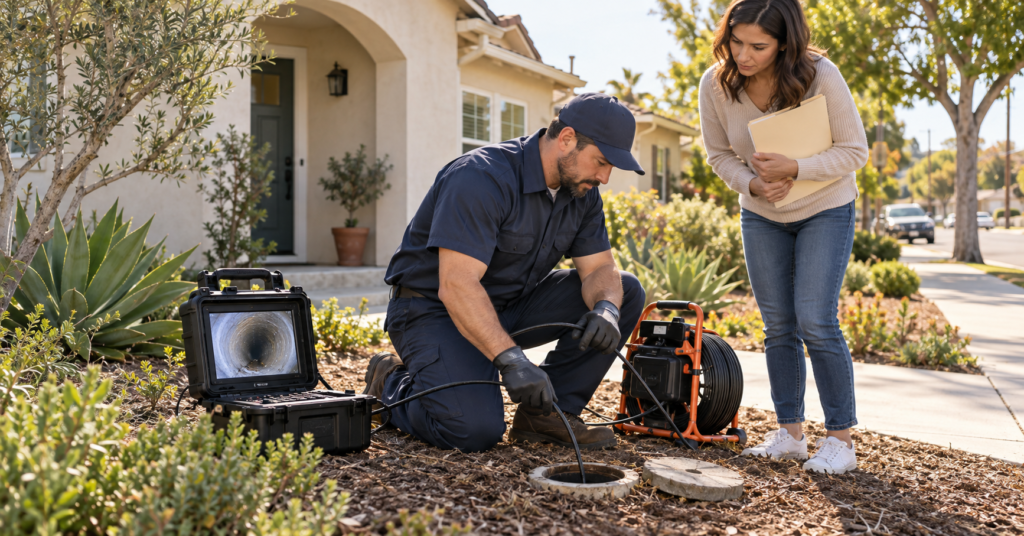
A camera inspection helps assess the condition of the pipe. Formal compliance may require a separate verification procedure.
The East Bay program describes a process involving a contractor’s assessment, applicable permits, necessary work, and an air or water pressure verification test. A video survey alone should therefore not be assumed to satisfy that program.
For a purchase, ask the contractor to distinguish between evaluating the line’s condition and completing the steps needed for certification. Confirm who arranges the agency inspection and who obtains the final document.
Also clarify the limits of any certificate. EBMUD states that its certificate confirms the tested portion passed verification on the stated date. It is not a promise that every drain in the house will remain trouble-free.
Check Existing Records Before Authorizing Work
Ask the seller for the current certificate, previous permits, final inspection records, repair invoices, and any available sewer video.
These documents serve different purposes. An invoice describes work billed by a contractor. A permit identifies authorized work. A final inspection or agency-issued certificate addresses a different part of the approval process.
Compare the address, parcel details, dates, and pipe sections shown in the records. If paperwork describes a partial repair, ask whether that work covered the entire section relevant to the sale.
Have the administering agency confirm whether the records establish current compliance. This can help avoid ordering unnecessary work or relying on a document that does not resolve the transaction’s requirement.
Hidden Sewer Repair Costs to Include in a Quote
The advertised price of a sewer inspection may cover only the initial visit. If further work is needed, obtain an itemized proposal.
| Potential expense | What to clarify |
|---|---|
| Initial assessment | Whether cleaning, locating the line, and a video copy are included |
| Test preparation | Whether access points or other preparation are needed |
| Permits and agency charges | Which fees are included and which are paid separately |
| Repair or replacement | Exact pipe sections, materials, and proposed method |
| Surface restoration | Responsibility for paving, landscaping, and other disturbed areas |
| Verification and retesting | Who books the test and pays if another visit is needed |
Ask how the contractor will handle conditions discovered after work begins. A written change-order process makes it easier to evaluate additional charges before approving them.
Avoid treating a general online price range as a property-specific estimate. Compare proposals based on the same work area and the same completion standard. A lower price may exclude restoration, permits, or certification tasks included in another bid.
Decide Who Pays and Who Manages Compliance
Payment and project responsibility should be addressed separately in the purchase agreement.
A seller might agree to pay for work while the buyer arranges completion after closing. Alternatively, the seller might handle testing and certification before transferring the property. Each arrangement needs clear deadlines and documentation.
For transactions under the East Bay program, its official frequently asked questions explain that buyers and sellers negotiate responsibility for obtaining the compliance certificate.
Ask your agent or attorney to document who hires the contractor, approves changes, pays agency charges, and delivers the required certificate. If costs exceed an estimate, the agreement should explain how that difference is handled.
A negotiated seller credit should also be reviewed with the lender and escrow officer. Confirm how it can be applied and whether the proposed arrangement fits the transaction’s financing and closing requirements.
Understand Time Extensions and Refundable Deposits
An extension can move the compliance deadline, but it does not establish that the pipe has passed testing.
The East Bay program describes a 180-day time extension for property sales. Its published guidance requires a $4,500 deposit to make the extension certificate valid and provides for a refund when compliance is achieved. Confirm the current instructions directly before relying on that option.
Berkeley separately describes possible six-month extensions. Its published process includes a deposit route or a signed contractor agreement for timely testing and work, subject to city review. These are local procedures, not statewide extension rights.
Before closing under an extension, identify the official deadline, the responsible party, and the person entitled to any refund. Keep a refundable deposit separate from the repair budget: money held by an agency is not automatically available to pay the contractor.
Also ask what happens if the deadline is missed. Put inspection and completion dates on your calendar with room for an unsuccessful test or scheduling delay.
Shared Laterals and HOA Responsibilities
A condominium, duplex, or property with a shared connection may require more coordination than a house with a dedicated line.
Ask for a diagram identifying which units the pipe serves. Review the governing documents or recorded agreements to establish who arranges access, authorizes repairs, and bears the expense.
For an HOA property, request any relevant inspection reports, planned-work notices, and funding decisions. Ask whether the association has already collected money for the project or is considering an assessment.
Do not assume that paying monthly dues means a particular sewer expense is fully funded. A useful review connects the physical pipe, the maintenance responsibility, and the available money.
Protect Your Closing Budget and Timeline
Build a property-specific schedule covering record review, contractor assessment, permits, repairs, verification, and delivery of the final document. Have escrow confirm which evidence it needs and when.
Our guide to buying your first home in California explains how inspections, contingencies, closing expenses, and repair reserves fit into the wider purchase process. Use that budget alongside your sewer estimate so immediate work does not consume the funds reserved for moving and ordinary ownership costs.
Before removing relevant contingencies, resolve any uncertainty about compliance status and financial responsibility with your transaction advisers. If work will continue after closing, keep the approved extension, contractor agreement, payment terms, and agency contact details together.
California sewer lateral compliance is easier to manage when the required outcome is specific: an accepted existing certificate, completed testing and approval, or an agency-authorized extension with a funded plan for completion.
Note: This article provides general educational information, not legal, plumbing, or engineering advice. Sewer requirements, fees, and extension procedures vary by location and may change. Confirm current requirements with the responsible agency and qualified professionals before closing.