
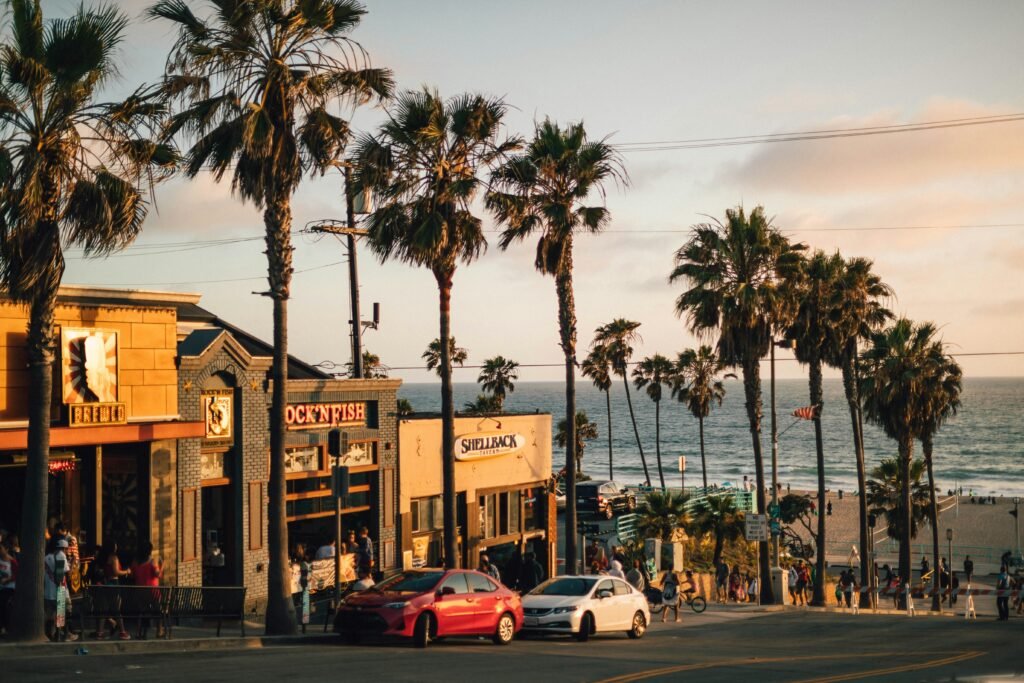
California Beach Parking can be surprisingly complicated. A beach may be open to the public while its nearest parking lot charges a day-use fee, fills before noon or closes at a different time than the shoreline. Free street parking may exist nearby, but posted restrictions, residential permits and street-cleaning schedules can make it difficult to use.
A successful beach trip therefore requires checking more than the weather. Understanding who manages the beach, where public access points are located and which parking rules apply can prevent unnecessary driving, expensive citations and long walks carrying beach equipment.
Why Beach Parking Varies Across California
California beaches are managed by different state and local agencies. One beach may be part of the California State Parks system, while another is operated by a county, city, harbor district or other public authority.
The agency responsible for the location can affect:
- Parking prices
- Operating hours
- Accepted payment methods
- Overnight restrictions
- Rules for oversized vehicles
- Availability of accessible spaces
- Dog and bicycle policies
- Seasonal closures
- Reentry after leaving the lot
Two neighboring beaches can have completely different parking arrangements. Never assume that a rule posted at one beach applies to the next location along the coast.
Common California Beach Parking Options
The most convenient option is not always the least expensive. Consider how much equipment you are carrying, how long you plan to stay and whether everyone in your group can manage a longer walk.
| Parking option | Typical advantages | Possible drawbacks |
|---|---|---|
| State beach lot | Usually close to the beach with clearly marked entrances | May charge a day-use fee and fill early |
| City or county lot | May offer hourly or daily payment | Prices and time limits vary |
| Metered street parking | Convenient for shorter visits | Requires attention to time limits and posted hours |
| Free street parking | No direct parking charge | Often limited, farther away or subject to restrictions |
| Residential street parking | Sometimes located near less crowded access points | Permit zones and local restrictions may apply |
| Remote lot with transit | Avoids searching near the shoreline | Requires additional planning and may limit what you can carry |
| Accessible parking | May provide a shorter route to an accessible entrance | Spaces can be limited and do not guarantee a fully accessible route |
Parking availability can change during holidays, warm weekends, festivals and high-surf events. Arriving early is helpful, but checking current restrictions before leaving home is more reliable than depending on an old online review.
Use Official Coastal Access Maps
A beach visible from the highway may not have an obvious public entrance. Some accessways appear between homes, beside hotels or at the end of residential streets. Others include long staircases, steep trails or narrow paths that are unsuitable for carts and mobility devices.
The California Coastal Commission provides the official YourCoast map, which can help visitors locate public access points, beaches, trails and related coastal facilities.
Use the map to identify:
- The actual public entrance
- Nearby parking areas
- Restrooms
- Picnic areas
- Trail connections
- Accessibility information
- Beach wheelchair availability
- Restrictions associated with the location
Confirm the final details with the agency managing the beach. Maps and navigation apps may show a road reaching the coast without explaining that parking is prohibited or that the access trail is temporarily closed.
Public Beach Access Does Not Guarantee Free Parking
California protects public access to the coast, but that does not mean every beach must provide free parking immediately beside the sand.
Visitors may encounter:
- Paid public lots
- Metered parking
- Residential permit zones
- Passenger-loading areas
- No-parking sections
- Limited-duration spaces
- Parking reserved for businesses or hotel guests
Public access also does not create a right to cross any private property. Use designated accessways and remain within marked public areas. Gates, fences and unclear signs can create confusion, so consult an official coastal access map rather than entering an unmarked path.
The California Coastal Commission investigates some situations in which unauthorized gates, fences, signs or closures may interfere with legally established public access. However, visitors should not personally remove barriers or enter areas marked as private. Access concerns can be reported through the appropriate public agency.
Read Every Parking Sign Carefully
Beach parking signs frequently contain several rules on the same pole. One restriction may apply only during certain hours, while another applies on specific days or to vehicles without a local permit.
Before leaving your vehicle, check for:
- Meter enforcement hours
- Maximum parking duration
- Street-cleaning days
- Residential permit requirements
- Tow-away periods
- Temporary event restrictions
- Overnight parking prohibitions
- Red, yellow, white, green or blue curb markings
- Rules for recreational or oversized vehicles
Look beyond the closest sign. A restriction posted at the entrance to a block or parking lot may apply even when there is no sign directly beside your vehicle.
Take a photograph of the signs and your parking location. The image can help you remember when the meter expires and locate the vehicle after returning from the beach.
Understand State Beach Day-Use Fees
Many state beaches charge a vehicle day-use fee. The price, payment method and pass eligibility can vary by location.
Some lots have staffed entrance stations, while others rely on automated machines, payment envelopes or digital systems. Do not assume that parking is free because the entrance station is unattended.
Before visiting, check the individual park page on the California State Parks website for:
- Current day-use fees
- Parking-lot hours
- Accepted payment methods
- Annual pass acceptance
- Construction notices
- Capacity restrictions
- Seasonal closures
Frequent visitors may consider a state park annual pass, but not every pass is accepted at every location. Compare the beaches you realistically expect to visit before purchasing one.
Beach transportation and parking should also be included in your recreation budget. TCG’s guide to California living costs explains how transportation and entertainment expenses fit into a broader monthly budget.
Arrive With a Backup Parking Plan
Popular beach lots may reach capacity early on warm weekends. Continuing to circle a full lot can waste time and add traffic to already congested coastal roads.
Create a backup plan before leaving home:
- Choose your preferred parking lot.
- Identify a legal secondary lot or street.
- Find another public access point nearby.
- Check whether transit reaches the beach.
- Decide how far your group can comfortably walk.
- Save the return location on your phone.
People traveling with children, surfboards, coolers or mobility equipment should be realistic about the distance between a backup space and the shoreline.
Living without a personal vehicle can sometimes make beach access easier by eliminating the parking search. TCG’s guide to car-free California discusses using public transportation, walking and cycling for everyday travel.
Consider Transit, Cycling and Drop-Off Options
Public transportation can be practical for beaches near major coastal cities, but service frequency and the distance from the stop to the sand vary considerably.
Before relying on transit, check:
- Weekend and holiday schedules
- The final return time
- Rules for carrying beach equipment
- Bicycle capacity
- Walking conditions from the stop
- Service disruptions
- Whether the beach closes before the final trip
Cycling may work for nearby residents when a safe route and secure bicycle parking are available. Bring an appropriate lock and avoid attaching bicycles to railings or structures where parking is prohibited.
A legal passenger drop-off can also reduce the distance that children, older adults or equipment must travel. The driver should use a designated loading area and avoid stopping in traffic lanes, bicycle lanes or emergency-access zones.
Check Accessibility Before Arriving
An accessible parking space does not always mean that the entire route to the shoreline is accessible. The path may include sand, slopes, stairs or uneven surfaces.
Confirm:
- The distance from parking to the beach
- Whether the route is paved
- Restroom accessibility
- Ramp or boardwalk availability
- Beach wheelchair programs
- Reservation or identification requirements
- Hours when accessibility equipment is available
The California Coastal Commission provides information about coastal access and beach wheelchairs through its public access resources. Contact the managing agency when specific mobility arrangements are essential.
Watch for Closures and Changing Coastal Conditions
Parking and access can change because of high tides, erosion, storm damage, construction, wildfire, unsafe water conditions or emergency activity. A parking lot may remain open even when part of the beach or its normal access trail is closed.
Check official notices on the morning of your visit, particularly after severe weather or during periods of high surf.
Never walk around a locked gate or closure sign simply because other visitors are doing so. Coastal bluffs, stairways and trails may be closed because of hazards that are not visible from the entrance.
California’s coastal temperatures can also differ greatly from inland conditions. Review TCG’s guide to preparing for a California summer before planning a long beach day.
Avoid Common Beach Parking Mistakes
Several preventable errors cause problems for beach visitors:
- Assuming an unattended lot is free
- Parking across a driveway
- Leaving part of the vehicle in a red zone
- Ignoring residential permit signs
- Relying on outdated parking information
- Forgetting to note when a meter expires
- Leaving valuables visible inside the vehicle
- Parking after the lot’s closing time
- Using a private business lot without permission
- Blocking emergency or maintenance access
- Following another vehicle through a restricted gate
- Assuming that all state park passes work everywhere
Remove valuables or keep them out of sight before arriving. Moving belongings into the trunk after parking can signal that valuables remain in the vehicle.
Frequently Asked Questions
Are all California beaches open to the public?
Many sections of the California coast are available for public use through beaches, parks and designated accessways. However, temporary closures, environmental protections, safety restrictions and private property boundaries can affect where visitors may enter. Use an official access point and check current agency notices.
Is California Beach Parking always free?
No. Parking may be free, metered or subject to a vehicle day-use fee. The shoreline may be publicly accessible even when the closest parking facility charges a fee.
Can I park on a residential street near the beach?
You may park where public street parking is legally allowed, but coastal neighborhoods often have permit requirements, time limits, street-cleaning schedules and tow-away areas. Read all posted signs.
Does a state park pass cover beach parking?
It depends on the pass and the state beach. Some passes exclude particular parks, facilities or special-use areas. Check the pass terms and the individual park page before traveling.
What should I do when the main beach lot is full?
Use a previously identified legal backup lot, public street space or transit option. Do not create a parking space along an unmarked shoulder or block an access road.
Can I leave my vehicle in a beach lot overnight?
Many beach lots prohibit overnight parking or close at a stated time. Check the entrance sign and the managing agency’s rules. A vehicle may be cited, locked inside or towed when left after closing.
Plan Access Before Starting the Drive
A little preparation can make California Beach Parking much easier. Confirm the managing agency, locate the designated entrance, review parking fees and restrictions, and save at least one legal alternative.
The closest space is not always the best choice. A slightly more distant lot with clear rules and a dependable walking route may save more time than circling congested coastal streets. Checking access conditions before leaving also helps ensure that a closure, high tide or full parking lot does not unexpectedly end the trip.
Note: Beach access, parking fees, enforcement hours and local restrictions can change. Check the official website and posted signs for the specific beach before parking or entering a coastal accessway.