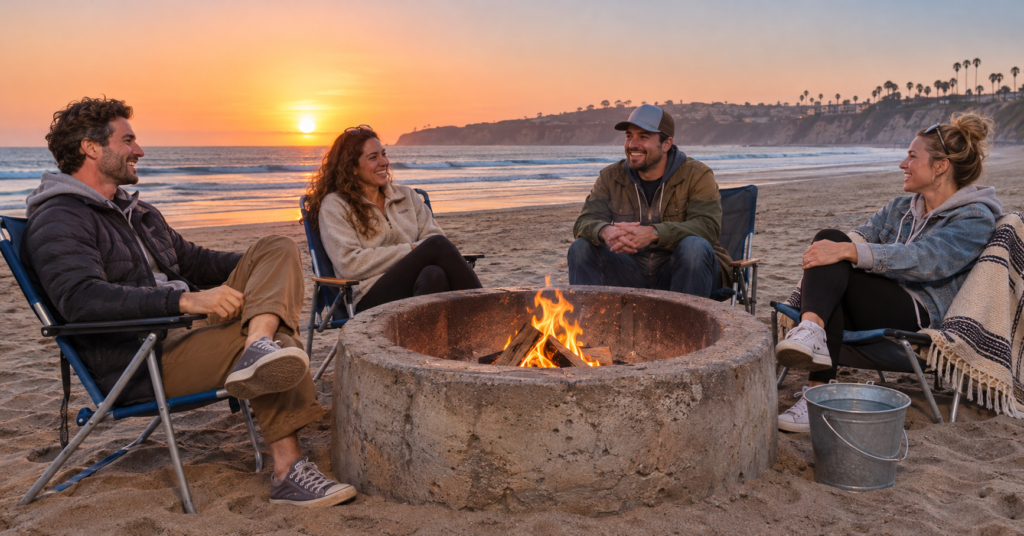
San Diego beach bonfires offer a relaxed way to spend an evening with friends: bring something to eat, watch the shoreline change after sunset, and settle into a conversation around the fire. The planning gets more complicated when everyone assumes a fire ring will be waiting.
Availability, permitted fuel, and departure arrangements deserve attention before you load the car. A beach shown in a summer photograph may have different facilities when you visit, and rules can change when you cross into another coastal jurisdiction.
A successful outing starts with choosing a specific location and making sure the evening works even if you cannot light a fire.
Check Who Manages Your Chosen Beach
“San Diego beach” can describe places across the region, but the same rules do not apply everywhere. This guide focuses primarily on beaches managed by the City of San Diego.
Coronado illustrates why that distinction matters. Its South Beach policy permits propane devices but prohibits wood and charcoal fires, while North and Central Beaches have different arrangements. Coronado also prohibits beach fires between 11 p.m. and 4 a.m.
Before inviting people, identify the beach’s managing authority and check its own guidance. Avoid transferring rules from a nearby beach simply because the two locations appear close together on a map.
Include the exact beach section in your invitation. A broad destination such as “Mission Bay” leaves guests searching a large area while carrying chairs, food, and supplies.
Confirm Fire-Ring Availability for Your Visit
City-provided fire rings are available on a first-come, first-served basis. Some shoreline locations have seasonal rings, so an old photograph or travel article does not establish what will be there on your chosen date.
Check current information before buying supplies, particularly for an autumn or winter outing. Ask whether rings are presently installed at the specific beach section you intend to use.
Arriving before the rest of your group gives you time to inspect the location and send an accurate meeting point. However, an early arrival should be treated as a planning choice, not a guarantee.
Choose a backup that requires little extra coordination. A picnic followed by a shoreline walk can preserve the evening without sending several cars between beaches in search of an empty ring.
Understand Wood Fires and Portable Propane Devices
At City of San Diego beaches, wood fires belong in City-provided fire rings. The municipal code separately permits qualifying portable propane-fueled devices under its beach-fire provisions. Other fuels are not permitted in those portable devices.
That means a portable wood-burning fire pit is not interchangeable with an approved propane setup. Do not assume a product is permitted because it is advertised as portable, smokeless, or suitable for camping.
If you plan to bring propane equipment, confirm the location’s requirements and follow the manufacturer’s operating instructions. Consider transport, setup, supervision, and cooling time before deciding it is a convenient alternative.
For a first outing, keep the arrangement familiar. Borrowing equipment you have never operated can add unnecessary work to a casual evening.
Bring Clean Fuel That Fits Inside the Ring
San Diego’s municipal code limits ring fuel to charcoal, clean wood, or paper products. It excludes materials such as treated or painted wood, landscape debris, plastic, and wood containing nails or other hardware. Fuel must remain inside the ring and extend no more than 12 inches above its upper edge.
Inspect the wood before loading it. Leftover renovation lumber and discarded pallets should not become the default fuel supply.
Assign one person to bring a modest amount. If every guest arrives with extra wood, the group may end the evening with more material than it can reasonably use or carry home.
Keep food packaging and general rubbish separate from the fuel. A fire ring is not a convenient way to dispose of the evening’s waste.
Plan Around Beach Hours and Your Return Journey
Ordinary City of San Diego beach fires are prohibited between midnight and 5 a.m. The City also prohibits overnight camping and sleeping at its beaches.
The fire cutoff does not establish the closing time of your parking lot or guarantee late transportation. Read entrance signs when you arrive and check the return journey before settling in.
For an evening gathering, work backward from the earliest practical departure constraint:
- When must vehicles leave the parking area?
- What time does the last useful transit connection depart?
- How long will cleanup and carrying equipment take?
- Who is staying to supervise the fire until it is fully extinguished?
Set a time to stop adding fuel well before departure. Guests should not be packing around an active fire while the driver worries about a closing gate.
Check Wind and Coastal Conditions Before Setting Up
Use a location-specific forecast and review current beach notices. Wind, rain, and coastal conditions can change whether the outing is comfortable or sensible, even when the beach itself remains open.
Agree in advance that anyone can suggest switching to the backup plan. This is especially useful when several people have already traveled and feel pressure to continue.
Bring layers so warmth does not depend entirely on sitting close to the fire. Keep blankets, bags, and spare clothing away from heat, and arrange chairs so people can move without stepping over equipment.
For more help coordinating arrival times and shared responsibilities, see The California Guide’s California outdoor meetups guide.
Pack for a Beach Gathering, Not Just the Fire
Choose food that is easy to serve without an elaborate cooking setup. Sandwiches, prepared snacks, and nonalcoholic drinks keep the evening manageable if a ring is unavailable.
City beach guidance prohibits alcohol and glass containers, along with smoking and disturbing noise. It also identifies permit requirements for gatherings of more than 50 people and certain activities or equipment, including amplification and canopies.
Check drink bottles, food jars, and serving containers before leaving home. A reusable cup does not solve the problem if the original glass bottle comes along in the cooler.
Useful supplies include a flashlight, rubbish bags, sturdy footwear, and enough water and suitable equipment to extinguish the fire. Keep extinguishing water separate from the drinking supply so it remains available.
If children attend, assign supervision clearly. The person watching the fire should not automatically be assumed to be watching everyone near it.
Leave Time to Extinguish the Fire Properly
San Diego’s beach-fire guidance says not to leave a fire unattended and directs users to extinguish it with water. Sand must not be used to put it out.
Begin this process while the group still has time and enough people to help. One person can supervise extinguishing while others collect food containers, chairs, and loose rubbish.
The municipal code allows extinguished ashes to remain uncovered in City-provided rings, requires unused fuel to be removed, and prohibits covering ashes with sand or dirt. Follow posted instructions for designated coal containers where provided.
Before leaving, use a flashlight to check the surrounding sand for bottle caps, wrappers, utensils, and belongings. The final check should cover the whole seating area, not only the ring.
Note: San Diego beach bonfire rules, seasonal fire-ring availability, and access conditions can change. Confirm the requirements for your exact location through the City’s Beach Amenities and Regulations page, the relevant managing authority, and posted signs before your visit.