California well water deserves a separate review when you are buying a home that depends on a private well. Clear water at the kitchen faucet tells you little about its quality, the system’s condition, or how reliably the well can supply the household.
Start by separating three questions: Is the water suitable for its intended use? Can the well provide enough of it? Who is responsible for operating and maintaining the system?
Answering those questions before closing helps you understand both the property’s practical limitations and the expenses that may come with ownership.
Confirm Which Water Source Supplies the Home
Ask the seller to identify the source serving the house, landscaping, and any additional buildings. A property may have a private domestic well, a shared well, a public connection, or different arrangements for different uses.
Request a simple explanation of how water reaches the home, including any storage tanks, pressure equipment, and treatment devices.
Private domestic wells generally do not receive the same routine regulatory oversight as public drinking-water systems. Owners need to arrange appropriate testing and maintenance, while local agencies may oversee construction and other requirements.
Contact the county environmental health department early. Ask what records are available and whether any local requirements apply to the property or proposed use.
Match Well Records to the Property
Request the well completion report, sometimes called a well log, along with available permits, repair invoices, and previous inspection reports.
California’s Department of Water Resources maintains well completion records and provides tools for finding them. However, its database can contain missing information, inaccurate locations, or duplicate records. A nearby map marker should not automatically be treated as the home’s well.
Have the seller or a qualified well professional help match the documents to the actual installation.
Useful details to clarify include:
- Where the well sits relative to property boundaries.
- When it was drilled and whether it was later modified.
- Which equipment has been replaced.
- Whether another well on the property is unused or abandoned.
- Whether the records describe the system currently supplying the house.
An old drilling report provides historical information. It does not establish the well’s present condition.
Arrange California Well Water Testing Before Closing
Ask for complete laboratory reports, including sampling dates, collection locations, and the substances tested. A seller’s statement that the water “passed” is difficult to evaluate without that information.
EPA recommends annual private-well testing for total coliform bacteria, nitrates, total dissolved solids, and pH. Additional testing depends on local conditions and potential contamination sources.
For a purchase, discuss the appropriate testing scope with the county environmental health department and a laboratory accredited for the relevant analyses. Ask whether local concerns justify testing for substances such as arsenic or other groundwater contaminants.
Follow the laboratory’s sampling instructions. The container, collection method, storage conditions, and delivery timing can affect whether a sample is usable.
Also establish whether the sample represents untreated groundwater or water after treatment. Those results answer different questions.
California’s domestic-well guidance recommends regular testing and provides information on selecting tests and interpreting findings.
Evaluate Well Yield Separately From Water Quality
A satisfactory laboratory result does not tell you how much water the well can deliver.
Ask a qualified well professional whether a pumping and recovery evaluation is appropriate. Request a written explanation of the test duration, conditions, measurements, and limitations.
Useful questions include:
- How did the water level respond during pumping?
- How quickly did it recover?
- Was the measured supply consistent throughout the test?
- Did a storage tank contribute water during the evaluation?
- How does the result compare with the household’s expected demand?
Explain your intended use. A home occupied by one person may have a different demand pattern from a larger household with frequent laundry, irrigation, or animals.
Avoid treating a brief faucet demonstration or an old production figure as a complete assessment. Ask the professional to explain what the evidence supports and what remains uncertain.
Investigate Seasonal Supply and Drought History
Ask the seller about late-summer shortages, declining pressure, pump adjustments, and any history of purchasing delivered water. Request related invoices where available.
Groundwater levels can decline, potentially affecting a domestic well’s ability to supply water. The State Water Board’s well-owner guide explains why changing groundwater conditions matter to private-well households.
DWR’s groundwater dashboards and dry-well reporting tools can provide broader context. Reported shortages nearby are worth discussing with a local professional, but regional information cannot determine the condition of an individual well.
Ask whether the inspection occurred during a season that could make the results look more favorable than conditions later in the year.
If the seller installed a large storage tank, find out why. Its presence should prompt a discussion about the system’s design and operating history.
Inspect the Pump, Pressure Tank, and Wellhead
Water testing should be accompanied by an equipment review.
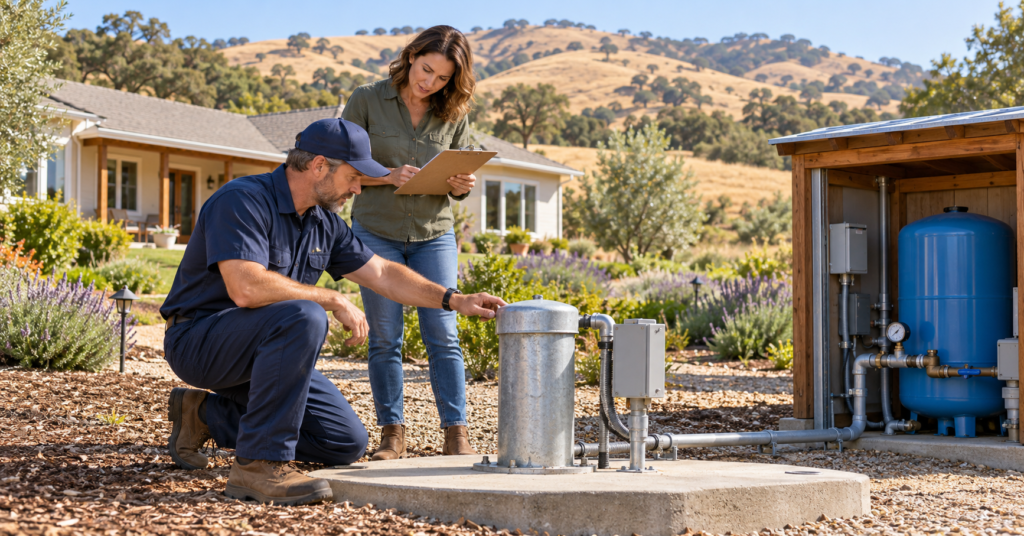
Ask the inspector to assess the accessible wellhead, pump controls, pressure tank, storage equipment, and visible piping. Have them identify unusual cycling, leaks, damaged components, and maintenance concerns.
The surroundings matter too. EPA advises protecting wells from nearby contamination sources and directing surface runoff away from the well.
Request a clear list of urgent repairs and items that may need replacement later. Where equipment age is unknown, ask how that uncertainty affects the recommended maintenance budget.
Also establish how the system behaves during a power outage. Ask which components depend on electricity and whether any existing backup arrangement has been professionally installed and maintained.
Understand Existing Water Treatment Costs
A filter or softener should come with an explanation of its purpose.
Request model information, service records, replacement schedules, and any testing used to select the equipment. Treatment should address the contaminants actually present; different devices have different capabilities.
California’s State Water Board advises consumers to evaluate treatment claims and identify the specific substances a device is certified to reduce.
Ask for the ongoing costs of replacement cartridges, treatment media, servicing, electricity, and follow-up testing.
If the seller proposes installing treatment before closing, agree on the problem being addressed and how the completed work will be verified. Equipment installation alone does not demonstrate that the intended result has been achieved.
Review Shared-Well Agreements and Access
For a shared well, request the written agreement and any recorded documents affecting access or water service. Have an appropriate real estate professional review them before you rely on the arrangement.
The review should establish who owns the equipment, how expenses are divided, and who can authorize repairs. Ask how emergency work, unpaid contributions, disagreements, and future replacements would be handled.
Physical access deserves attention. If the well or supply line crosses another property, ask your title or legal adviser to confirm the documented rights to use, inspect, and maintain it.
Give the documents to your lender early and ask whether the arrangement meets its requirements.
Turn the Findings Into a Purchase Budget
Separate one-time expenses from recurring ownership costs. Your estimate might include inspection and laboratory fees, immediate repairs, treatment servicing, electricity, and a reserve for equipment replacement.
Obtain property-specific quotes for major work. If someone suggests drilling a replacement well, investigate feasibility, access, permitting, and cost before assuming that option will be available.
For the broader purchase process, TCG’s guide for first-time California homebuyers explains how specialized inspections fit alongside financing, disclosures, and closing expenses.
Allow time to review the findings before relevant contractual deadlines. If an important question remains unresolved, discuss the available options with your agent and other advisers while there is still time to act.
Note: California well water conditions vary by property and location. For background on testing, groundwater, and maintenance, consult the State Water Board’s Guide for Private Domestic Well Owners and confirm property-specific questions with the local environmental health department.