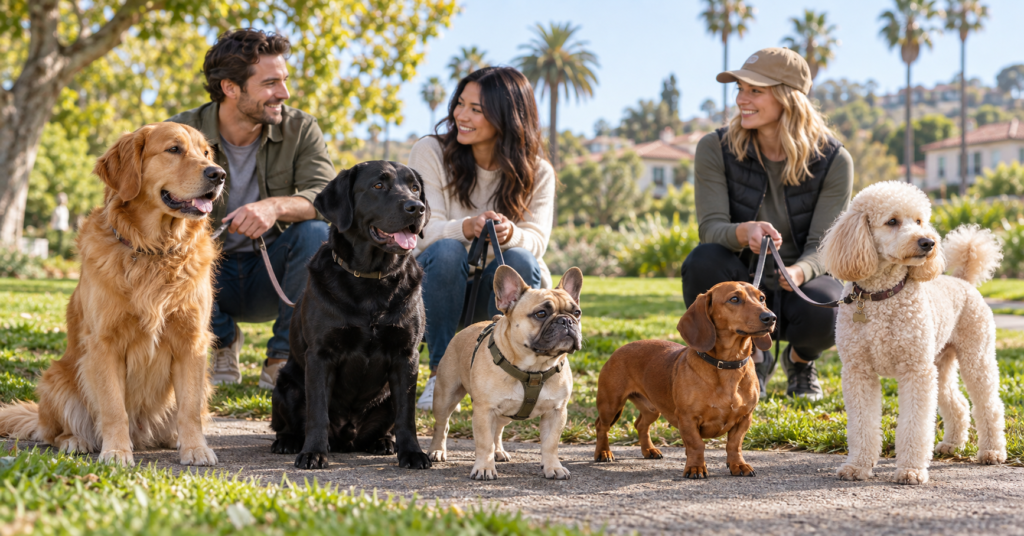
French Bulldogs, Golden Retrievers, and Labrador Retrievers feature prominently in California city breed rankings. However, understanding popular dog breeds in California takes more than naming a statewide favorite. Preferences vary between cities, and registration statistics do not capture every dog living in the state.
For prospective owners, popularity is a starting point. The more useful question is whether a particular dog suits your home, daily schedule, budget, and local climate. A breed you regularly see at a neighborhood park may still require more exercise, grooming, or veterinary care than you expect.
What California Dog Breed Rankings Actually Show
The American Kennel Club ranks breeds using its registration statistics. These figures describe AKC-registered purebred dogs, rather than a complete count of household pets. They should not be presented as a statewide ownership census that includes mixed-breed dogs and every unregistered purebred.
Its 2025 city rankings provide useful California examples:
| California city | First | Second | Third |
|---|---|---|---|
| Los Angeles | French Bulldog | Golden Retriever | Dachshund |
| Oakland | French Bulldog | Cane Corso | Golden Retriever |
| Sacramento | French Bulldog | Golden Retriever | Labrador Retriever |
| San Diego | French Bulldog | Golden Retriever | Labrador Retriever |
| San Francisco | Golden Retriever | French Bulldog | Dachshund |
These are city-level registration rankings, not a combined California top-five list. They show recurring preferences while also revealing local differences.
The figures also do not explain why owners selected a breed. Claims that apartment living or outdoor recreation caused a particular ranking would require separate evidence.
French Bulldogs: Compact Size With Important Care Needs
French Bulldogs stand out across several California cities, making them an obvious breed to consider when discussing local popularity.
Their compact build may appeal to people who prefer a smaller companion, but size should not be confused with low maintenance. French Bulldogs are flat-faced dogs with particular breathing and temperature concerns. The AKC cautions against exertion in hot or humid conditions and highlights the need to keep their facial folds clean and dry.
Before choosing one, consider your actual home environment. Can you maintain a comfortable indoor temperature? Who will provide care during the day? Does your ideal weekend involve short outings or strenuous activity?
Discuss breed-related health concerns with a veterinarian before committing. A dog’s popularity or small footprint does not establish that its ongoing care will be inexpensive.
Golden Retrievers: Daily Activity and Regular Coat Care
Golden Retrievers appear consistently near the top of the selected city rankings. For someone seeking an active companion, they are a breed worth researching carefully.
Their care includes substantial daily exercise and regular brushing. Golden Retrievers shed throughout the year, with heavier seasonal shedding that can require more frequent coat maintenance.
Think about an ordinary workday before imagining weekend adventures. Who handles the morning outing? Where will the dog spend the afternoon? How much time can you reliably devote to activity and training?
Also consider the practical effects of a larger dog: space in your vehicle, muddy paws after outings, and the effort involved in managing the dog if it becomes injured or needs assistance.
A welcoming temperament does not remove the need for training or supervision. Assess the individual dog’s behavior around children, visitors, and other animals rather than relying on a breed’s reputation.
Labrador Retrievers: More Energy Than Their Easygoing Image Suggests
Labrador Retrievers feature in the leading groups for several California cities. Their familiar appearance and reputation as companions can make them seem like an uncomplicated choice.
However, the AKC describes Labs as energetic dogs that need considerable daily exercise. Their short coat is also a shedding double coat, so a short-haired dog does not necessarily mean a hair-free home.
A realistic Labrador plan should include opportunities for movement, training, and interaction throughout the week. Access to a yard can be convenient, but consider what you will actually do with the dog rather than counting outdoor space as the entire exercise plan.
For renters, think through shared hallways, elevators, and nearby walking routes. The ability to manage a larger, enthusiastic dog calmly in those spaces matters as much as the size of the apartment.
Dachshunds: Small Dogs With Specific Home-Layout Questions
Dachshunds rank third in both Los Angeles and San Francisco in the AKC’s 2025 city lists. Their size makes them relevant to households considering smaller dogs, but their care needs deserve individual attention.
They still require regular exercise. The AKC also advises preventing repeated running on stairs and jumping on or off furniture because of injury concerns. Grooming requirements vary between smooth, longhaired, and wirehaired varieties.
Before bringing one home, review the route from your front door to the street. A building with several flights of stairs creates different daily arrangements from a ground-floor home.
Discuss suitable activity and ways to manage elevated furniture with a veterinarian. Planning the layout early is easier than changing routines after the dog has become accustomed to jumping onto a high bed or sofa.
Poodles: Account for Grooming as Well as Exercise
Poodles also appear in the selected California city rankings, including Sacramento and San Diego.
Research the size variety you are considering instead of treating all Poodles as interchangeable. Your available space, handling preferences, and transport arrangements may influence which individual dog fits your household.
Coat care requires a genuine time and budget commitment. The AKC explains that longer coats need thorough brushing to prevent matting, while many owners choose shorter trims and regular grooming appointments. Poodles are also active dogs that need daily exercise.
Ask what maintenance will be needed between appointments. A professional grooming visit does not necessarily replace brushing at home.
If allergies are part of your decision, avoid treating a breed label as a guarantee. Spend time around the individual dog and seek appropriate advice before making a permanent commitment.
Match Your Dog to Your Part of California
California ownership decisions should account for local conditions rather than a general image of mild weather. Plan around the temperatures and walking conditions where the dog will actually live.
The American Veterinary Medical Association recommends exercising during cooler hours, avoiding hot surfaces, providing water and shade, and never leaving pets in parked vehicles. It also identifies short-nosed dogs as having a higher risk of problems during warm-weather exercise.
Consider how you would adjust your routine on an unsuitable outdoor day. You may need shorter outings, different walking times, or indoor activities appropriate for the dog.
For longer hikes or a new exercise routine, ask your veterinarian what is suitable for the dog’s age, health, and condition. A breed commonly associated with activity is not automatically ready for every trail.
Check Housing and the Full Ownership Budget
Before selecting a dog, review the pet arrangements for your home. If renting, ask for the applicable policy in writing and clarify any size, number, or breed restrictions relevant to ordinary pets.
Then build a budget that extends beyond the adoption or purchase cost. Include food, routine veterinary care, grooming, training, supplies, and arrangements for days when you cannot provide care yourself.
Ask about costs for the particular dog you are considering. Coat type, age, medical history, and individual needs can affect the budget more than a general breed average.
Plan for travel too. Identify who would care for the dog during a holiday or emergency, and whether that person can manage its size, routine, and behavior.
Keep Mixed-Breed and Adult Dogs in the Comparison
Purebred registration rankings leave out much of the decision facing a prospective owner. A mixed-breed dog or an adult dog with a well-documented history may also suit your household.
Ask a shelter, rescue, or current caregiver about observed behavior: comfort when left alone, walking habits, reactions to visitors, and experience with other animals. Distinguish what they have directly observed from what remains unknown.
Describe your routine honestly. Someone away from home for long stretches needs different arrangements from someone with a flexible schedule, regardless of the breed they prefer.
Use popular dog breeds in California to guide your research, then choose based on the individual animal and the care you can consistently provide.
Note: Breed rankings reflect the population measured by their source and do not predict an individual dog’s temperament or health. Confirm care needs with a veterinarian and assess the dog’s history before bringing it home.