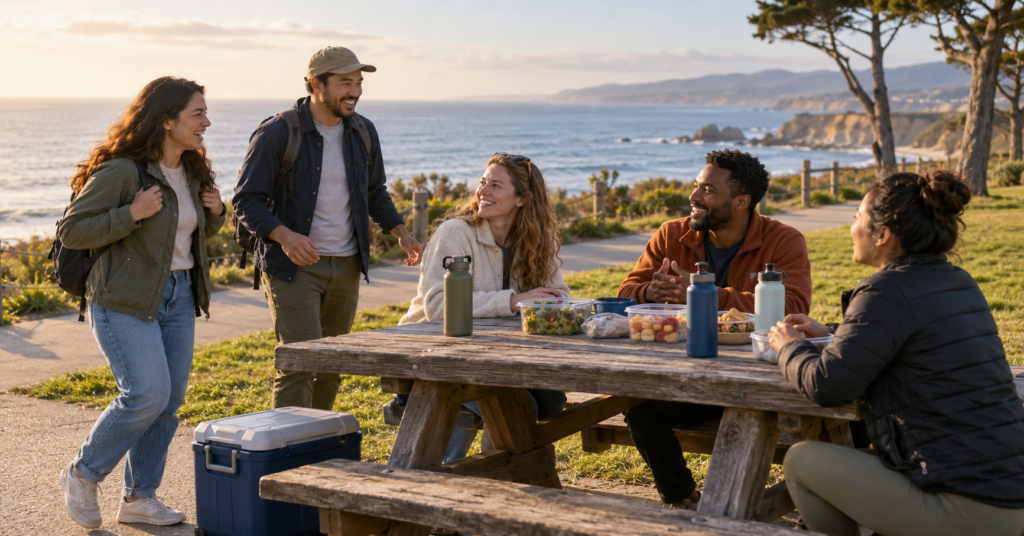
Getting friends together outdoors sounds easy until everyone starts discussing where to go, who can drive, and whether the activity suits the whole group. A simple afternoon can become a long message thread without a clear decision.
California outdoor meetups work best when the plan gives people enough information to say yes without making attendance feel like a major commitment. A neighborhood park gathering, coastal walk, or casual picnic can become a regular part of your social life when the location, timing, and expectations are manageable.
The aim is to create an outing people can comfortably join—and would want to repeat.
Give Your Outdoor Meetup One Clear Purpose
Start with the kind of gathering you want. A walking meetup, picnic, and recreational sports afternoon require different preparation, even when they happen in the same park.
Choose one main activity and describe it plainly. “An easy 45-minute walk followed by time to chat” gives guests more useful information than “an outdoor adventure.”
Avoid filling the first gathering with several stops. Moving between a trail, restaurant, and beach adds travel time and creates more opportunities for people to become separated or leave early.
If your group needs inspiration, Gennifer Rose’s guide to making the most of California’s outdoor lifestyle explores parks, beach visits, outdoor gatherings, and new hobbies. Use those ideas to choose an activity that fits your friends’ interests, then build a practical plan around it.
Choose a Location People Can Reach Regularly
A scenic destination is not always the best meeting place. If most guests need a long drive, expensive parking, or several transport connections, a recurring gathering may become difficult to maintain.
Ask where people will be traveling from and how they expect to get there. Compare actual journey times rather than choosing a point that merely looks central on a map.
For your first meetup, favor a location with a recognizable entrance, straightforward paths, and enough space for the planned activity. A place you have visited before can reduce uncertainty about seating, noise, and how crowded it becomes.
Keep the meeting point specific. A park name alone may send guests to different entrances. Share a map pin and a short description, such as “the picnic tables beside the main restroom building.”
Match the Activity to Different Abilities and Preferences
Words such as “easy,” “short,” and “beginner-friendly” mean different things to different people. Describe the conditions guests will encounter instead.
For a walking meetup, explain the approximate distance, surface, slopes, and expected pace. For a stationary gathering, say whether there are benches, shaded seating, and accessible restrooms nearby.
Ask privately whether anyone needs a particular arrangement. People should not have to explain personal health or mobility details in a group chat to find out whether they can participate.
A useful format is a shared meeting area with an optional activity. Some guests might take a short walk while others remain at the picnic area, with everyone reconnecting afterward. Make both options part of the invitation so nobody feels they are disrupting the plan by choosing one.
Check Reservations and Group-Use Rules Before Inviting Everyone
Public access does not necessarily mean every organized activity is allowed without advance arrangements. Requirements depend on the managing agency, location, group size, and what you intend to bring or do.
Contact the park office when planning a larger gathering, publicly advertised meetup, paid activity, or event involving equipment, vendors, or amplified sound. Describe the actual plan rather than asking only whether “groups are allowed.”
For example, Lake Perris distinguishes group picnic reservations from special-event arrangements. Its guidance identifies catering, tournaments, sales, and sound systems among activities that may require a special-event permit. Those are local requirements, not a universal rule for every California park.
Confirm whether a reservation gives you exclusive use of a particular space. If tables are first come, first served, describe them that way in the invitation rather than promising seating you have not secured.
Make Parking and Arrival Part of the Invitation
Guests should know the likely arrival costs before setting off. Include parking charges, entrance fees, or reservation contributions when they apply.
For coastal gatherings, send your group TCG’s California beach parking and access guide. It explains why the nearest parking space, public entrance, and accessible route may not be in the same place. It also covers checking restrictions and identifying backup parking.
Choose one backup meeting arrangement before the day begins. If the main lot fills, guests should know whether to use another entrance, contact the organizer, or meet at an alternative location.
Carpooling can simplify arrivals, but agree on the return time beforehand. Someone who needs to leave early should not discover that their ride expects to stay until sunset.
Set a Budget Without Making Attendance Awkward
California outdoor meetups can involve small expenses that add up: transport, parking, food, equipment, and a reserved space.
Decide which costs are individual and which are shared. Tell guests about any contribution before paying a nonrefundable booking fee on their behalf.
For example, explain whether the host is covering a picnic reservation or dividing it among confirmed attendees. Avoid collecting money first and deciding later what it will cover.
Keep optional spending clearly optional. If the gathering ends near a café or restaurant, guests should be able to finish the outdoor activity without feeling committed to buying a meal.
For a recurring group, ask whether the usual cost feels comfortable. A modest local meetup that people can attend regularly may work better than an occasional outing that strains their budgets.
Keep Food and Equipment Responsibilities Specific
A vague request for everyone to “bring something” can produce several bags of snacks and no practical way to serve them.
Assign only what the gathering needs. One person might bring a picnic blanket, another a game, while everyone brings their own drinks and lunch. This keeps the organizer from supplying an entire event.
For shared food, ask about dietary needs and identify ingredients where practical. If someone has strict requirements, let them decide whether bringing their own food is the most comfortable option.
Check site rules before planning cooking equipment, shade structures, speakers, or decorations. Do not assume an item is allowed because it appeared at another park gathering.
Plan cleanup responsibilities too. Leave enough time before departure to collect belongings, remove rubbish, and check the area for small items.
Decide How Weather Changes Will Be Communicated
A recurring calendar invitation should still be reviewed before each gathering. Conditions at a coastal picnic spot can differ from those at an inland trail, and a location that worked last month may be less suitable on the next date.
Check the forecast and official notices for the destination. Choose a time by which the organizer will confirm, relocate, or postpone the meetup so guests are not already traveling when the decision arrives.
Keep the alternative simple. You might shorten the activity, move to another suitable venue, or choose a new date. Have an indoor option when outdoor conditions are unsuitable rather than assuming another outdoor location will solve the problem.
Use one communication channel for updates. Ask guests to check it before leaving, and avoid making essential changes across several separate conversations.
Send One Complete Message and Make the Next Meetup Easier
Once the arrangements are settled, send a single message containing:
- The date, start time, and expected finish.
- The exact meeting point.
- The activity and relevant access details.
- Expected costs and anything to bring.
- The confirmation deadline and cancellation plan.
For new attendees, include the organizer’s name and a way to recognize the group. If sharing photographs afterward, ask before posting images of other guests.
After the meetup, request specific feedback: Was the travel manageable? Did the activity length work? Was the meeting point easy to find?
Use those answers to improve the next gathering. Keep the parts that worked instead of redesigning the whole event each time. A predictable format makes it easier for friends to fit California outdoor meetups into their schedules and share the organizing work.
Note: Park reservations, group-use requirements, access arrangements, and local conditions vary. Confirm details with the agency managing your chosen location before collecting money or finalizing invitations.