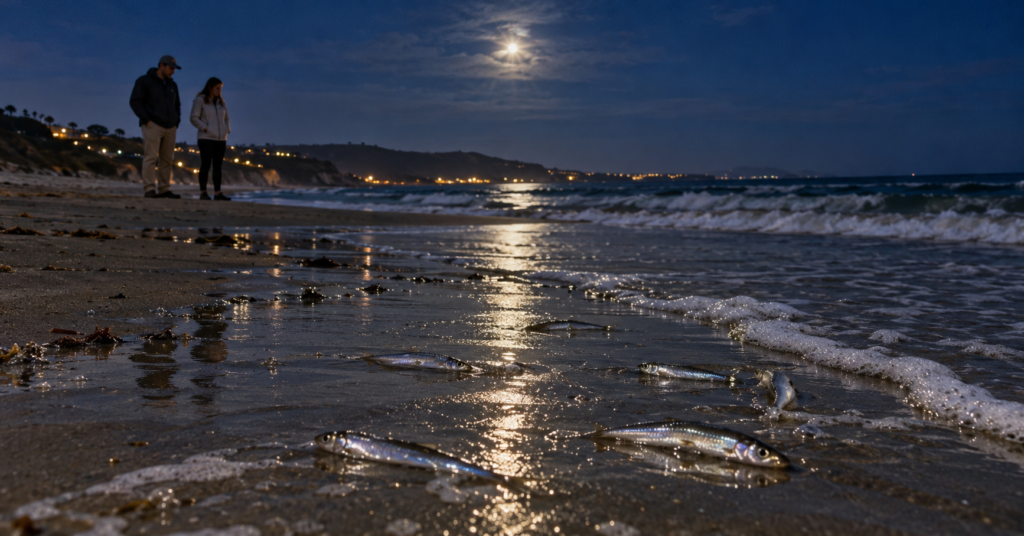
California grunion runs offer an unusual reason to visit the coast after dark: watching small, silvery fish come ashore to spawn. For first-time observers, the experience involves patience, careful timing, and choosing a beach that allows access during the expected viewing window.
Planning takes more than finding a date on a calendar. Beach closing times, parking restrictions, and the needs of your group can determine whether an outing works. A useful plan leaves room for an unpredictable wildlife encounter while making the practical details straightforward.
Understand What Happens During a Grunion Run
Grunion use incoming waves to reach the wet sand, where females bury their tails to deposit eggs. Males fertilize the eggs, and the adult fish return to the ocean. The eggs remain beneath the sand until later tides create suitable conditions for hatching.
This spawning behavior makes the shoreline an active habitat, even after the visible fish have disappeared. Watching without digging or disturbing the sand helps protect the part of the event visitors cannot see.
Think of the outing as a chance to observe a brief natural process. You may see a few fish, a larger gathering, or none during your visit. Setting that expectation before leaving home is especially helpful when bringing children or friends who expect a guaranteed spectacle.
Read the California Grunion Runs Schedule Carefully
Start with the California Department of Fish and Wildlife’s current expected-run schedule. Its listed times describe a probable two-hour window, not an appointment at which fish will definitely appear.
The schedule uses Cabrillo Beach as its reference point. CDFW notes that runs occur approximately five minutes earlier in San Diego and 25 minutes later in Santa Barbara. It also indicates that the second hour is often better and that the second and third nights of a four-night period commonly produce stronger runs.
Pay attention to the date convention: when a forecast begins at or after midnight, the schedule lists the previous evening’s date.
For your own calendar, record both the evening you will leave home and the actual viewing hours. This prevents a midnight start from turning into a trip on the wrong night.
Use the schedule for the year of your visit. An old screenshot or saved blog post is not a reliable substitute for the current forecast.
Check Beach Curfews Before Choosing a Viewing Night
A predicted spawning window does not extend a beach’s opening hours. Confirm access with the city, county, or other agency managing your chosen location.
Cabrillo Marine Aquarium’s visitor information states that Cabrillo Beach closes at midnight. Los Angeles County’s beach rules separately prohibit loitering between midnight and 6 a.m. These examples show why a late forecast needs to be checked against the rules for the particular beach.
Ask a precise question when contacting the managing agency: “Is public access allowed during this viewing window, and when must visitors leave?”
Do not assume that other people remaining on the sand means access is permitted. If the forecast conflicts with closing time, choose a different date or confirm whether an officially organized event provides a suitable viewing opportunity.
Build the walk back into your departure time. Leaving the shoreline at closing time may still put you at a locked gate several minutes later.
Treat Parking and Beach Access as Separate Checks
A beach entrance and its nearest parking lot may operate on different schedules. Verify the lot’s closing time, any gate restrictions, and the signs governing the space where you park.
Before leaving the vehicle, photograph its location or save a map pin. A familiar beach can look surprisingly different after dark, particularly when several paths lead toward similar parking areas.
For groups arriving separately, agree on one meeting point away from the water. Avoid instructions such as “meet near the lifeguard tower” unless everyone knows which tower and how to reach it.
If using public transport or a ride service, plan the return journey before the outing. Check the last departure and identify a pickup point that remains accessible at the time you expect to leave.
Use Recent Sightings to Narrow Your Beach Choice
CDFW does not recommend one beach over another because local conditions and curfews change. It suggests contacting state or county beach lifeguards, who may know where recent spawning has occurred.
Recent information can help you choose a starting point, but it cannot promise that the next run will happen in the same place.
When asking about sightings, also ask about the practical approach: which entrance serves that stretch of beach, whether there are temporary closures, and whether the route includes stairs or uneven surfaces.
For a first visit, an easily navigated beach may suit your group better than an unfamiliar location requiring a long walk in darkness. Decide how far you are comfortable walking before arriving, rather than extending the search indefinitely.
Keep Observation Separate From Handling Fish
California’s April-through-June grunion closure allows discreet observation but prohibits touching, handling, or taking the fish. Watching therefore remains possible during the closed season, subject to local beach access.
During the open season, taking grunion is restricted to collection by hand, with a daily bag and possession limit of 30. People aged 16 or older need the applicable fishing license, and Ocean Enhancement Validation requirements also apply in the relevant area.
For an observation outing, make a simple agreement with your group: watch without picking up fish. CDFW states that observation alone does not require a fishing license, but interacting with fish can trigger licensing requirements even when you do not intend to keep them.
Explain this distinction to children beforehand. A fish resting briefly on wet sand is not an invitation to scoop it up for a closer look.
Bring Light for Walking and Use It Sparingly Near the Surf
A flashlight helps with navigating paths, steps, and belongings. Near the viewing area, however, constant illumination can interfere with the encounter.
CDFW advises using flashlights sparingly because light may discourage grunion from coming ashore. Its observation guidance also favors less crowded areas, where practical.
Keep navigation lights directed toward your footing rather than sweeping beams across the water. Avoid surrounding a small group of fish with phone lights simply to get a brighter photograph.
For photography, decide whether your equipment can handle low light without repeated flashes. A modest image taken with minimal disturbance is a better outcome than interrupting the behavior you came to watch.
Pack for Waiting on a Cool, Dark Beach
Cabrillo Marine Aquarium recommends warm clothing and a flashlight for its grunion program. Choose clothing for standing still outdoors after sunset, rather than relying on how warm the afternoon felt.
A small bag can hold an extra layer, drinking water, a charged phone, and any essentials your group needs. Keep valuables protected from sand and splashes, and choose footwear suitable for the access route.
Check the coastal forecast and any beach hazard notices before departure. Stay aware of incoming waves, keep children close, and avoid turning a viewing trip into nighttime wading.
Agree on an end time that accounts for fatigue and the drive home. Nobody needs to remain until the final minute of the forecast if the group is cold, uncomfortable, or no longer enjoying the outing.
Consider a Guided Program for Your First Visit
An organized outing can make California grunion runs easier to understand. Cabrillo Marine Aquarium’s Meet the Grunion program combines an educational presentation, aquarium exploration, and guided beach observation.
Availability is seasonal. Its public-program page currently marks the 2026 season as closed, so prospective visitors should check for a newly announced season rather than assume an older event listing is bookable.
Before reserving a future event, check its meeting time, walking requirements, cancellation terms, and arrangements if no fish appear. Guided interpretation can still make the evening worthwhile, but wildlife remains unpredictable.
Note: Grunion forecasts, seasonal regulations, and beach-access arrangements can change. Confirm the current CDFW guidance and local opening hours before each outing.