
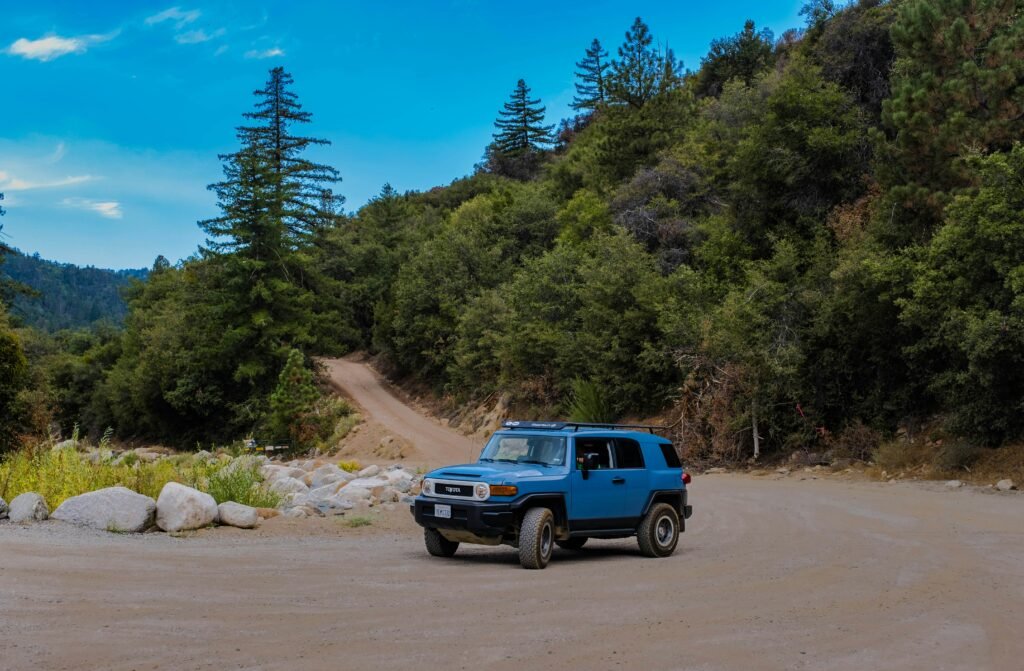
California Overlanding can take travelers from dry desert trails to pine forests, mountain passes and remote public lands. The state’s varied terrain makes it an appealing destination for vehicle-based camping, but the experience requires more preparation than driving to a developed campground.
An overlanding trip combines transportation, camping and self-supported travel. The purpose is usually to explore a destination over one or more days rather than to test a vehicle on the most difficult terrain available. Off-road camping may be part of the trip, but legal access, road conditions and land-use restrictions determine where a vehicle can actually go.
Drivers must understand the difference between an unpaved road, a designated off-highway vehicle trail and unrestricted cross-country travel. A capable four-wheel-drive vehicle does not automatically give its owner permission to leave established routes.
This guide explains how to plan an overlanding trip in California, find legal roads and campsites, prepare a vehicle and reduce the risks of becoming stranded.
Overlanding Is Not the Same as Driving Anywhere Off-Road
The phrase “off-road” can create the impression that travelers are allowed to drive across open desert, forest or grassland. In many California recreation areas, motor vehicles must remain on designated roads and trails.
A route may be rough, remote and unpaved while still being an officially recognized road. By contrast, driving around a locked gate, creating a new track or cutting across undisturbed land may be prohibited. Tire tracks can damage vegetation, disturb wildlife habitat and leave scars that remain visible for years.
Land-management rules vary between Bureau of Land Management property, national forests, state vehicular recreation areas, national parks, county land and private property. A trail shown by a navigation app is not necessarily open to public motor vehicles.
Before traveling, identify which agency manages the land and consult that agency’s current map, notices and closure information.
Where Overlanding Is Allowed in California
California does not have one statewide network covering every legal overland route. Access depends on the land manager and the designation assigned to each road or trail.
Bureau of Land Management areas
The Bureau of Land Management manages extensive recreation land, particularly in California’s desert and eastern regions. Some BLM areas permit dispersed camping and provide access to designated off-highway vehicle routes.
Popular regions include areas around the Mojave Desert, Imperial Sand Dunes, Johnson Valley, El Mirage, Jawbone Canyon, Alabama Hills and South Cow Mountain. These names describe broad destinations rather than guarantees that every visible trail is open.
The BLM’s California recreation directory can help travelers locate managed recreation areas. Each destination may have its own route restrictions, camping limits, fire rules and temporary closures.
National forests
National forests contain many unpaved roads, but vehicle access is controlled through route designations. A Motor Vehicle Use Map, commonly called an MVUM, identifies roads, trails and areas legally open to motorized travel.
A line appearing on a general road map does not replace the official motor-vehicle map. Some forest roads are suitable for ordinary passenger vehicles, while others require high clearance, four-wheel drive or advanced recovery experience. Seasonal gates, wildfire damage, snow and erosion may make an otherwise legal route temporarily inaccessible.
Dispersed camping may be permitted near certain forest roads, but local restrictions can control how far a vehicle may pull off the route and where camping is allowed.
State vehicular recreation areas
California’s State Vehicular Recreation Areas are designed specifically for off-highway recreation. They can be a practical starting point for people who want to learn how their vehicle handles dirt, sand, hills or uneven terrain in a managed setting.
The California State Parks Off-Highway Motor Vehicle Recreation Division publishes information about state riding areas, vehicle requirements and operating rules. Conditions and facilities vary, so visitors should check the page for the individual recreation area before leaving.
National parks and other protected land
National parks generally restrict vehicles to established roads. A road being unpaved does not mean drivers may leave it or create a campsite beside it. Backcountry camping may require a reservation or permit, and vehicle camping may be limited to designated campgrounds or approved roadside sites.
State parks, wilderness areas, wildlife refuges and local preserves can impose additional restrictions. Mechanized or motorized travel is normally prohibited within federally designated wilderness.
Check Whether the Vehicle Is Legal for the Route
A street-legal four-wheel-drive vehicle and a non-highway-registered dirt bike, ATV or side-by-side are not treated the same way.
California State Parks explains that vehicles operated off-highway on public land generally must be street licensed or properly registered as off-highway vehicles. Visitors from other states may need a California Nonresident OHV Use Permit, depending on their vehicle and home-state registration arrangement. Current details are available through the state’s nonresident OHV permit guidance.
Registration does not make a vehicle legal on every trail. The route must also be open to that type of vehicle. Width, vehicle class, seasonal restrictions and emissions classifications can affect access.
Drivers who recently moved to the state may also find TCG’s guide to California vehicle registration fees helpful when organizing their vehicle paperwork.
Dispersed Camping Requires More Research
Dispersed camping means camping outside a developed campground, usually without services such as potable water, toilets, trash collection or marked campsites. It does not mean camping is allowed on every unused piece of land.
BLM dispersed camping is generally subject to stay limits, although the exact rule can vary by location or field office. The agency states that a common limit is 14 days within a 28-day period, but travelers should verify the rule for their intended area through the BLM camping guidance.
Some locations require visitors to use previously disturbed sites. Others limit camping near water sources, trailheads, roads or sensitive habitat. A destination may also use a permit or reservation system to control crowding.
Never assume that an empty-looking site is public. California contains a patchwork of federal, state, local, tribal and private land. Offline land-ownership maps can be useful for planning, but posted signs and official agency information should take priority.
Campfire Permits Do Not Override Fire Restrictions
Fire rules are one of the most important parts of California off-road camping. A California Campfire Permit may be required for a campfire, charcoal fire or portable gas stove outside a developed campground, depending on the land and current restrictions.
Having a permit does not guarantee that a fire is allowed. Agencies can prohibit open flames during periods of high wildfire danger. Restrictions may change rapidly because of heat, wind, dry vegetation or active fires.
The BLM maintains a page for current California fire restrictions. Travelers should check it shortly before departure and again when entering the recreation area. National forests and parks publish their own alerts.
Where fires are permitted, use an existing fire ring when required, keep water and a shovel nearby and extinguish the fire completely. The ashes should be cold before leaving. Parking over tall, dry grass can also create a fire risk because hot exhaust components may ignite vegetation.
A gas stove with a shutoff valve may be permitted when wood or charcoal fires are prohibited, but it can still require a valid permit. During severe restrictions, even some stove use may be limited.
Select a Route That Matches the Vehicle and Driver
Online photos often make difficult terrain appear flatter and less technical than it is. A route described as easy by an experienced driver with a modified vehicle may be challenging for someone using a stock crossover.
Consider ground clearance, approach and departure angles, tire condition, vehicle weight and the availability of low-range gearing. Long vehicles can have difficulty crossing sharp dips, while heavily loaded vehicles may handle poorly on sand or off-camber terrain.
Four-wheel drive improves traction, but it does not prevent a vehicle from becoming high-centered, sliding sideways or sinking into soft ground. All-wheel drive can be useful on maintained dirt roads, yet it may not provide the clearance, gearing or recovery points needed for more demanding trails.
New overlanders should begin with well-traveled routes close to services. A shorter trip provides an opportunity to learn how the vehicle, camping equipment and passengers respond before attempting a remote multi-day journey.
California Terrain Creates Different Hazards
California’s landscapes require different styles of preparation.
Desert travel brings extreme heat, sharp rocks, soft sand and long distances without water. Temperatures can remain dangerous even after sunset, while cell coverage may disappear close to populated highways.
Mountain routes can hold snow or ice after lower elevations have warmed. Storm damage, fallen trees and washed-out sections can close roads unexpectedly. Elevation may also affect people who are not accustomed to thinner air.
Coastal and northern routes can become muddy after rain. Driving a wet dirt road may deepen ruts, damage the route and leave a vehicle stranded. Some agencies close roads specifically to prevent erosion.
Wildfire can affect any of these regions. Smoke, evacuation orders and road closures may change a trip even when the fire is many miles from the planned campsite. California residents unfamiliar with these seasonal conditions can learn more from TCG’s broader guide to California summer weather and preparation.
Vehicle Preparation for Remote Travel
A dependable vehicle matters more than an expensive collection of accessories. Complete overdue maintenance before the trip and inspect the tires, brakes, battery, cooling system, suspension and fluid levels.
The spare tire should be full-sized when the route is remote, properly inflated and accessible after the vehicle is packed. Carry the correct jack and tools, and make sure they work on uneven ground. A tire repair kit and air compressor can help with minor punctures, although sidewall damage may still require a replacement tire.
Recovery equipment must match the vehicle and the route. Useful equipment may include a rated recovery strap, traction boards, a shovel, gloves and properly rated attachment hardware. Recovery points should be designed for the forces involved. Cosmetic tie-down points and ordinary tow balls can fail dangerously when subjected to a sudden recovery load.
Extra water is essential. Carry more than the amount expected for drinking because water may also be needed for cooking, cleaning or an emergency. Food, warm clothing, sun protection, first-aid supplies and essential medication should remain available if the trip lasts longer than planned.
Navigation and Communication
Mobile navigation alone is not sufficient for remote California overlanding. Maps may be outdated, and a phone may lose both signal and power.
Download offline maps before departure and carry a backup power source. Compare recreational maps with official land-management maps rather than relying on a single app. Mark fuel stations, water sources, emergency exits and alternate routes.
A satellite communication device can provide an additional way to request assistance where cellular service is unavailable. It does not replace planning, and rescue may still take hours.
Give a trusted person a trip plan containing the route, vehicle description, license plate, travelers’ names and expected return time. Establish when that person should contact authorities if the group does not check in.
Avoid Traveling Alone on Difficult Routes
Solo overlanding is possible, but the consequences of a mechanical problem or injury are greater when another vehicle is not available. Beginners should consider joining an experienced group, especially on sand, steep trails or routes with deep water crossings.
Group travel still requires clear communication. Drivers should leave enough distance to see obstacles and avoid dust, but they should not become separated at intersections. Every driver remains responsible for deciding whether an obstacle is within their ability.
Turning around is a valid safety decision. Continuing because other vehicles completed an obstacle can lead to body damage, rollover or an expensive recovery.
Camp Without Damaging the Site
Responsible camping helps preserve access to California’s public lands. Use an existing durable campsite where possible instead of clearing vegetation for a new one. Keep vehicles on authorized surfaces and avoid expanding the site.
Pack out trash, food scraps and damaged equipment. Human-waste rules depend on the location; some desert areas require portable waste systems because burying waste is not permitted or is environmentally unsuitable.
Do not drain wastewater onto the ground unless the land manager expressly allows it. Store food securely and follow local guidance for bears and other wildlife. Avoid camping near springs, water troughs or other limited water sources that animals need to approach.
Noise also affects other visitors and nearby communities. Keep music low, limit generator use and avoid unnecessary engine revving around campsites.
Building a Realistic Overlanding Budget
The cost of overlanding in California depends on the vehicle, trip length and distance from home. Fuel may be the largest recurring expense, particularly with a loaded four-wheel-drive vehicle traveling through soft terrain.
The budget may also need to include campground or permit fees, OHV registration, maintenance, recovery equipment, additional insurance and emergency lodging. Tire damage or professional backcountry recovery can be expensive.
A rooftop tent and extensive vehicle modifications are not required for every trip. Many beginners can learn more by starting with a reliable stock vehicle, ground tent, basic recovery kit and carefully chosen easy route. Equipment should solve a known need rather than simply add weight.
Planning a California Overlanding Trip
Start by choosing a region and identifying its land manager. Confirm that the roads are open to the vehicle, determine where overnight camping is permitted and review current fire restrictions. Check the weather at both the starting point and the route’s highest or most remote section.
Estimate travel time using trail conditions rather than highway distance. Ten miles on a rough route can take far longer than expected. Plan to reach camp before dark so hazards and site boundaries remain visible.
Fuel early, top up water and inspect the vehicle before leaving pavement. If conditions differ significantly from the forecast or route description, use the alternate plan rather than forcing the original itinerary.
Travelers combining their trip with time along the coast may also want to review the California Beach Parking and Access Guide because coastal access and overnight vehicle rules differ from those on inland public land.
Frequently Asked Questions
Is dispersed camping free in California?
Many BLM and national forest dispersed camping areas do not charge a nightly fee, but this is not universal. Some destinations require permits, passes or paid reservations. Always check the individual land manager’s rules.
Can you drive anywhere on BLM land in California?
No. Vehicle travel may be limited to designated or existing roads and trails. Some areas have open riding zones, while others prohibit off-route travel. The local BLM map and posted signs determine legal access.
Is four-wheel drive required for California overlanding?
Not for every route. Maintained dirt roads may be suitable for high-clearance two-wheel-drive or all-wheel-drive vehicles in dry conditions. More difficult routes can require four-wheel drive, low-range gearing, suitable tires and recovery experience.
Is a California Campfire Permit enough to have a fire?
No. A permit does not override seasonal closures, Red Flag restrictions or local fire bans. Check current rules for the specific land-management unit immediately before the trip.
Can an out-of-state OHV be used in California?
Possibly, but the registration and permit requirements depend on the vehicle and the home state. Some visitors need a California Nonresident OHV Use Permit. Verify the current requirements with California State Parks before operating on public land.
Can overlanders sleep inside their vehicles?
Sleeping inside a vehicle may be allowed where vehicle camping is permitted, but it does not make an otherwise prohibited overnight location legal. Local parking rules, campground requirements and public-land restrictions still apply.
What is the safest first overlanding trip in California?
A short, well-documented route near a managed recreation area is usually more appropriate than a remote desert crossing. Choose mild weather, travel with another vehicle when possible and avoid terrain that exceeds the group’s experience.
Note: Road access, camping rules, fire restrictions and permit requirements can change without notice. Confirm current conditions with the agency managing the exact destination before beginning a California overlanding or off-road camping trip.